Explore our premium portfolio of enterprise-grade MIMO Mesh systems, low-latency COFDM modules, and ultra-rugged telemetry equipment designed for hazardous environments.
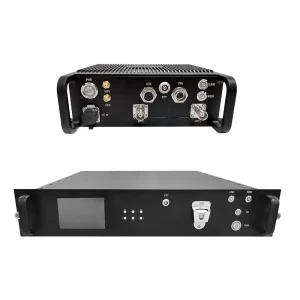
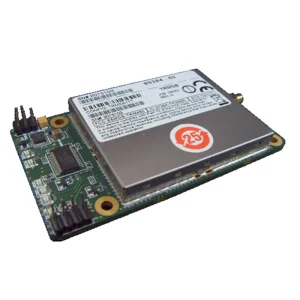
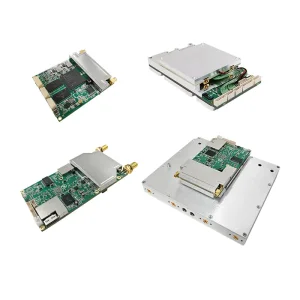
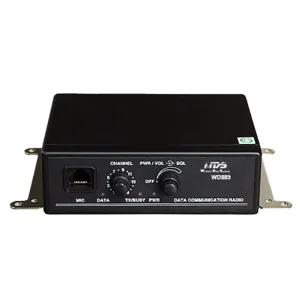
Analyzing long-range industrial RF infrastructures, multipath resilience, and low-latency spectrum modulation.
In the digital-first industrial era, the reliance on high-throughput, resilient communication lines has transitioned from a utility to a core operational demand. Industrial applications spanning from remote telemetry, pipeline automation, seismic monitoring, to tactical unmanned vehicles operating in non-line-of-sight (NLOS) conditions demand radio communication links that exceed standard commercial constraints. High-quality wireless data relays serve as the crucial linchpins in modern network architectures, establishing secure, multi-kilometer backhauls where fiber infrastructure is either physically impossible or economically unfeasible.
Historically, narrow-band sub-GHz configurations provided foundational serial telemetry connections. However, the contemporary migration to smart grids, industrial Internet of Things (IIoT), and real-time multi-spectral video streams has catalyzed the shift toward advanced technologies like OFDM/COFDM, broad-spectrum MIMO Mesh, and ultra-resilient FHSS (Frequency Hopping Spread Spectrum) systems. These physical-layer paradigms guarantee extreme anti-interference capabilities, high-speed data links, and long-range connectivity over extremely challenging topographies.
Pioneering the next frontier of spectral efficiency, dynamic mesh adaptation, and software-defined radio frameworks.
To navigate the congested RF spectrum of modern industrial sites, our technological roadmap centers on three foundational paradigms:
Future industrial environments require transceivers that do not merely transmit on preset frequencies, but dynamically analyze spectrum interference in real-time. Through integration of advanced Software-Defined Radio (SDR) hardware engines, our next-generation systems implement cognitive algorithms to automatically hop to cleaner, less-congested spectral windows, mitigating localized noise floors and targeted RF interference without link disruption.
Multiple-Input Multiple-Output (MIMO) technology leverages spatial diversity to significantly improve path reliability and data density. Rather than treating multipath reflections as destructive interference, MIMO mesh nodes utilize these reflections constructively. Through mathematical spatial multiplexing, MIMOmesh networks simultaneously scale data bandwidth and range, maintaining critical links across complex urban caverns, subterranean mines, and heavy metal-clad factory floors.
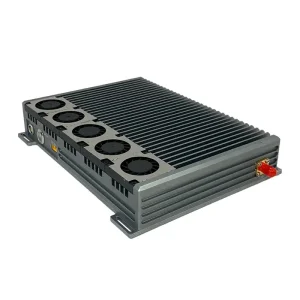
By blending Coded Orthogonal Frequency Division Multiplexing (COFDM) with TDD protocols, we maximize bidirectional efficiency on a single RF channel. COFDM divides a wide carrier into hundreds of closely spaced orthogonal sub-carriers, protecting packet transmission against selective fading and multi-path delays. This makes it ideal for high-speed dynamic tracking, such as telemetry from unmanned aerial vehicles (UAVs) flying at speeds over 120 km/h.
Deploying specialized high-reliability wireless infrastructures to ensure operational continuity in critical industry verticals.
Long-range SCADA data acquisition across hundreds of kilometers of hostile desert and sub-zero pipelines. Using our ultra-stable low-frequency modules and RF power amplifiers, remote valve telemetry and pressure values are reliably transmitted to central controls without reliance on cellular coverage.
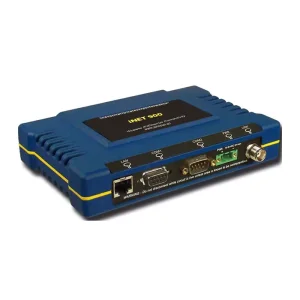
Decentralized metropolitan thermal networks require robust, multi-hop mesh relays to report system performance. Our iNET series network radios interface with Modbus/TCP or RTU devices, creating seamless bridged industrial Ethernet links across vast municipal footprints.
Low-latency bi-directional video transmission is critical for tactical unmanned vehicles. DDLmesh and COFDM technology guarantee real-time HD video streams and telemetry backhauls even in highly obstructed, non-line-of-sight environments, enabling precise remote piloting and sensory control.
Precision agriculture and geological geodesy demand sub-centimeter coordination updates. Our dedicated high-performance GNSS/RTK wireless data link radios maintain stable connection to rover base stations with ultra-low latency, defying terrain obstructions and weather extremes.
Standard Wi-Fi cannot propagate through deep metallic and winding mine shafts. High-performance MIMOmesh nodes establish a self-healing, dynamic multi-hop chain, carrying real-time voice, video feed, and environmental gas telemetry back to safety coordination hubs on the surface.
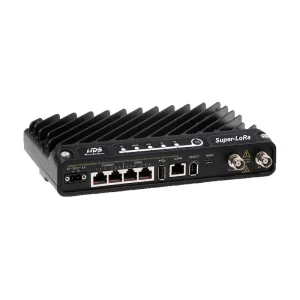
Operating completely off the grid under extreme solar-powered battery constraints. Our micro-volume low-power LoRa module transceivers sleep during idle phases and wake up instantly to relay critical tectonic or water level shifts, ensuring fail-safe alerting networks.
Shenzhen Huaxiasheng Technology Co., Ltd. has been deeply engaged in the service industry of wireless data transmission product development, application, and network engineering since 1996. Over the past decades, the company has independently developed wireless data transmission equipment based on the world's leading technology in the wireless data transmission equipment industry, tailoring solutions to the application characteristics of different fields, and relying on the deep research and testing strength of prestigious domestic universities and academic institutes.
At present, Huaxiasheng develops and produces the most advanced digital data transmission radio, intelligent data transmission radio, digital data module, high-speed frequency hopping radio, industrial wireless Ethernet, network high-definition image transmission radio/module, AD-HOC/MESH self-organizing network, GNSS/RTK wireless data link, industrial wireless remote I/O, handheld mobile data transmission voice transceiver, two-way RF power amplifier, voice codec, multi-serial port composite connection, and point-to-multipoint address coding modules.
Our solutions are designed to deliver advanced technology, reliable quality, and highly competitive, reasonable pricing to ensure global factories and critical control industries achieve seamless automation.
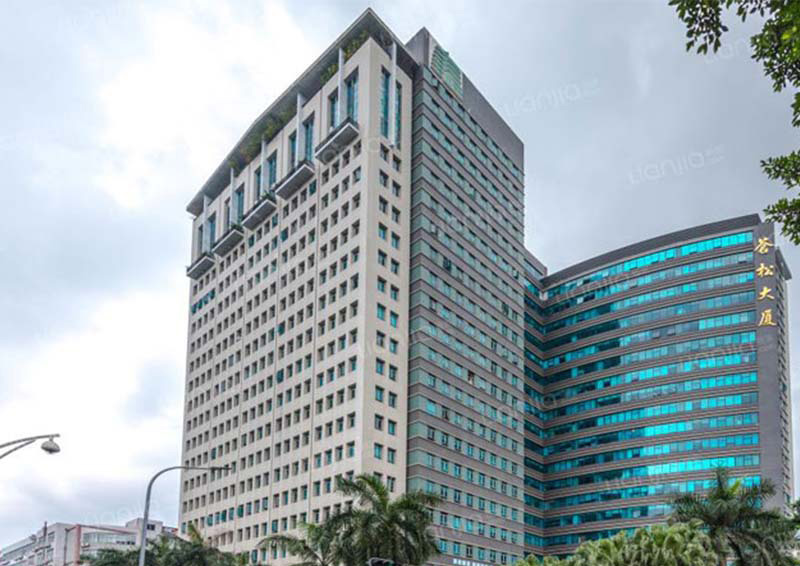
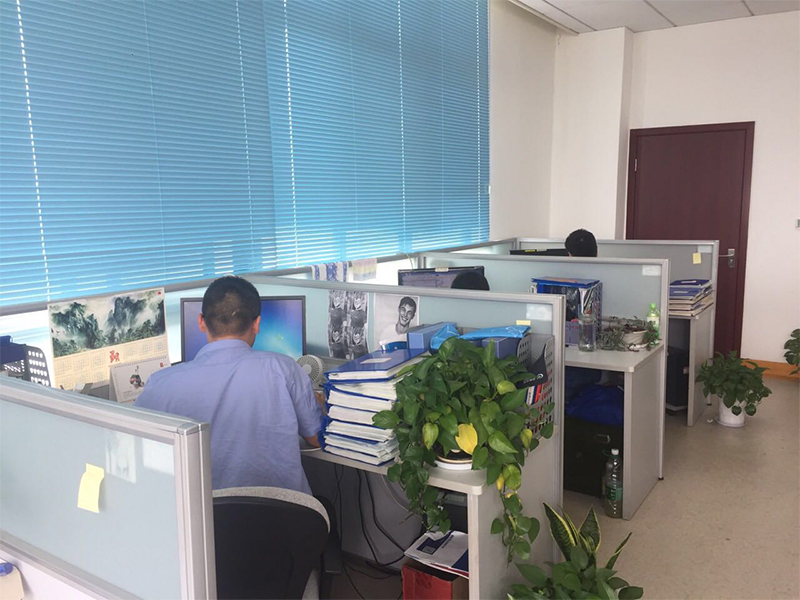
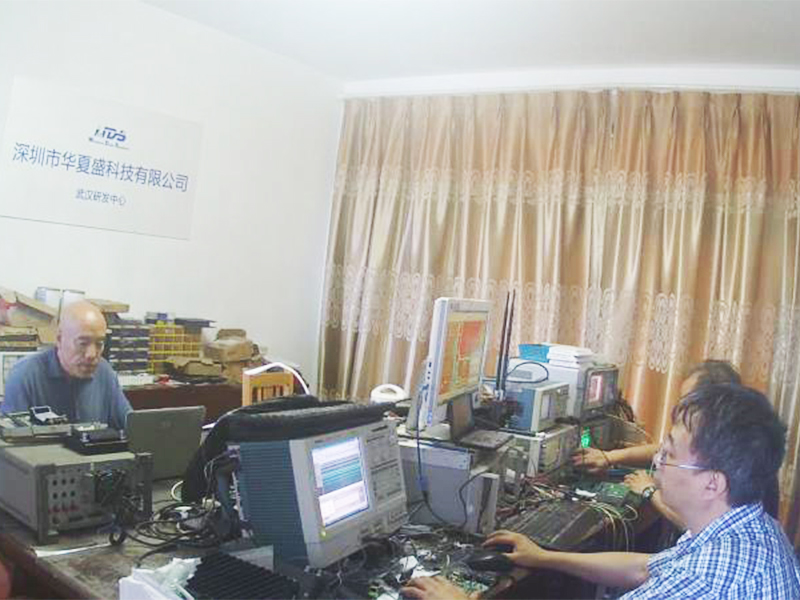
Located in the heart of Shenzhen's high-tech manufacturing cluster, our factory utilizes the best of Industry 4.0 paradigms. From automated surface mount technology (SMT) pick-and-place pipelines to automated visual inspection (AOI) and multi-temperature environmental chamber testing, every wireless data link is subjected to exhaustive quality checks. RF calibration is performed using industry-standard Keysight and Rohde & Schwarz analyzers, ensuring transmitter spectral mask conformity, frequency stability, and receiver sensitivity parameters match strict aerospace-grade tolerances before shipment.
Our integrated supply chain keeps significant stock of critical components, shielding global clients from silicon market swings and guaranteeing lightning-fast lead times. Whether you require standard frequency bands or unique military-grade customizations (VHF, UHF, L-band, S-band, C-band), our specialized engineers handle production rapidly with zero compromise on reliability.


Navigating international regulatory frameworks, customized frequency spectrum allocations, and local technical support.
Deploying high-power wireless telemetry or mesh equipment internationally requires compliance with national radio authorities (such as FCC in the United States, CE/RED in Europe, MIC in Japan, and SRRC in China). Shenzhen Huaxiasheng Technology Co., Ltd. provides comprehensive engineering support to streamline certification. Our Software-Defined Radios can be configured to comply with local regulatory limits by locking out restricted frequency bands and adapting dynamic power controls (ATPC) to meet safe spectral exposure indices.
Every industrial project presents unique design constraints—ranging from specific hardware envelopes to special connector interfaces (such as SMB, MMCX, or ruggedized aviation plugs). We offer full-stack OEM and ODM services. This includes designing custom form factors, adapting RF power amplifier modules for extended temperature ranges (-40°C to +85°C), and building multi-channel voice/data pipelines to interface directly with custom flight controllers or marine autopilot systems.
Direct answers from our principal RF design engineers regarding signal performance, deployment, and configuration.
WiFi relies on standard CSMA/CA protocols, which suffer from severe packet drops and link breaks when encountering fast dynamic movement, high Doppler shifts, or multipath reflections from terrain. COFDM (Coded Orthogonal Frequency Division Multiplexing) splits the data payload across hundreds of narrow subcarriers, using robust forward error correction (FEC). This allows it to maintain low-latency HD video links over dozens of kilometers, even in highly dense non-line-of-sight (NLOS) urban or maritime conditions.
Our ad-hoc/MESH self-organizing networks use dynamic routing protocols. The mesh topology continuously evaluates link quality based on signal strength (RSSI), packet loss rate, and path latency. If a relay node drops out due to damage or distance, the network autonomously self-heals, routing data through alternative active nodes in fractions of a second without breaking the central control loop.
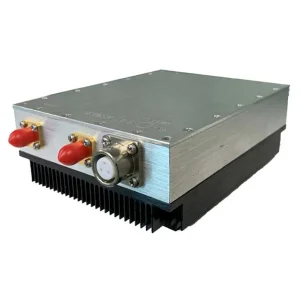
Yes. Our BiAMP series bi-directional power amplifiers can be customized across standard frequencies ranging from VHF and UHF to L-band, S-band, and C-band. We tune internal filters, low-noise amplifiers (LNA), and power amplifiers (PA) to match your exact operating requirements, maximizing overall range and reducing out-of-band emissions.
Every industrial module and radio undergoes rigorous environmental stress testing. This includes operating in climatic chambers from -40°C to +85°C, humidity exposure, and high-G vibration sweeps. We also use ruggedized aluminum enclosures and military-grade components to prevent failure from dust and mechanical impacts.
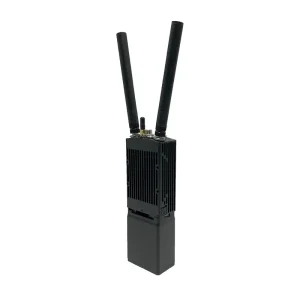
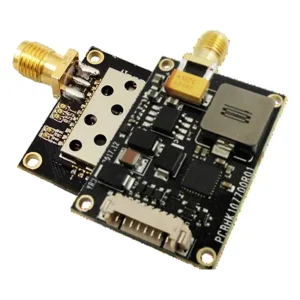
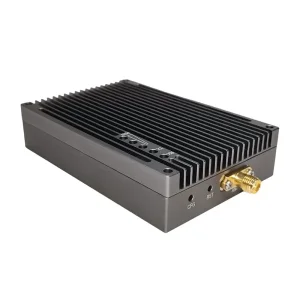
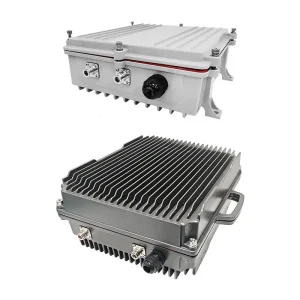
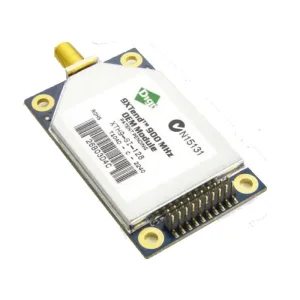
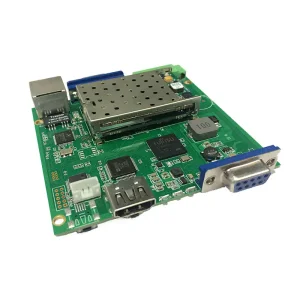
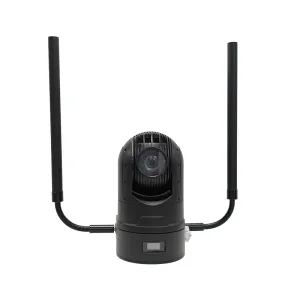
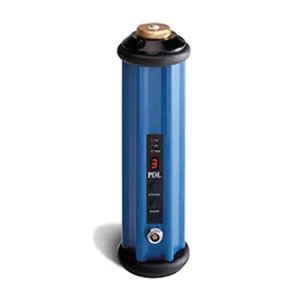
Explore our compact integration-ready RF transceiver boards, GNSS data links, and tactical deployment camera nodes.
 Sinosun Tech