 Sinosun Tech
1 / 1
To meet the growing number of data-intensive applications in the SCADA environment, the Super-LoRa provides data rates of up to 216 kbit/s in 50 kHz licensed channels.
With its defense in depth approach, including AES encryption, authentication, address filtering and user access control including RADIUS, the Super-LoRa protects against vulnerabilities and malicious attacks.
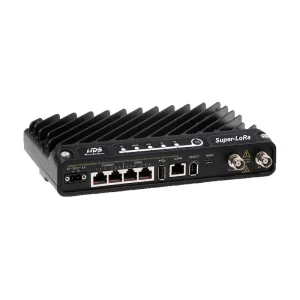
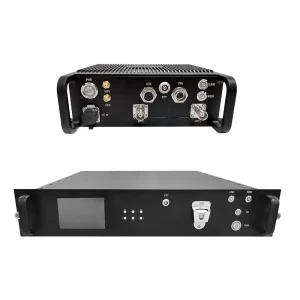
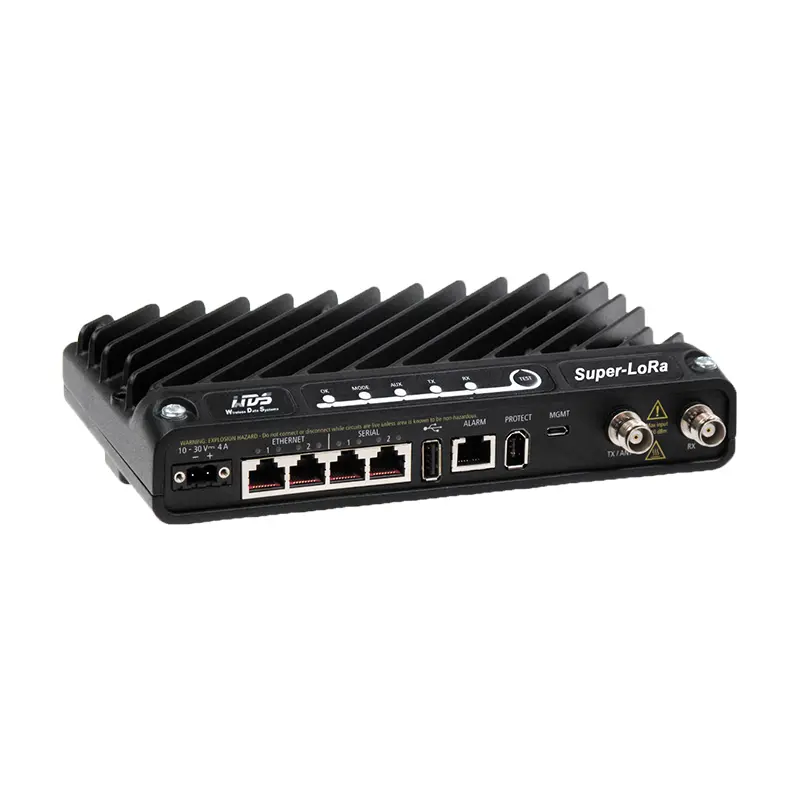
The Super-LoRa supports multiple serial and Ethernet interfaces in a single, compact form factor, and is standards-based for long term incorporation into SCADA networks while protecting the legacy investment in serial devices.
Selectable L2 Bridge or L3 Router modes, with VLAN, advanced QoS, filtering and IP header and payload compression attributes to support narrow bandwidth channels and mission critical traffic while meeting increasing security and IP network policy requirements. Advanced payload and Ethernet / IP / TCP / UDP header compression.
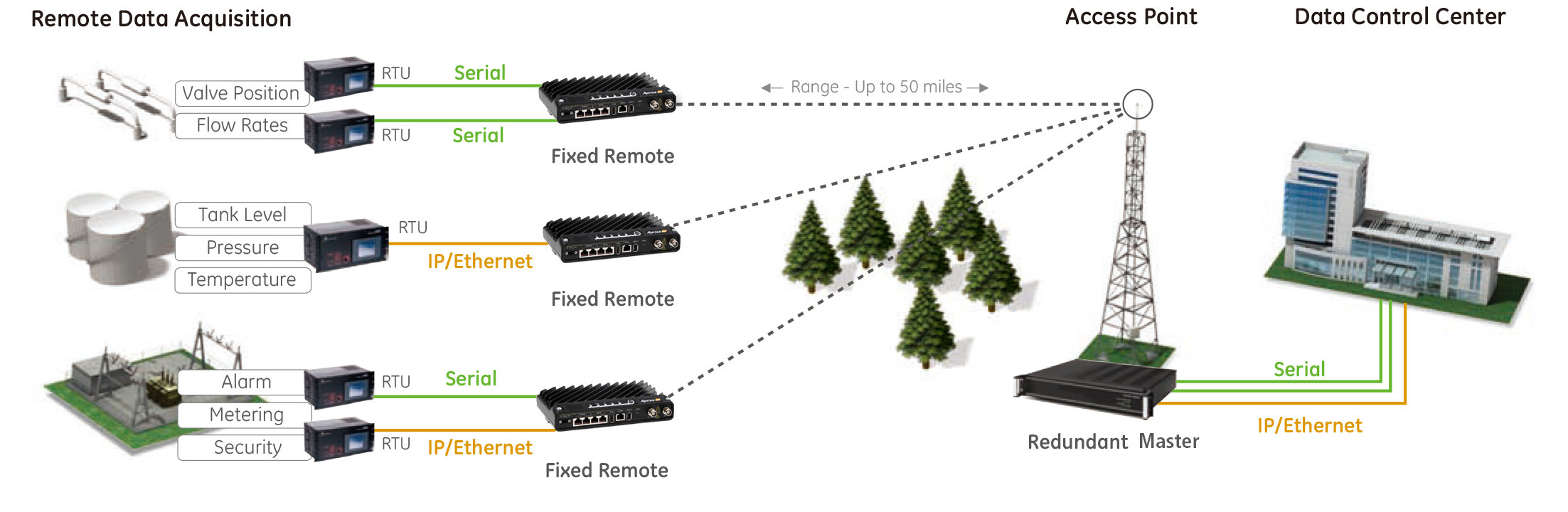
The Super-LoRa integrates into a range of network topologies, with each unit configurable as a master station, repeater or remote station; connect multiple RTUs / PLCs to a single radio.
The data interfaces can be configured for serial or Ethernet operation; a range of options are supported, including two serial and two Ethernet, one serial and three Ethernet, or four Ethernet ports. Support for NMEA GPS receiver option.
Adaptive Coding and Modulation (ACM) and forward error correction maintains the integrity of the wireless connection while an effective channel access scheme and IP routing ensures efficient transfer of data across the Super-LoRa network.
The Super-LoRa requires no manual component tuning and maintains its high-power output and performance over a wide temperature range.
An easy-to-use GUI supports local element management via HTTPS and remote element management over the air and SNMP support allows network-wide monitoring and control via a variety of supported third party network management systems.
| GENERAL | |||||||||
| NETWORK TOPOLOGY | Point-to-multipoint (PMP), Master, Remote, Repeater | ||||||||
| NETWORK INTEGRATION | Serial and Ethernet (router or bridge mode) | ||||||||
| PROTOCOLS | |||||||||
| ETHERNET | IEEE802.3, 802.1d/q/p | ||||||||
| SERIAL | Legacy RS-232 transport | ||||||||
| WIRELESS | Proprietary | ||||||||
| SCADA | Transparent to all common SCADA protocols such as Modbus, IEC 60870-5-101/104, DNP3 or similar | ||||||||
| RADIO | FREQ BAND | TUNING RANGE | TUNE STEP | ||||||
| FREQUENCY RANGE | 150 MHz | 135 – 175 MHz | 0.625 kHz | ||||||
| 230 MHz | 215 – 240 MHz | 0.625 kHz | |||||||
| 400 MHz | 400 – 470 MHz | 6.25 kHz | |||||||
| (Note 4) | 450 MHz | 450 – 520 MHz | 6.25 kHz | ||||||
| (Note 4) | 700 MHz | 757 – 758 & 787 – 788 MHz | 6.25 kHz | ||||||
| (Note 5) | 896 MHz | 896 – 902 MHz | 6.25 kHz | ||||||
| (Note 5) | 928 MHz | 928 – 960 MHz | 6.25 kHz | ||||||
| CHANNEL SIZE | 12.5kHz, 15kHz, 25kHz, 30kHz and 50kHz software selectable | ||||||||
| DUPLEX | Single frequency half-duplex, Dual frequency half-duplex, Dual frequency full-duplex | ||||||||
| FREQUENCY STABILITY | ± 0.5 ppm | ||||||||
| FREQUENCY AGING | < 1 ppm / annum | ||||||||
| TRANSMITTER | |||||||||
| MAX PEAK ENVELOPE POWER (PEP) | 10.0 W (+40 dBm) | ||||||||
| AVERAGE POWER OUTPUT |
64 QAM: 0.01–2.5W (+10 to +34dBm, in 1dB steps) 16 QAM: 0.01–3.2W (+10 to +35dBm, in 1dB steps) QPSK: 0.01–5.0W (+10 to +37dBm, in 1dB steps) 4-CPFSK: 0.01–10.0W (+10 to +40dBm, in 1dB steps) (Note 2) |
||||||||
| ADJACENT CHANNEL POWER | < –60 dBc | ||||||||
| TRANSIENT ADJACENT CHANNEL POWER | < –60 dBc | ||||||||
| SPURIOUS EMISSIONS | < –37 dBm | ||||||||
| ATTACK TIME | < 1.5 ms | ||||||||
| RELEASE TIME | < 0.5 ms | ||||||||
| DATA TURNAROUND TIME | < 2 ms | ||||||||
| EMISSION DESIGNATOR SUFFIX | QPSK G1D, QAM D1D | ||||||||
| RECEIVER | 12.5 kHz | 25 kHz | 50 kHz | ||||||
| SENSITIVITY (BER < 10-6) max coded | 64 QAM | –103 dBm | –99 dBm | –96 dBm | |||||
| max coded | 16 QAM | –110 dBm | –107 dBm | –104 dBm | |||||
| max coded | QPSK | –115 dBm | –112 dBm | –109 dBm | |||||
| max coded | 4-CPFSK | –113 dBm | –110 dBm | –107 dBm | |||||
| ADJACENT CHANNEL SELECTIVITY (Note 1) | > –47 dBm [> 48 dB] | > –37 dBm [> 58 dB] | > –37 dBm [> 58 dB] | ||||||
| CO-CHANNEL REJECTION (max coded QPSK) | > –10 dB | ||||||||
| CO-CHANNEL REJECTION (max coded 64 QAM) | > –20 dB | ||||||||
| INTERMODULATION RESPONSE REJECTION | > –35 dBm [> 60 dB Note 1] | ||||||||
| BLOCKING OR DESENSITISATION | > –17 dBm [> 78 dB Note 1] | ||||||||
| SPURIOUS RESPONSE REJECTION | > –32 dBm [> 63 dB Note 1] | ||||||||
| MODEM | 12.5 kHz (Note 3) | 15 kHz | 25 kHz | 30 kHz | 50 kHz | ||||
| BAND | 220, 400, 450 | 700, 896, 928 | 135 | 220 | 220, 400, 450, 700, 896, 928 | 135 | 135, 220, 400, 700, 896, 928 | ||
| 64 QAM | 54 kbit/s | 60 kbit/s | 54 kbit/s | 60 kbit/s | 96 kbit/s | 120 kbit/s | 96 kbit/s | 216 kbit/s | 240 kbit/s |
| 16 QAM | 36 kbit/s | 40 kbit/s | 36 kbit/s | 40 kbit/s | 64 kbit/s | 80 kbit/s | 64 kbit/s | 144 kbit/s | 160 kbit/s |
| QPSK | 18 kbit/s | 20 kbit/s | 18 kbit/s | 20 kbit/s | 32 kbit/s | 40 kbit/s | 32 kbit/s | 72 kbit/s | 80 kbit/s |
| 4-CPFSK | 9.6 kbit/s | 9.6 kbit/s | 9.6 kbit/s | 9.6 kbit/s | 19.2 kbit/s | 19.2 kbit/s | 19.2 kbit/s | 38.4 kbit/s | 38.4 kbit/s |
| OCC BW | 10.7 kHz | 12.0 kHz | 10.7 kHz | 12.0 kHz | 19.8 kHz | 24.5 kHz | 19.8 kHz | 43.0 kHz | 48.0 kHz |
| FORWARD ERROR CORRECTION | Variable Reed Solomon plus convolutional code | ||||||||
| ADAPTIVE BURST SUPPORT | Adaptive Coding and Modulation | ||||||||
| SECURITY | |||||||||
| DATA ENCRYPTION | 256, 192 or 128 bit AES | ||||||||
| DATA AUTHENTICATION | CCM | ||||||||
| INTERFACES | |||||||||
| ETHERNET | 2, 3 or 4 port RJ45 10/100Base-T switch (specified at order) | ||||||||
| SERIAL | 2, 1 or 0 port RJ45 RS-232 (specified at order); Additional RS-232/RS-485 port via USB converter (optional) | ||||||||
| MANAGEMENT | 1 x USB micro type B (device port), 1 x USB standard type A (host port), 1 x Alarm port RJ45 | ||||||||
| ANTENNA | 2 x TNC 50-ohm female; Software selectable single or dual port operation | ||||||||
| LEDs | Status: OK, MODE, AUX, TX, RX; Diagnostics: RSSI, traffic port status | ||||||||
| TEST BUTTON | Toggles LEDs between diagnostics / status | ||||||||
| PRODUCT OPTIONS | |||||||||
| DATA PORT CONFIGURATION | 2 x Ethernet ports + 2 serial ports, 3 x Ethernet ports + 1 serial port, 4 x Ethernet ports | ||||||||
| POWER OPTIMIZED | Providing optimized power and sleep mode | ||||||||
| PROTECTED STATION | Providing hot-swappable/hot-standby redundant hardware switching (13.8VDC or 48VDC) | ||||||||
| GPS RECEIVER | Support for NMEA GPS receiver with radio coordinates | ||||||||
| POWER | |||||||||
| INPUT VOLTAGE | 10 – 30VDC (13.8V nominal) | ||||||||
| RECEIVE All bands | < 3W (217mA at 13.8VDC) active; < 2W (145mA at 13.8VDC) idle; < 0.5W (36mA at 13.8VDC) sleep | ||||||||
| TRANSMIT 135 and 220 MHz | < 26W (1884mA at 13.8VDC) | ||||||||
| 400, 450, 700, 896, 928 MHz | < 28W (2028mA at 13.8VDC) | ||||||||
| MECHANICAL | |||||||||
| DIMENSIONS | 210 mm (W) x 130 mm (D) x 41.5 mm (H) / 8.27” (W) x 5.12” (D) x 1.63” (H) | ||||||||
| WEIGHT | 1.25 kg (2.81 lbs) | ||||||||
| MOUNTING | Wall, Rack or DIN rail | ||||||||
| ENVIRONMENTAL | |||||||||
| OPERATING TEMPERATURE | –40 to +70 °C (–40 to +158 °F) | ||||||||
| HUMIDITY | Maximum 95 % non-condensing | ||||||||
| MANAGEMENT & DIAGNOSTICS | |||||||||
| LOCAL ELEMENT | Web server with full control / diagnostics; Partial diagnostics via LEDs and test button; Software upgrade from PC or USB flash drive | ||||||||
| REMOTE ELEMENT | Over-the-air remote element management with control / diagnostics; Network software upgrade over-the-air | ||||||||
| NETWORK | SNMPv2 and SNMPv3 security support for integration with external network management systems | ||||||||
| COMPLIANCE | |||||||||
| RF | FCC CFR47 Part 24 / 27 / 90 / 101, IC RSS 119 / RSS 134 | ||||||||
| BAND | FCC ID: | IC: | |||||||
| 135 | UIPSQ135M150 | 6772A-SQ135M150 | |||||||
| 220 | UIPSQ215M141 | 6772A-SQ215M141 | |||||||
| 400 | UIPSQ400M1311 | 6772A-SQ400M1311 | |||||||
| 450 | UIPSQ450M140 | N/A | |||||||
| 700 | UIPSQ757M160 | N/A | |||||||
| 896 | UIPSQ896M141 | 6772A-SQ896M141 | |||||||
| 928 | UIPSQ928M141 | 6772A-SQ928M141 | |||||||
| EMC | FCC CFR47 Part 15, EN 301 489-5, ICES-003 | ||||||||
| SAFETY | EN 60950, Class 1 division 2 for hazardous locations | ||||||||
| ENVIRONMENTAL | ETS 300 019 Class 3.4, IEEE 1613 Class 2, IEC 61850-3, Ingress Protection IP51 | ||||||||
The Super-LoRa provides high-capacity data rates of up to 216 kbit/s in 50 kHz licensed channels, designed to meet the demands of data-intensive SCADA applications.
It features a defense-in-depth approach, including 128, 192, or 256-bit AES encryption, CCM data authentication, address filtering, and user access control via RADIUS to protect against vulnerabilities and malicious attacks.
It is ideal for electricity grids (distribution automation), smart grids, oil & gas (production metering), AMI/AMR high-density concentrators, renewables (wind/hydro automation), and water/wastewater systems.
It supports multiple frequency bands ranging from 135 MHz to 960 MHz, including 135–175 MHz, 215–240 MHz, 400–520 MHz, 757–788 MHz, and 896–960 MHz.
Yes, it supports multiple serial (RS-232) and Ethernet ports in a single compact form factor, with flexible configurations like 2 serial + 2 Ethernet, 1 serial + 3 Ethernet, or 4 Ethernet ports.
It features an easy-to-use HTTPS GUI for local element management, supports over-the-air remote management, and integrates with third-party network management systems via SNMPv2/v3.