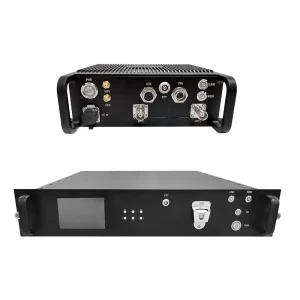
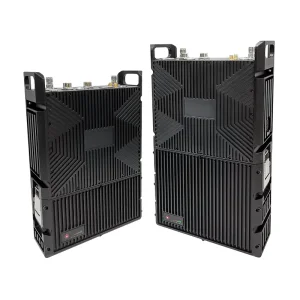
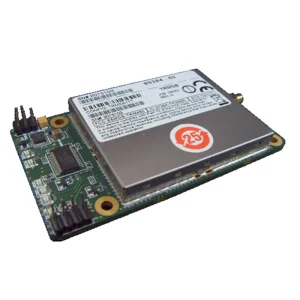
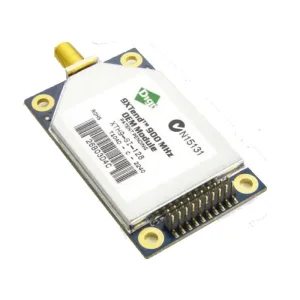
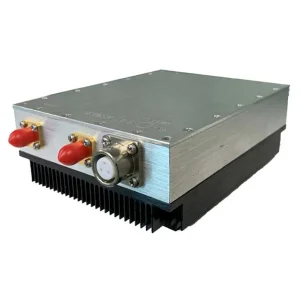
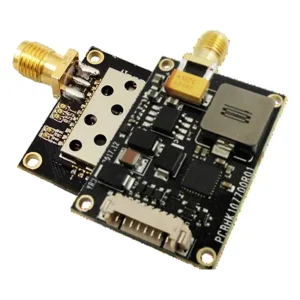
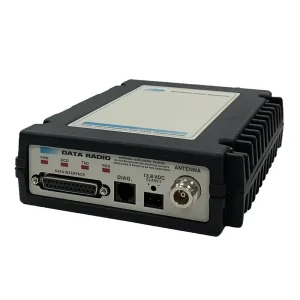
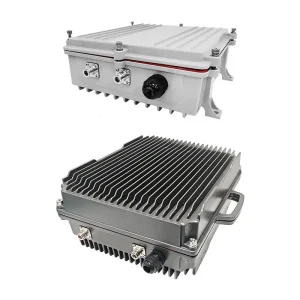
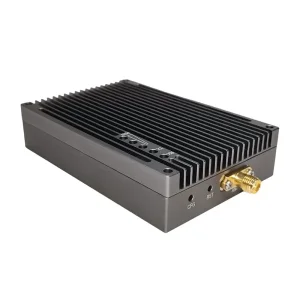
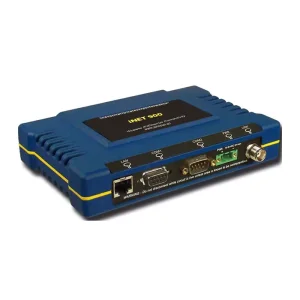
High-Quality Pmddl Series of HD Video Manufacturer & Supplier

Next-Generation Long-Range Wireless Mesh & Ultra-Low Latency High-Definition Data Links

PMDDL Wireless HD Video Technology Whitepaper

The Evolution of Point-to-Multipoint Digital Data Links in Complex, High-Interference RF Environments.

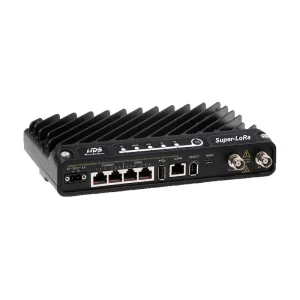
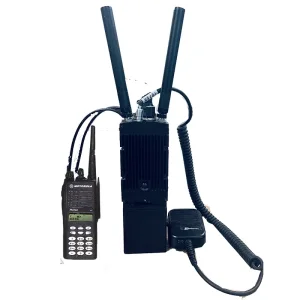
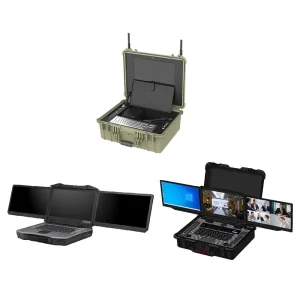
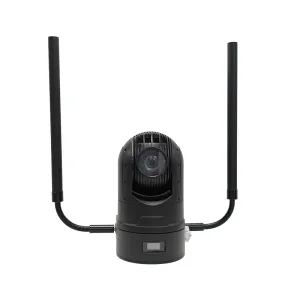
In the rapidly changing landscape of industrial automation, defense systems, and unmanned operations, the demand for secure, zero-latency, high-bandwidth transmission of high-definition video and data has scaled exponentially. At the absolute forefront of this technological breakthrough lies the Pmddl Series of HD Video Transmission Links (Point-to-Multipoint Digital Data Link). Engineered to replace traditional, highly vulnerable analog links and standard Wi-Fi setups, the Pmddl Series delivers highly secure, long-range orthogonal frequency-division multiplexing (OFDM) combined with Multiple-Input Multiple-Output (MIMO) capabilities. These specialized platforms form the backbone of modern remote telemetry, enabling mission-critical operations to stream multi-channel Full HD video and telemetry across hundreds of kilometers without degradation.

Multi-Band RF Flexibility

Operational across L-band, S-band, C-band, VHF, and UHF spectrums to adapt seamlessly to localized dynamic interference patterns and regional regulatory frameworks.

Advanced Encryption

Equipped with AES-256 bit hardware-level encryption protocols and dynamic key generation, securing wireless video arrays against eavesdropping and electronic sniffing.

Ultra-Low Latency Links

Proprietary physical-layer compression and transport engines reduce glass-to-glass latency below 30ms, facilitating real-time precise mechanical control of UAVs/UGVs.

R&D PIONEER SINCE 1996

Shenzhen Huaxiasheng Technology Co., Ltd.

Shenzhen Huaxiasheng Technology Co., Ltd. has been deeply engaged in the service industry of wireless data transmission product development, application, and network engineering since 1996. Over the past decades, the company has independently developed cutting-edge wireless data transmission equipment based on the world's leading technology in the RF industry. By tailoring technologies to the specific application characteristics of different fields, and relying on the structural research strengths of famous domestic universities and specialized institutes, we consistently deliver unprecedented performance.
At present, Huaxiasheng develops and produces highly specialized digital data transmission radios, intelligent data transmission radios, digital data modules, high-speed frequency hopping radios, industrial wireless Ethernet systems, network high-definition image transmission modules, AD-HOC/MESH self-organizing networks, GNSS/RTK wireless data links, industrial wireless remote I/O, handheld voice transceivers, and two-way RF power amplifiers. Our technologies power crucial telemetry lines in water, electricity, heating networks, oil fields, mining, robotics, and aerospace.
Shenzhen Huaxiasheng Technology Co., Ltd. Headquarters & R&D Laboratory

Global Quality Raters Benchmark

Our advanced manufacturing ecosystem in Shenzhen provides rapid engineering cycles, moving designs from layout schematics to functional prototypes in less than 7 days, backed by intensive environmental stress testing (ESS).

98.8%
First Pass Yield
28+ Yrs
RF Excellence
WHY HUAXIASHENG?

The Shenzhen Factory Efficiency Advantage

Operating from the electronics manufacturing capital of the world—Shenzhen, China—gives Huaxiasheng a profound structural cost and efficiency advantage. We run fully integrated SMT (Surface Mount Technology) assembly lines, custom CNC enclosure facilities, and high-frequency RF laboratory cleanrooms under one roof. This minimizes material logistics delays and streamlines multi-stage testing (including thermal cycling, vibration resilience, and signal-integrity verification).
By collaborating directly with specialized component suppliers, we maintain stable pipelines of chipsets and high-frequency amplifiers, insulated from global market volatility. For international enterprise clients, this translates into shorter lead times, highly scalable OEM/ODM customizations, and unparalleled price-to-performance characteristics on standard and specialized orders alike.

Empowering Mission-Critical Global Operations

Our Pmddl and MESH systems are deployed worldwide in extreme environments where reliable communication is the difference between operational success and system failure.

UAVs & Robotics

Enabling long-range control telemetry and multi-channel Full HD video streaming for unmanned aerial vehicles (drones), unmanned surface vessels (USVs), and automated ground robots across difficult terrains, dense urban settings, and maritime operations.

Industrial Automation

Integrating point-to-multipoint digital data links into oil fields, offshore wind farms, smart electrical grids, and automated petrochemical refineries to manage remote telemetry units (RTUs), PLCs, and CCTV systems seamlessly.

Emergency & Search

Providing Ad-Hoc self-healing tactical MESH networks for search and rescue operations, forest fire monitoring, earthquake response teams, and mobile field dispatch centers without relying on existing cellular networks.

Industrial Manufacturing & Quality Validation

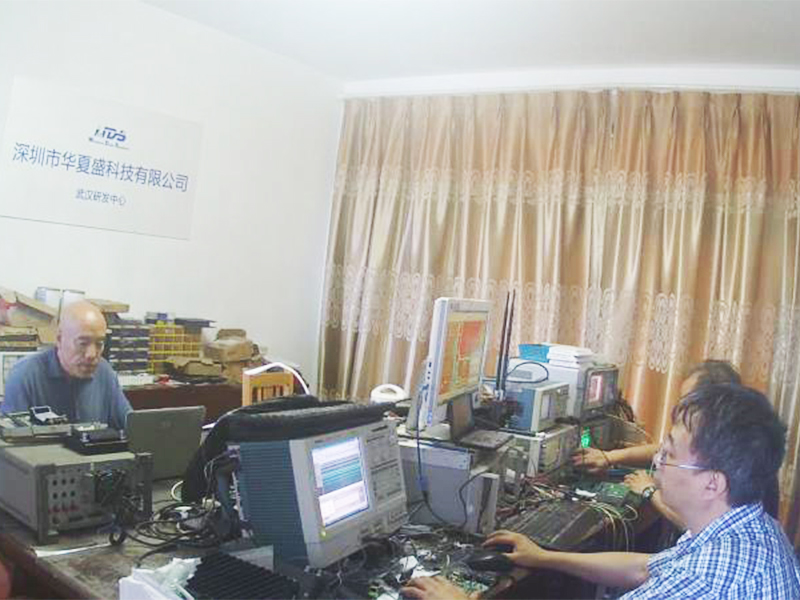
A glimpse into our manufacturing compliance, automated SMT lines, and specialized RF test chambers designed to meet international engineering benchmarks.

Navigating B2B Procurement in Wireless RF Infrastructure

Critical factors that technical procurement managers must evaluate when selecting high-bandwidth long-range wireless equipment.

For system integrators and supply-chain officers, choosing an RF vendor goes beyond simple link-budget calculations. In today's dense electromagnetic landscape, co-site interference, multi-path fading, and strict regional spectral regulations represent major challenges. High-quality systems address these by combining software-defined radio (SDR) platforms with advanced physical layers that support fast frequency hopping (FHSS).
Furthermore, modern operations demand unified links where IP-based payloads, legacy RS232/485 serial data, and digital voice communications travel over a single cohesive pipeline. Our MIMOmesh and DDLmesh series resolve these problems by using self-healing protocol stacks that constantly re-route packets based on path attenuation and signal-to-noise ratio (SNR) fluctuations. This makes them ideal for large-scale systems looking to lower maintenance overheads and eliminate single-point-of-failure architectures.

Technical Q&A: Wireless HD Video & Data Links

In-depth technical answers addressing the real-world operational challenges of wireless systems engineers, RF designers, and procurement managers.

1. What is the fundamental difference between the Pmddl Series and standard Wi-Fi systems?
Unlike standard commercial Wi-Fi (which relies on high-density Carrier Sense Multiple Access protocols that fail under high attenuation or long distances), the PMDDL (Point-to-Multipoint Digital Data Link) Series uses custom Orthogonal Frequency Division Multiplexing (OFDM) combined with high-performance physical layer custom coding. This allows it to handle heavy multi-path fading, operate in non-line-of-sight (NLOS) conditions, and cover distances over 50 kilometers, whereas standard Wi-Fi performance drops off sharply past 100 meters.
2. How does the MIMOmesh self-organizing network handle node failures in the field?
Our MIMOmesh self-organizing (Ad-Hoc) networks run on a completely decentralized protocol. Every node in the network acts as a dynamic repeater. If a single node drops out (due to physical damage or deep shadowing), the neighboring nodes automatically recalculate optimal routing paths within milliseconds. This self-healing process occurs without human intervention, ensuring uninterrupted telemetry and HD video feeds back to the central command box.
3. Can the DDLmesh series transmit both high-definition video and telemetry data simultaneously?
Yes. The DDLmesh series uses an integrated IP interface along with built-in serial ports (RS-232/RS-485). By utilizing Quality of Service (QoS) packet prioritization, the unit can transmit multi-channel digital high-definition video and critical flight telemetry or robotic control packets over a single, unified RF link.
4. What frequency bands do Huaxiasheng wireless systems support?
We provide systems that cover a wide range of frequencies, from low-frequency VHF/UHF bands (ideal for penetrating thick foliage and urban obstacles) up to high-bandwidth L-band, S-band, and C-band allocations (ranging from 300MHz to 5.8GHz). We also customize specific operating frequencies to match the legal regulations of your destination country.
5. Why are Bi-Directional RF Power Amplifiers (BiAMP) necessary in long-range projects?
Bi-Directional Amplifiers (BiAMP) are critical for boosting both the transmitted signal and the weak incoming signals received from far-off mobile nodes. By integrating high-performance Low Noise Amplifiers (LNA) and high-efficiency Power Amplifiers (PA) in a single housing, they extend your overall operational range and keep your video feeds stable under difficult RF conditions.
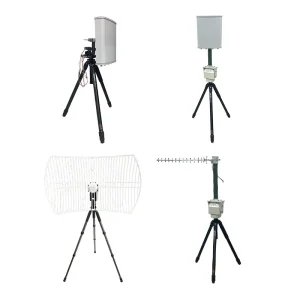
6. How does the automatic antenna tracking platform improve long-distance operations?
As a mobile unit (like a drone or surveillance boat) moves further away, a high-gain directional antenna is required to maintain high-definition video transmission. Our automatic antenna tracking platform uses real-time GPS coordinates and an active servo system to keep the ground antenna pointed directly at the target, maximizing signal strength over extreme ranges.
7. What is the typical latency of a Pmddl Series HD video transmission system?
Our hardware-based video compression and dynamic RF packet assembly keep latency extremely low. For the Pmddl Series, the end-to-end (glass-to-glass) latency is typically under 30-50 milliseconds. This is essential for pilots and remote operators controlling unmanned vehicles at high speeds.
8. Are your products compliant with industrial environments?
Absolutely. All industrial-grade radios and MESH modules are housed in rugged, CNC-milled aluminum casings rated for high vibration, wide temperature variations (-40°C to +85°C), and harsh weather conditions. This makes them ideal for mining, smart grids, oil fields, and marine applications.
9. How do your frequency-hopping digital radios handle RF jamming?
Our FGR2 and NANO digital radios use Fast Frequency Hopping Spread Spectrum (FHSS) algorithms. By shifting frequencies hundreds of times per second across a wide band, they easily avoid localized narrow-band interference and jamming, keeping your data transmission link reliable.
10. Can I order fully customized OEM/ODM wireless modules?
Yes. With our in-house R&D team and flexible SMT manufacturing lines in Shenzhen, we can customize board form factors, output power levels, specialized frequency ranges, and connector layouts to fit your system's exact physical and technical requirements.