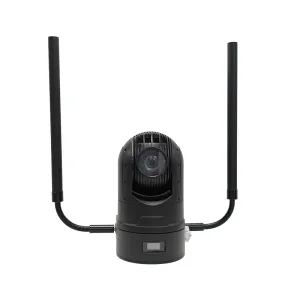
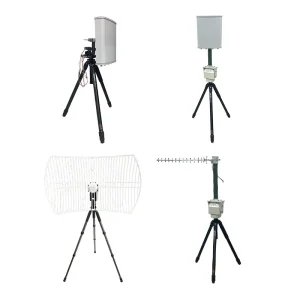
High-Quality Wireless RF Solutions

Pmddl Series Of Data Links Supplier & Factory

Industry-leading Point-to-Multipoint Digital Data Link (PMDDL) & MESH infrastructure. Delivering high-throughput, military-grade anti-interference, and ultra-long-range communication capabilities for modern global operations.

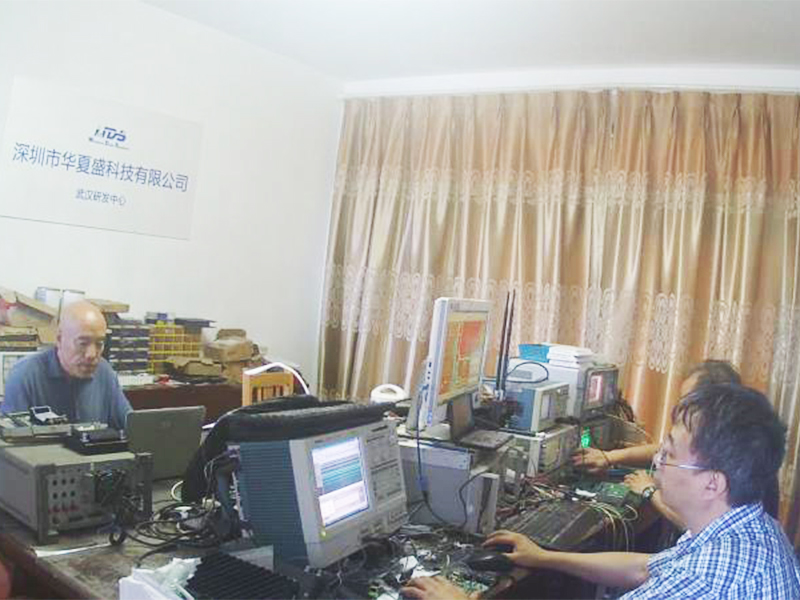
Shenzhen Huaxiasheng Technology: The Pinnacle of RF Innovation

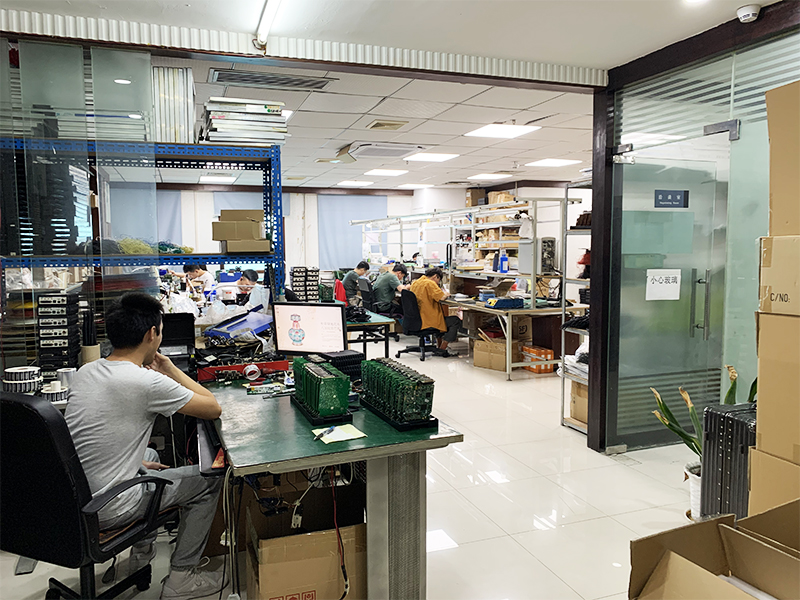
Established in 1996, Shenzhen Huaxiasheng Technology Co., Ltd. has stood at the absolute forefront of wireless communication and telemetry hardware systems. Our nearly three decades of domain expertise enable us to design, engineer, and manufacture systems that form the backbone of modern automation networks, remote telemetry, and tactical multi-node topologies.

"We integrate fundamental electro-physical research with field-tested applications to formulate robust systems for the oil & gas, infrastructure monitoring, surveying, and unmanned vehicle industries. Driven by strategic collaborations with domestic universities and national research institutions, our systems represent peerless reliability."

Our core mission revolves around solving the most daunting RF challenges: Non-Line-Of-Sight (NLOS) penetration, signal degradation under extreme electromagnetic interference, and massive data throughput across dozens of kilometers. From low-power long-range LoRa links to high-frequency military-grade hopping mechanisms, we serve as the premier OEM/ODM manufacturer for high-reliability data link integrations.
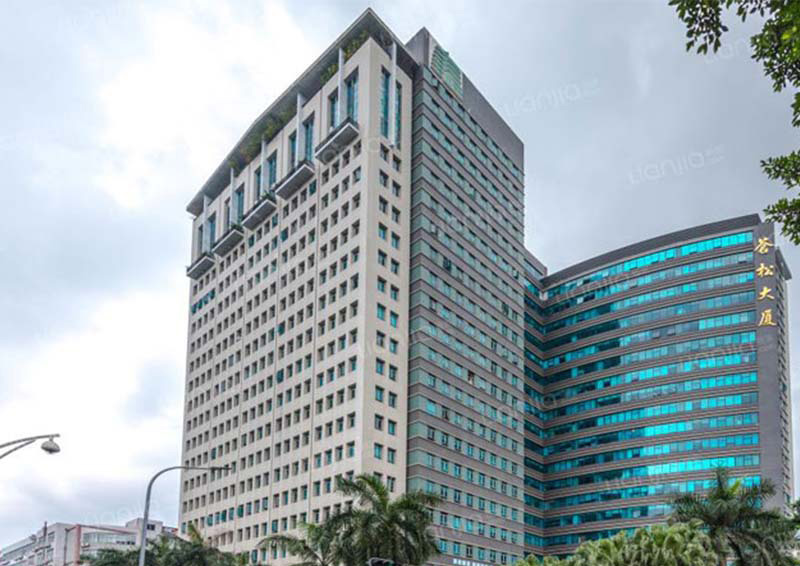
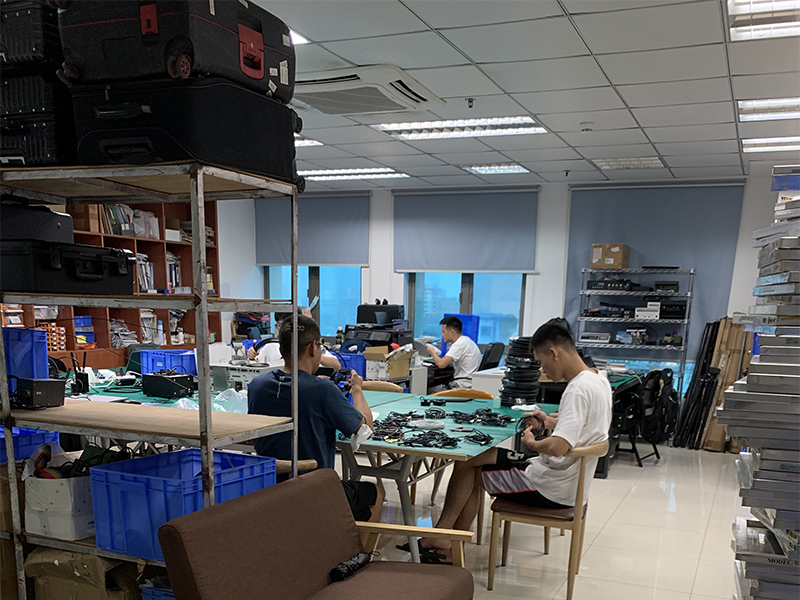
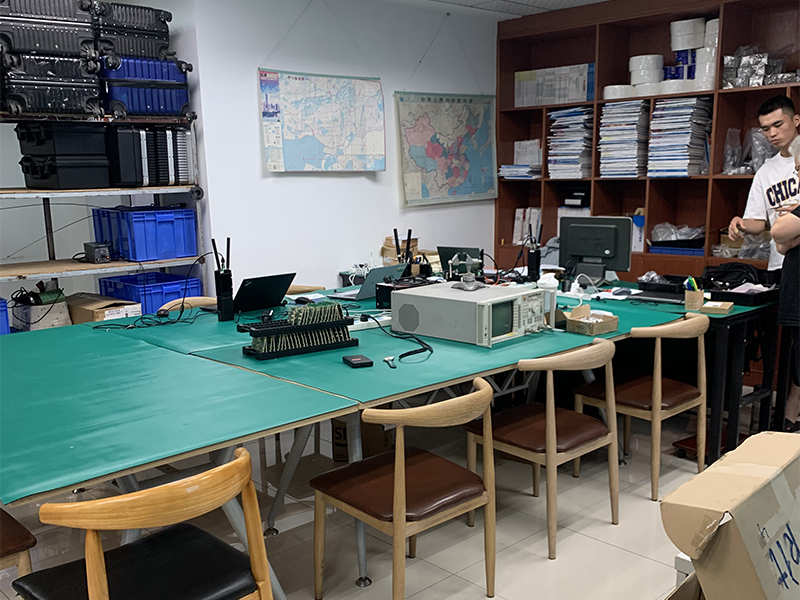
Shenzhen Huaxiasheng Technology Research Lab
1996
Established Year
28+
Years of R&D Excellence
50km+
Max Telemetry Range
<30ms
Ultra-Low latency latency

Advanced Producers

We are recognized as a premier communication equipment product development and production provider in the MESH self-organizing network industry. Our multi-frequency systems boast leading throughput velocities and unparalleled anti-jamming characteristics.

Full Lifecycle Service

We provide full pre-sales application consultation and technical post-sales engineering support. By utilizing comprehensive path analysis tools, we guarantee stable operational deployments regardless of environmental constraints.

Unyielding Innovation

By constantly researching high-speed digital modules, active bidirectional amplifiers, and dynamic antenna tracking servo mechanisms, we furnish active industrial networks with advanced communication infrastructure.

Global Commercial & Industrial Landscape of PMDDL Systems

As unmanned robotics, remote physical infrastructure tracking, and ad-hoc networks expand globally, Point-to-Multipoint Digital Data Links (PMDDL) have become the default engineering standard.

Global Commercial Status

The current landscape for ultra-long-range digital telemetry is defined by massive automation requirements across all seven continents. Industries are rapidly shifting away from legacy analog radio systems towards software-defined high-rate data transceivers.

PMDDL series links represent a fundamental building block in these networks due to their asymmetrical communications capabilities. Our systems allow multiple remote terminal units (RTUs) or mobile nodes (e.g., aerial survey drones, subsea probes, utility sensors) to pipe ultra-high-definition video and command sequences back to central control systems in real-time, operating across complex frequency allocations globally.

Macro Industrial Trends

  • COFDM Integration: Transitioning towards Coded Orthogonal Frequency Division Multiplexing to completely nullify multipath fading in marine and mountainous areas.
  • Dynamic Bandwidth Negotiation: Systems that automatically adjust modulation depths (QPSK to 64QAM) based on real-time noise-floor metrics.
  • Cognitive Anti-Jamming: Frequency-hopping rates exceeding several thousand hops per second (FHSS) to remain virtually immune to commercial and deliberate signal jamming.
  • Low Latency Video Streaming: Standardizing on H.265/AV1 onboard processing to stream multi-channel 1080P HD footage with latencies below 30 milliseconds.

Technical Roadmap & Future Architectural Developments

Our engineering roadmap details how Shenzhen Huaxiasheng Technology intends to leverage dynamic software-defined topologies to lead the industrial RF market into 2030.

Phase 1: Dynamic Cognitive Radios (Current - 2026)

Development and deep implementation of AI-driven cognitive radio spectrum allocation. The PMDDL systems continuously map the local electromagnetic field, automatically shifting operation bands dynamically without dropping data packets or introducing phase distortions. Fully integrated with MIMO architectures for enhanced multipath performance.

Phase 2: Hybrid Satellite-Terrestrial Mesh Routing (2027 - 2028)

Bridging terrestrial MIMOmesh systems with low-Earth-orbit (LEO) satellite data channels. Standardizing hardware topologies to seamlessly switch between local multi-hop ad-hoc networks and satellite arrays, enabling infinite transmission envelopes for high-reliability asset tracking.

Phase 3: Quantum-Resistant Encrypted Handshakes (2029 - 2030)

Upgrading military-grade AES-256 platforms with quantum-resistant key exchange algorithms directly on the physical layer. This will guarantee absolute data security across high-altitude airborne nodes and critical industrial SCADA networks.

Localized Real-World Applications & Macro-Industry Solutions

Our digital data link configurations are deployed across the globe to solve extreme local terrain and architectural challenges.

Topographical & Climate Adaptation

Each geography presents specific thermodynamic, moisture, and reflective hurdles:
  • Alpine & Mountainous Depressions: Using low-frequency hopping channels (VHF/UHF bands) combined with high-gain bidirectional amplifiers to overcome deep shadow zones and terrain obstructions.
  • Marine Offshore Pipelines: Deploying COFDM long-distance video transceivers with auto-tracking servo antenna systems to neutralize the extreme multipath reflection caused by the flat sea surface.
  • Dense Megacities (Urban Canyons): Utilizing wide-band MIMO mesh handpieces to create dynamic ad-hoc relays, bypassing steel-and-concrete NLOS blockages easily.

Key Industry Implementations

  • Unmanned Aerial Systems (UAVs): Dual-antenna tracking platforms allowing telemetry streaming over 100km distances.
  • Oil, Gas & Hydropower: Real-time RTU telemetry monitoring networks over pipeline spans crossing rugged wildlands.
  • Geodetic Surveying & Mapping: Ultra-precise high-speed GNSS/RTK wireless links providing centimeter-level horizontal positioning in real-time.
  • Emergency Services & First Responders: Tactical self-healing body-pack and handpiece MESH networks that coordinate voice and video streaming where cell towers are down.

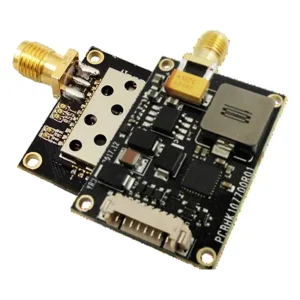
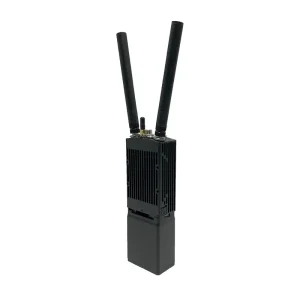
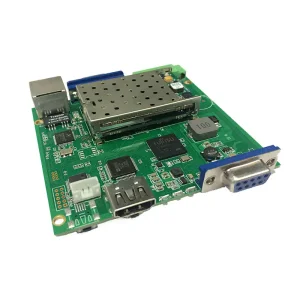
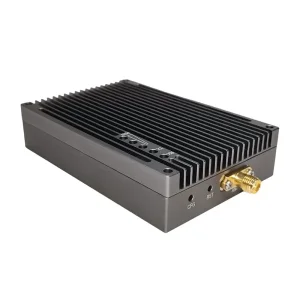
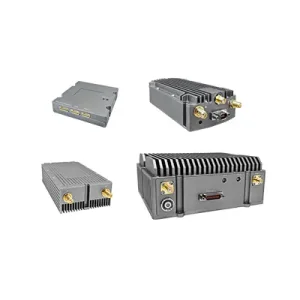
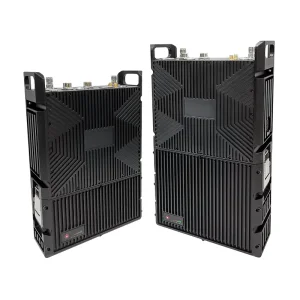
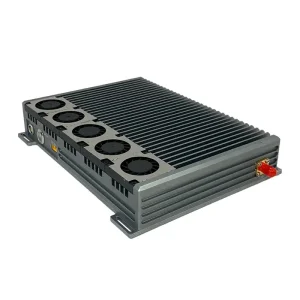
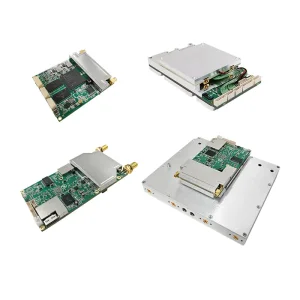
Advanced System Assemblies and Modules

Technical Q&A: Understanding Advanced PMDDL & MESH Architectures

Our senior design engineers tackle core questions about deployment, physical limits, and optimization strategies.

What major advantages does PMDDL architecture hold over standard Point-to-Point (P2P) systems?
PMDDL allows a central base station node to simultaneously communicate with, command, and stream high-bandwidth telemetry from up to hundreds of remote terminals. This asymmetry avoids the need to run duplicate, parallel transmission infrastructure. The dynamic scheduler assigns discrete time or frequency slots (TDMA/FDMA) ensuring zero collisions and highly optimized aggregate spectral throughput.
How does MIMOmesh technology bypass multi-path interference in deep marine operations?
Multi-path propagation occurs when reflections of radio signals bounce off sea surfaces, arriving at the receiver out of phase and causing cancellation. MIMO (Multiple-Input Multiple-Output) uses spatially diverse antennas to process multiple copies of the incoming signal. By combining these signals using algorithms like Maximal-Ratio Combining (MRC), the system turns reflections into gain, increasing signal robustness rather than degrading it.
What is the latency penalty on HD video codec integrations for unmanned robotics?
Our custom low-latency video codec boards feature optimized H.264/H.265 compression pipelines coupled with direct physical-layer stream injection. The end-to-end latency—from camera sensor image capture to display at the Ground Control Station (GCS)—is kept under 30 milliseconds. This ultra-fast response is critical for real-time manual control of rapid UAVs, terrestrial UGVs, and unmanned surface watercraft.
Can these systems adapt to non-standard, custom frequency spectra required by special operations?
Yes. Since our systems utilize Software-Defined Radio (SDR) platforms, our engineering team can calibrate and program custom transceivers to operate across a broad range of frequencies from 300MHz to 6GHz (including standard VHF, UHF, L-band, S-band, C-band, and ISM bands). This enables rapid alignment with local regional regulatory environments.