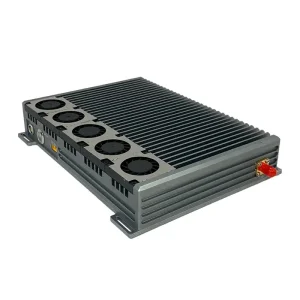
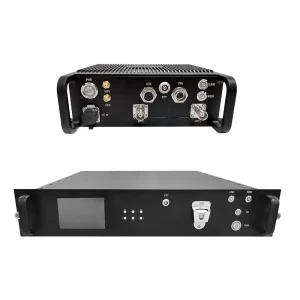
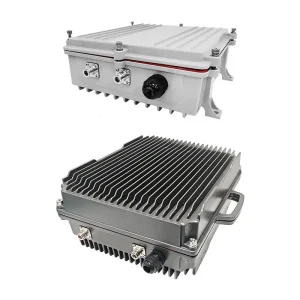
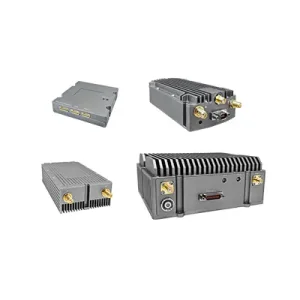
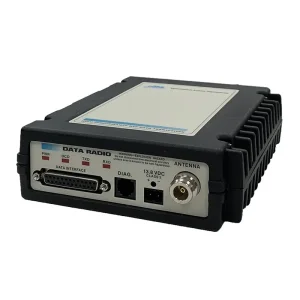
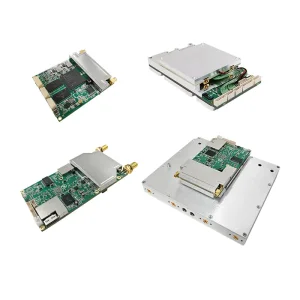
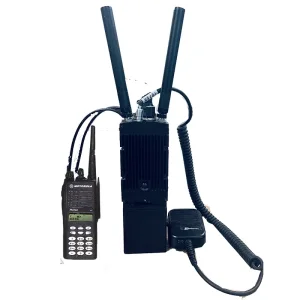
In the rapidly evolving landscape of Industrial IoT and mission-critical communications, the convergence of MANET (Mobile Ad-hoc Network) and MIMO (Multiple-Input Multiple-Output) technologies has emerged as the definitive solution for high-reliability, low-latency connectivity. Unlike traditional cellular networks that rely on static base stations, MANET+MIMO systems form dynamic, self-healing networks that adapt to the physical environment in real-time.
As a seasoned growth director observing the shift in global industrial demand, I have witnessed a massive migration toward private, localized mesh networks. Enterprises are moving away from dependency on public infrastructure, seeking sovereignty over their data transmission. This whitepaper analyzes why the Chinese manufacturing ecosystem—specifically firms like Shenzhen Huaxiasheng Technology—has become the global authority in deploying these sophisticated systems.
The Shenzhen-based supply chain ecosystem allows for unmatched speed in hardware iteration. Unlike global competitors who are often bogged down by corporate bureaucracy, Chinese factories integrate R&D directly with production lines, enabling custom modifications for specific frequency bands or protocol requirements within weeks, not months.
By controlling the entire lifecycle—from RF module design to firmware development and ruggedized housing production—Chinese manufacturers maintain strict quality control. This vertical integration is critical for E-E-A-T (Experience, Expertise, Authoritativeness, Trustworthiness) compliance, ensuring that every link in the chain is optimized for high-throughput, low-latency transmission.
Leveraging massive scale in component procurement and advanced PCB manufacturing, these factories provide enterprise-grade performance at a fraction of the cost found in Western counterparts, without compromising the rugged durability required for field deployment.
The true power of modern data links lies in the fusion of technologies. MANET provides the network topology resilience; if one node in the mesh is damaged or goes out of range, the network automatically re-routes traffic through other available nodes. When you add MIMO antenna technology to this foundation, you unlock spatial multiplexing.
This allows multiple data streams to be transmitted simultaneously over the same frequency channel. The result? Enhanced spectral efficiency that is non-negotiable for high-definition video transmission in drone swarms, autonomous vehicular fleets, and public safety command centers. Understanding this technical hierarchy is essential for any CTO or procurement manager looking to future-proof their infrastructure.
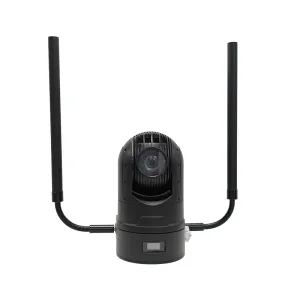
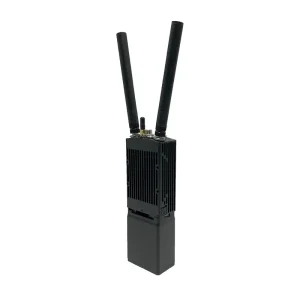
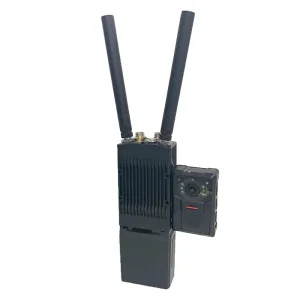
Long-range, non-line-of-sight (NLOS) communication is enabled by our specialized DDLmesh series, essential for coordinated aerial operations in search and rescue or inspection missions.
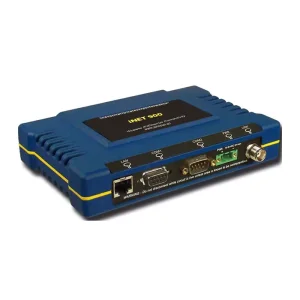
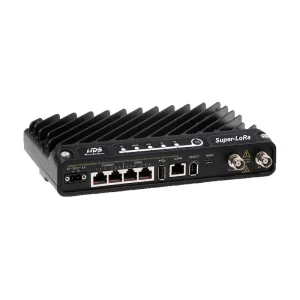
Automating production lines require robust data links. Our COFDM and MIMOmesh series ensure that factory control automation and industrial wireless Ethernet operate without jitter or packet loss.
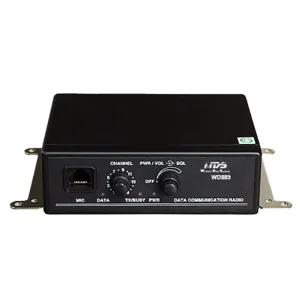
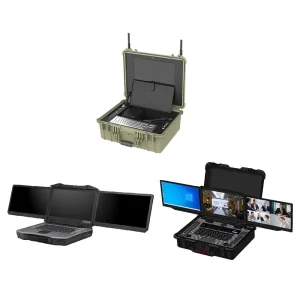
Our portable command boxes and inter-operable intercom radios serve as the "nerve center" in emergency response, where reliable communication is the difference between success and failure.
Established in 1996, Huaxiasheng Technology represents the pinnacle of wireless communication expertise. With decades of dedicated research into wireless data transmission, the company acts as both an innovative factory and a technical partner.
Our philosophy is grounded in active pioneering and innovation. We do not just sell radios; we provide comprehensive solutions for oil/gas fields, public utility networks, transportation, and autonomous control systems. By bridging the gap between theoretical physics in signal transmission and real-world industrial environments, we ensure our clients receive equipment that is not only high-performing but operationally reliable.
Procuring custom MANET+MIMO solutions is a strategic decision. As you navigate the global supply chain, prioritize these three factors:
MANET allows for dynamic, self-healing network architecture that does not require a central master node, while MIMO increases throughput capacity significantly by using multiple antennas. Combined, they create a robust, high-speed, self-organizing network suitable for mission-critical apps.
Yes. Our core competence is custom engineering. Whether you need specialized frequency hopping for government use, specific serial port configurations for SCADA, or compact sizes for drones, we adapt our modules to your requirements.
We implement multi-layered encryption protocols at the hardware and transmission levels, ensuring that data packets remain secure and authenticated even in hostile radio environments.
 Sinosun Tech