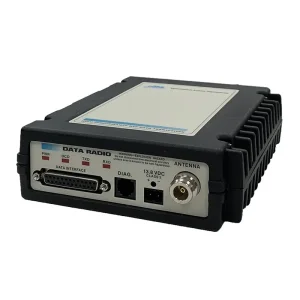
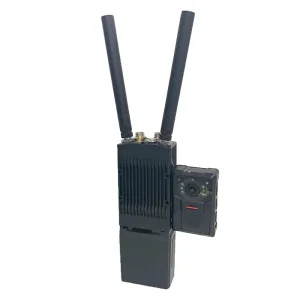
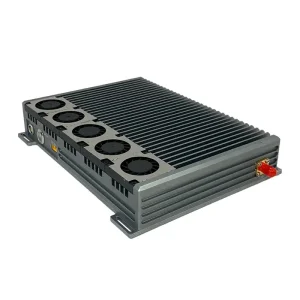
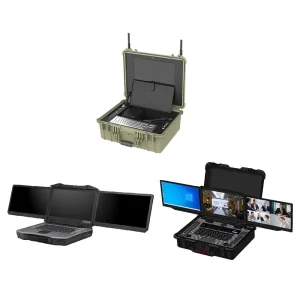
Explore the industry's most versatile, low-latency, and high-bandwidth transceiver systems optimized for mission-critical robotics, unmanned systems, and SCADA applications.
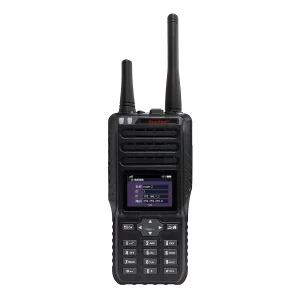
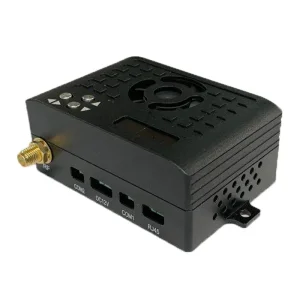
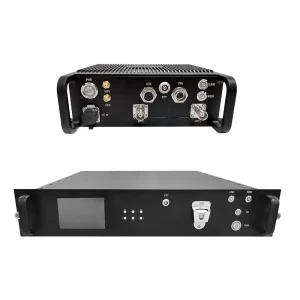
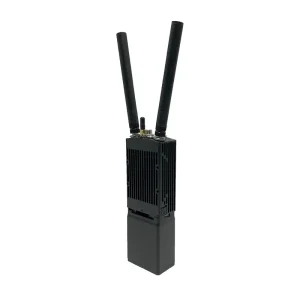
Engaging in premium RF and network engineering development since 1996.
Shenzhen Huaxiasheng Technology Co., Ltd. has been engaged in the service industry of wireless data transmission product development, application, and network engineering since 1996. Over the past decades, the company has independently developed cutting-edge wireless data transmission equipment based on the world's leading technology in the radio frequency propagation industry.
By designing customized systems aligned to the strict demands of different fields and relying heavily on the advanced scientific capabilities of famous domestic universities and prestigious research institutes, we have established ourselves as an industry leader in specialized long-range link engineering. Our industrial grade modules are designed for resilience under harsh environmental conditions, integrating robust anti-interference algorithms, adaptive power schemes, and deep military-grade encryption formats.
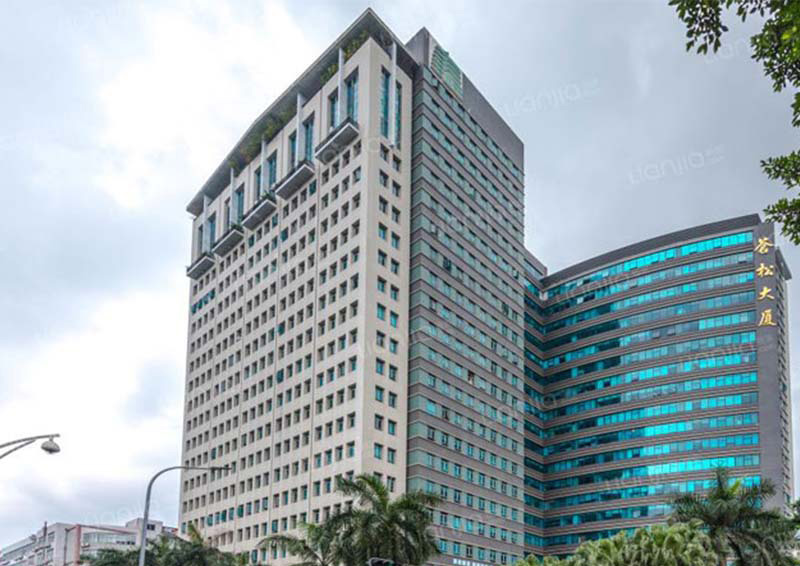
We stand as a premier communications equipment manufacturer in the MESH self-organizing network industry. Our portfolio boasts rich product variety, long-distance performance, high transmission rates, and class-leading anti-interference architectures.
Beyond our engineering advantages, we provide global pre-sales and technical field service engineering (FAE) support. We are dedicated to ensuring clients integrate and deploy links with absolute efficiency, safety, and reliability.
Our guiding light is pioneering technology coupled with reasonable economics. We push wireless bounds to supply highly advanced, reliable digital transmission radios and modules tailored to process automation and robot kinetics.
The industrial telemetry landscape is undergoing a monumental paradigm shift. Legacy narrowband systems are quickly being phased out by broad-spectrum Software Defined Radios (SDR) capable of dynamically adjusting frequency, modulation scheme, and transmit power in real time. Modern operations demand bidirectional, high-throughput pipelines that can simultaneously carry HD video, telemetric feedback, and differential GNSS correction data.
As industrial autonomy accelerates across deep mining, offshore wind farming, and drone logistics, digital data links have evolved from static point-to-point systems to dynamic self-healing mesh networks. The following key market trends are defining the future of digital link deployment:
“The fundamental limitation of modern telemetry is no longer power output, but spectral efficiency and propagation resilience in highly dense, noisy industrial environments.” — Shenzhen Huaxiasheng Engineering Directorate
Choosing the right wireless digital data link architecture is crucial to achieving optimal balance between payload capacity, latency budget, and line-of-sight range. The matrix below outlines how our different product series serve specific mission profiles.
| Data Link Family | Core RF Technology | Ideal Range Profile | Latency Spec | Key Applications | Key Strengths |
|---|---|---|---|---|---|
| BEAMmesh & MIMOmesh | MIMO Broadband MANET | 10 - 50 km (LOS) | < 30 ms | Tactical Team Comm, UAV Swarms | Self-healing, multi-hop routing |
| pMDDL Series | COFDM / TDD Broadband | 5 - 30 km (NLOS) | < 15 ms | HD Video Uplink, Robotics | High throughput in cluttered environments |
| FGR2 & NANO Series | FHSS (Frequency Hopping) | Up to 100 km (with high gain) | < 10 ms | Long-range Industrial SCADA | Ultra-resilient to interference & jamming |
| LoRaData Series | LoRa Chirp Spread Spectrum | 15 - 40 km | < 150 ms | Sensor telemetry, IoT nodes | Ultra-low power consumption |
| SCADA Series | Narrowband FSK / GMSK | 20 - 70 km | < 50 ms | Water, Gas, Oil Pipelines | Stable, licensed band capability |
Procurement directors and Chief Technology Officers at global defense, robotics, and industrial engineering firms evaluate OEM/ODM partners based on complex key performance metrics. Selecting a manufacturer goes beyond examining raw power output; it involves evaluating the lifecycle stability and integration ecosystem of the products.
Global operations mean adapting to regional spectral regulations. Standard commercial bands (e.g., 2.4GHz, 5.8GHz) are often saturated. We provide customization for specialized military and industrial bands, including 300MHz to 2.5GHz, ensuring clean channels and reduced path loss in dense foliage or industrial structures.
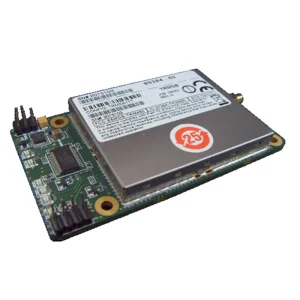
In modern UAV (Unmanned Aerial Vehicle) and UGV (Unmanned Ground Vehicle) systems, every gram and milliwatt counts. Our OEM module formats, such as the FGR2(MM2) & NANO Series, are designed to fit the smallest avionics bays while maintaining superior thermal efficiency to prevent thermal throttling during high-duty-cycle operations.
Wireless channels are vulnerable to interception and spoofing. Our link series utilizes hardware-based encryption including AES-128 and AES-256 protocols directly integrated at the FPGA/chip level. This ensures secure transport of critical SCADA codes and high-definition surveillance feeds.
Shenzhen Huaxiasheng Technology Co., Ltd. products are widely used in oil/gas, water/electricity, power/heating network/gas/railway/transportation, street lights/earthquake/meteorology/environmental protection, GPS data acquisition control and mapping, finance, metallurgy/chemical industry and industrial process control automation, industrial wireless Ethernet, long-distance video transmission, multi-channel wireless data link for drone/unmanned ship/unmanned vehicle and robot control.
Providing long-range telemetry to pipelines and substations. Our high-stability transceivers allow remote monitoring over hundreds of miles of terrain with low maintenance overhead and extreme MTBF ratings.
Delivering synchronized control commands and low-latency HD video feeds. The MESH and MIMO capabilities enable multiple unmanned vehicles to collaborate seamlessly during search and rescue or mapping missions.
Transmitting RTK correction data with sub-centimeter accuracy. Our low-power, high-reliability modules operate continuously in harsh, dust-filled agricultural fields without packet loss.
Operating globally requires strict adherence to regulatory standards. Shenzhen Huaxiasheng Technology Co., Ltd. builds hardware to comply with local certifications, including FCC, CE, RoHS, and SRRC.
We recognize that hardware integration is only half the battle. Our global support framework provides FAE (Field Application Engineering) consultants who can assist with antenna placement simulations, link budget calculations, and frequency clearance procedures.
As we look toward the next decade of RF engineering, our development pipeline is focused on bridging local RF links with cloud intelligence. Our research team, in partnership with leading scientific institutions, is focusing on:
Find answers to common questions about deployment, antenna alignment, protocol selection, and customization of our wireless systems.
Standard Wi-Fi networks rely on a centralized access point; if the AP fails or a node moves out of range, the link drops. A MANET (Mobile Ad-Hoc Network) MESH network operates without a central coordinator. Every handheld, vehicle, or OEM module acts as a smart router, dynamically rerouting data through the most efficient path. If one node drops, the network self-heals in milliseconds, maintaining connectivity.
COFDM splits a high-speed data stream across hundreds or thousands of closely spaced orthogonal sub-carriers. By utilizing guard intervals and advanced forward error correction (FEC) codes, COFDM exploits multipath propagation. Instead of being degraded by reflections from concrete structures and metallic objects, it recombines these reflections to construct a strong, stable signal.
We support standard license-free bands (433MHz, 902-928MHz, 2.4GHz, 5.8GHz) as well as custom bands for public safety, government, and scientific use (ranging from 300MHz up to 6.0GHz). We offer customized frequency allocations at the factory level to match your local regulatory requirements.
Our high-quality data links utilize hardware-accelerated encryption engines directly embedded in the RF processing core. We support AES-128 and AES-256 encryption. In addition, technologies like FHSS add a physical layer of security by rapidly shifting frequencies up to hundreds of times per second in a pseudo-random pattern.
We provide full circuit board layout design, interface customizations (such as TTL, RS232, RS485, USB, Ethernet, and CAN-bus), and software API integrations. Our FAE teams provide support from initial desktop link simulation to field testing and certification support.
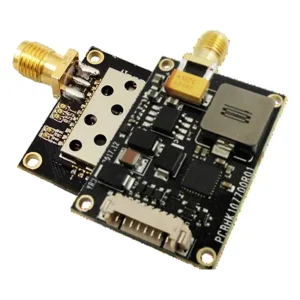
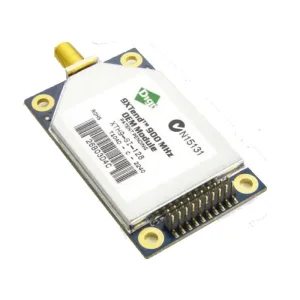
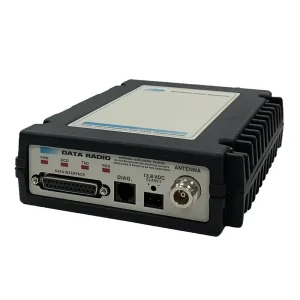
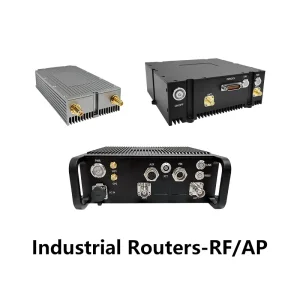
Discover our specialized modules, backpack-mounted command transmitters, and frequency-hopping modules engineered for high integration and heavy industrial application environments.
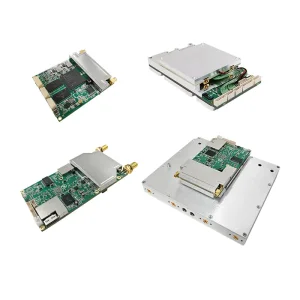
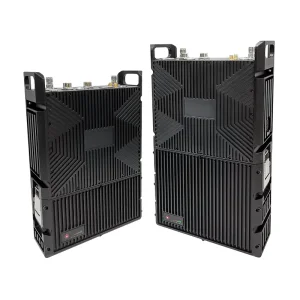
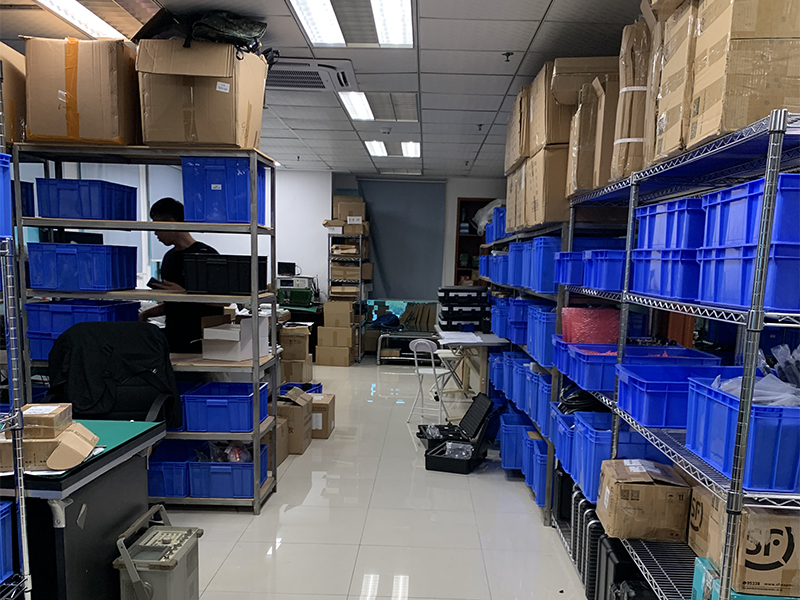
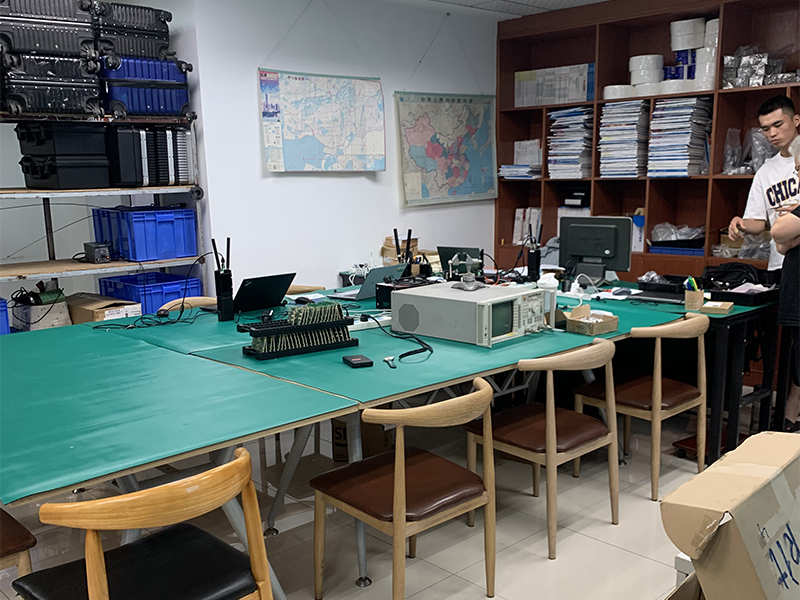
Quality and performance validated under demanding conditions, supported by rigorous laboratory verification and field testing.
 Sinosun Tech