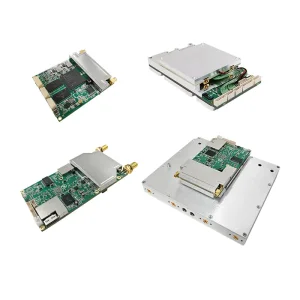
High-Quality Vehicle Mounted Wireless Digital Data Link Manufacturer & Supplier

Next-Generation Dynamic MESH Ad-Hoc & COFDM Telemetry Systems Engineered for Mission-Critical Vehicle Automation, Autonomous Mining Fleets, Defense UGVs, and Industrial IoT Applications.

Industrial Grade MIL-STD-810G 28+ Years RF R&D Mastery Sub-10ms Ultra-Low Latency
28+
Years RF Engineering Experience
>50 km
Line-of-Sight (LOS) Range
< 8 ms
Ultra-Low Data Latency
IP67/MIL
Ruggedized Vehicle Chassis

1. Comprehensive Whitepaper: Vehicle-Mounted Wireless Digital Data Links in Modern Telemetry

In contemporary industrial, defense, and autonomous mobility ecosystems, the demand for robust, un-interrupted, high-throughput communication links has reached an unprecedented peak. A Vehicle Mounted Wireless Digital Data Link acts as the central neurological pathway for unmanned ground vehicles (UGVs), mining haul trucks, emergency response command units, autonomous agricultural machinery, and mobile robotic swarms. Modern dynamic operational environments require data links that transcend standard cellular networks or legacy point-to-point analog telemetry by offering self-healing mesh topology, dynamic spectrum hopping, low latency, and resilience against aggressive RF multipath reflections.

Core Technological Paradigms: COFDM & MIMO MESH

Unlike traditional static radio communications, vehicle-mounted systems experience severe channel fading, fast Rayleigh fading, and Doppler frequency shifts caused by rapid vehicle motion relative to obstacles and surrounding structures. To guarantee zero data loss, high-end vehicle digital data links utilize advanced signal processing algorithms:

  • Coded Orthogonal Frequency Division Multiplexing (COFDM): Splitting high-rate data streams across hundreds of closely spaced orthogonal sub-carriers. COFDM mitigates Inter-Symbol Interference (ISI) caused by Non-Line-of-Sight (NLOS) reflections in complex terrain such as open-pit mines, urban canyons, and heavy industrial plants.
  • MIMO Multi-Antenna Spatial Multiplexing: Dual-transmit and dual-receive (2T2R) or quad-receive architectures leveraging spatial diversity to double throughput while enhancing link margin without requiring additional RF power.
  • Frequency Hopping Spread Spectrum (FHSS): Dynamic hopping rates (>1,000 hops/sec) across designated frequency spectrum bands (VHF, UHF, L-band, S-band, C-band) ensuring immunity against narrow-band RF jamming and co-channel interference.
  • Ad-Hoc MESH Self-Forming & Self-Healing Routing: Decoupling mobile nodes from fixed infrastructure. Every vehicle node acts as a intelligent repeater, dynamically rerouting data packets through optimal peer-to-peer paths in sub-milliseconds if a primary node suffers blockage.

2. Comparative Engineering Architecture Matrix

A rigorous architectural comparison of modern vehicle digital data link parameters engineered by Shenzhen Huaxiasheng Technology Co., Ltd. against standard market solutions.

Parameter Specifications Industrial MESH Data Links (pMDDL/MIMOmesh) High-Speed FHSS (FGR2/NANO Series) Standard Commercial Cellular/Wi-Fi
Operating Frequency Bands 300 MHz – 5.8 GHz Custom Bandwidth 902–928 MHz / 2.4 GHz ISM Licensed LTE / 5.8 GHz Static
Network Topology Decentralized Ad-Hoc MESH (No Master Node) Point-to-Point / Multi-Point FHSS Infrastructure-dependent Base Station
Data Latency (End-to-End) < 8 ms (Ultra-Low Packet Delay) < 15 ms Dedicated Serial Link 40 ms – 150 ms (Cellular Dependent)
Throughput Capacity Up to 80 Mbps Real-Time Bidirectional Up to 384 kbps Telemetry Data Variable (Shared Cell Bandwidth)
Doppler Compensation Speed Up to 350 km/h High Mobility Up to 120 km/h Vehicle Mobility Low Mobility Optimization
Encryption & Data Security AES-128 / AES-256 Hardware Encryption 128-bit FHSS Keying Algorithm Standard Software TLS/SSL
Environmental Ruggedness IP67 Enclosure, Vibration MIL-STD-810G Industrial Grade -40°C to +85°C Standard Commercial Plastic IP54

3. Strategic Advantages of China's RF Engineering & Manufacturing Ecosystem

Why Tier-1 system integrators choose Shenzhen Huaxiasheng Technology Co., Ltd. for custom vehicle wireless data links.

Complete Hardware Value Chain Integration
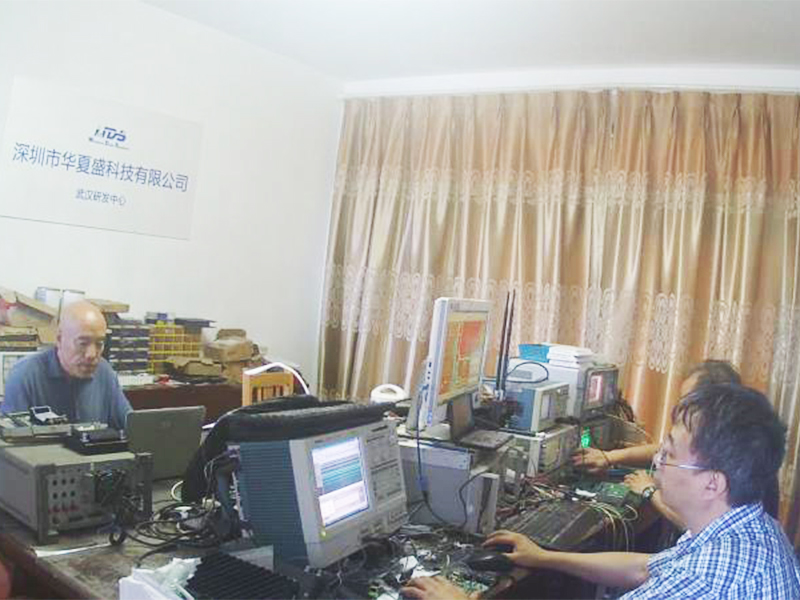
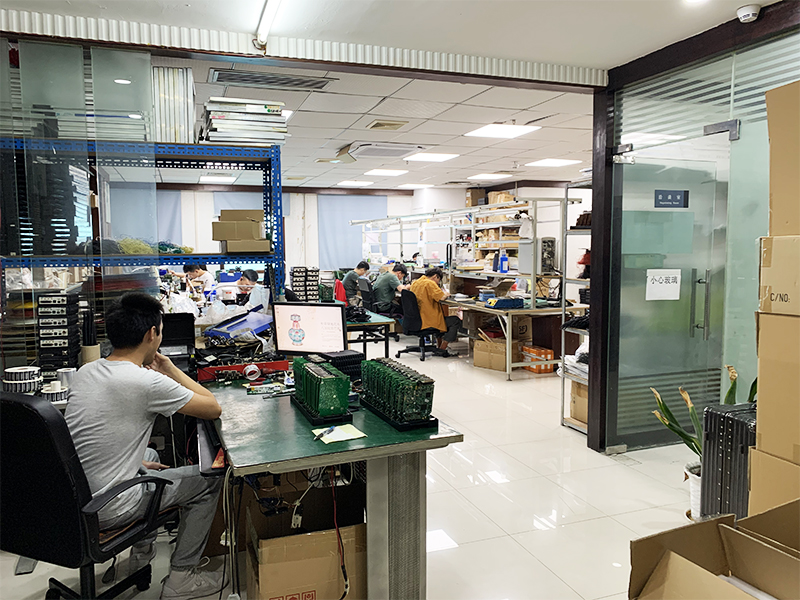
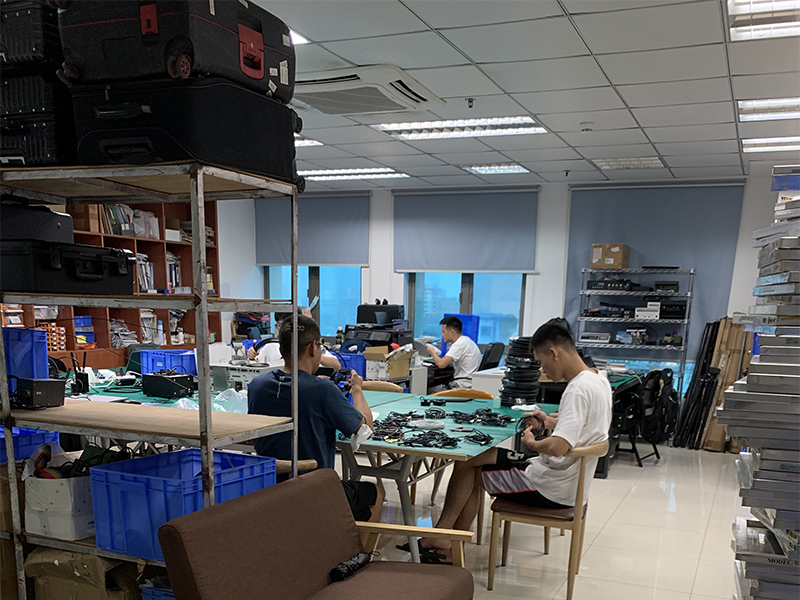
Located in Shenzhen—the global hardware innovation capital—we maintain direct control over high-frequency substrate sourcing, Gallium Nitride (GaN) power amplifier fabrication, Surface Mount Technology (SMT) assembly lines, and precise RF spectrum analyzer calibration.
Agile OEM/ODM Customization
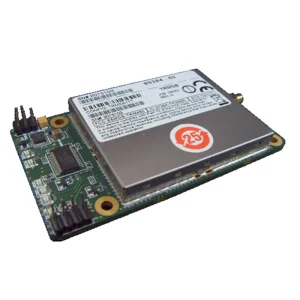
From custom form-factor PCB micro-modules for cramped vehicle bays to customized dual-band dynamic hopping frequencies, our in-house engineering team converts operational requirements into field-ready prototypes within accelerated turnarounds.
Rigorous Environmental & Quality QA
Vehicle data links undergo aggressive stress testing, including 100G mechanical shock testing, high-vibration sweeps, salt spray corrosion testing, thermal cycling from -40°C to +85°C, and electromagnetic compatibility (EMC) validation.

4. Global Enterprise Procurement & Sourcing Framework

Essential selection criteria for enterprise procurement managers and defense system architects acquiring vehicle data link solutions.

SWaP-C Optimization (Size, Weight, Power, and Cost)

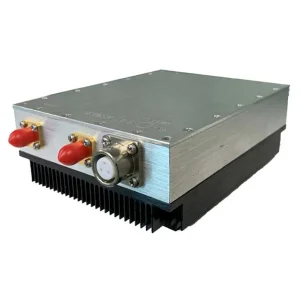
When selecting vehicle-mounted wireless data hardware, payload and electrical budget are critical parameters. Modern mobile machinery operating on 12V/24V/48V vehicle batteries requires energy-efficient RF power amplifiers. Our designs optimize heat dissipation through custom CNC aluminum chassis without sacrificing transmitter efficiency, delivering up to 10 Watts of RF power with minimal power draw.

Multi-Interface Protocol Compatibility

Vehicle control systems rely on varied communication buses. Enterprise buyers must demand native integration capability. Our vehicle data link radios incorporate seamless bridges between:

  • CAN-Bus (Controller Area Network): Direct transmission of vehicle diagnostic telemetry (J1939 / CANopen).
  • Dual High-Speed Ethernet Ports: Concurrent streaming of HD IP cameras and LiDAR point-cloud data.
  • Multi-Channel Serial Protocols: RS232, RS485, and RS422 ports for precise GNSS/RTK correction differential signals (NMEA / RTCM).
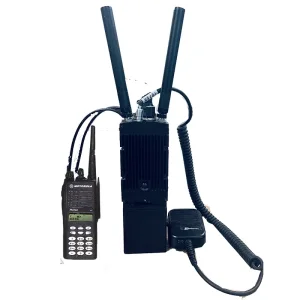
  • Analog Voice & Intercom Pass-Through: Integrated digital voice encoders for emergency tactical voice communications among fleet operators.

5. Vertical Macro-Industry Solutions & Localized Scenarios

Targeted deployment whitepapers detailing real-world success across demanding operational environments.

Autonomous Mining & Heavy Haulage Fleets
Deep open-pit mines present constant RF line-of-sight blockages caused by massive pit walls and moving excavation equipment. Our MIMOmesh vehicle radios create dynamic vehicle-to-vehicle (V2V) and vehicle-to-infrastructure (V2I) communication links. Mining haul trucks relay control signals back to the central dispatch center through neighboring trucks, eliminating dead zones and ensuring uninterrupted teleoperation.
Unmanned Ground Vehicles (UGVs) & Defense Robotics
In hostile electronic warfare scenarios, military and security UGVs require secure, anti-jamming communication channels. Leveraging fast Frequency Hopping (FHSS) and dynamic channel switching, our data links preserve operational command links, driving control inputs, and low-latency video streams even in contested RF environments.
Emergency Command & Tactical Dispatch Fleets
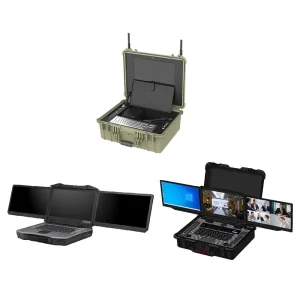
During natural disasters or major municipal emergencies, public cellular networks frequently collapse. Vehicle-mounted MESH data links enable emergency command vehicles, fire trucks, and mobile command boxes to establish an instant tactical broadband network across tens of kilometers, maintaining seamless voice, video, and positional tracking.
Precision Smart Agriculture & Robotic Farming
Autonomous tractors and combine harvesters require continuous centimeter-level GNSS/RTK positioning data alongside high-definition video feeds. Our custom RTK wireless data link modules deliver sub-second differential correction updates across vast farmland regions with dense foliage and undulating terrain.
Rail Transport & Autonomous Logistics Ports
Automated Guided Vehicles (AGVs) in container sea ports and railway inspection vehicles operate in high-density metal container yards. Our COFDM data links penetrate complex steel structures, delivering consistent telemetry and automated safety braking signals.
Air-to-Ground & Drone Swarm Integration
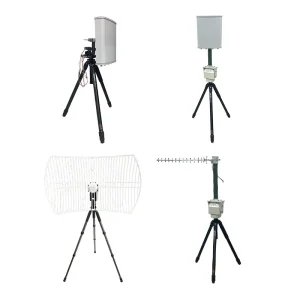
Connecting vehicle command centers with unmanned aerial vehicles (UAVs) for hybrid air-ground perimeter surveillance. Auto-tracking directional antenna platforms continuously lock onto airborne nodes to maximize data throughput across long distances.

6. About Shenzhen Huaxiasheng Technology Co., Ltd.

28 Years of Dedicated Wireless Data Transmission Expertise & Technical Legacy

Shenzhen Huaxiasheng Technology Co., Ltd. has been engaged in the service industry of wireless data transmission product development, application and network engineering since 1996. Over the past decade, the company has independently developed wireless data transmission equipment based on the world's leading technology in the wireless data transmission equipment industry, according to the application characteristics of different fields, and relying on the strength of famous domestic universities and research institutes.

Producer
Shenzhen Huaxiasheng Technology Co., Ltd. is a top communication equipment product development and production provider in the MESH self-organizing network industry, with rich product varieties, leading performance, long transmission distance, high transmission rate, and strong anti-interference ability.
Services
Shenzhen Huaxiasheng Technology Co., Ltd. not only has advantages in products, but also has the best pre-sales and after-sales services in the industry. We are committed to providing high-quality services to every customer, so that customers can use products effectively, accurately and safely.
Purpose
Providing high-quality, reasonably priced products and professional, perfect services is the basis for us to become an industry leader. The spirit of active pioneering and innovation is the driving force of our continuous development. Providing advanced technology, reliable quality and reasonably priced wireless data transmission products for factory control automation is our unchanging direction.

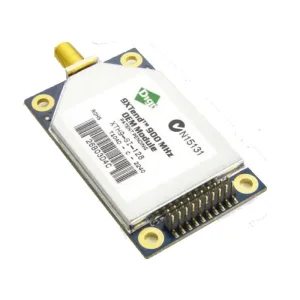
At present, Huaxiasheng develops and produces the most advanced digital data transmission radio, intelligent data transmission radio, digital data module, high-speed frequency hopping radio, industrial wireless Ethernet, network high-definition image transmission radio/module, AD-HOC/MESH self-organizing network, GNSS/RTK wireless data link, industrial wireless remote I/O, handheld mobile data transmission voice transceiver, two-way RF power amplifier, voice codec, multi-serial port composite connection, point-to-multipoint address coding module and other products, which are widely used in oil/gas, water/electricity, power/heating network/gas/railway/transportation, street lights/earthquake/meteorology/environmental protection, GPS data acquisition control and mapping, finance, metallurgy/chemical industry and industrial process control automation, industrial wireless Ethernet, long-distance video transmission, multi-channel wireless data link for drone/unmanned ship/unmanned vehicle and robot control.
7. Deep Technical FAQ (Frequently Asked Questions)

Expert answers addressing systemic engineering, installation, and procurement questions for vehicle data link integration.

Q1: How do vehicle-mounted MESH data links handle high-speed movement and Doppler shift?
Our vehicle radios employ sophisticated digital signal processors (DSPs) with automated Doppler shift compensation algorithms and adaptive OFDM subcarrier tracking. This ensures uninterrupted modulation stability even when vehicles move at relative speeds exceeding 350 km/h.
Q2: What is the maximum line-of-sight (LOS) and non-line-of-sight (NLOS) range achievable?
In pure Line-of-Sight (LOS) conditions (such as open agricultural fields or elevated command tracking platforms), ranges exceed 50 to 80 kilometers. In heavy Non-Line-of-Sight (NLOS) urban environments or open-pit mining cuts, COFDM technology and multi-hop MESH relaying achieve dependable communications across 3 to 15 kilometers without infrastructure.
Q3: How are vehicle data links protected against engine power spikes and electromagnetic noise?
All our vehicle-mounted transceivers integrate wide-input DC power supply stages (9V–36V DC) featuring reverse polarity protection, transient voltage surge suppression (TVS), and heavy galvanic isolation to prevent ground loop interference from heavy vehicle alternators and electric motors.
Q4: Can we request custom frequency bands for military or private licensed operations?
Yes. Shenzhen Huaxiasheng offers complete RF customization (OEM/ODM). We can tailor center frequencies and channel bandwidths across VHF (138-174MHz), UHF (300-900MHz), L-band (1.4GHz), S-band (2.4GHz), and C-band (5.8GHz) according to your regional spectrum regulatory compliance.
Q5: What security protocols protect telemetry and video data from interception?
Our radio hardware supports embedded chip-level AES-128 and AES-256 encryption. Additionally, proprietary dynamic frequency hopping spread spectrum (FHSS) algorithms prevent unauthorized RF packet sniffing and directional signal triangulation.
Q6: How fast does the MESH network self-heal if a vehicle node gets blocked by terrain?
The dynamic Ad-Hoc MESH dynamic routing protocol recalculates topology in real-time. If a path breaks, alternate routing packet rerouting occurs within less than 20 milliseconds, ensuring zero interruption to critical teleoperation controls.
Q7: Are your vehicle data links certified for extreme environmental conditions?
Yes. Units are enclosed in ruggedized IP67 waterproof aluminum alloys designed to withstand intense mechanical shock and vibration standards compliant with MIL-STD-810G, operating across temperatures from -40°C to +85°C.
Q8: How do I select between narrow-band data radios and wide-band MESH video links?
Narrow-band radios (such as our FGR2/LoRa series) are ideal for low-speed, ultra-long-range sensor telemetry and RTK positioning where bandwidth requirements are minimal (<1 Mbps). Wide-band MESH links (such as the MIMOmesh series) are required when transmitting real-time multi-channel HD video streams, LiDAR point clouds, and high-rate vehicle telemetry simultaneously.