Explore our state-of-the-art wireless transmitters and receivers engineered to perform under extreme ambient scenarios.
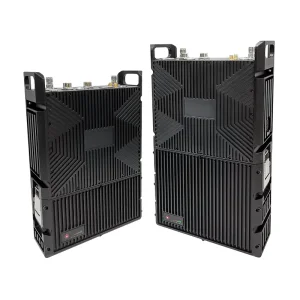
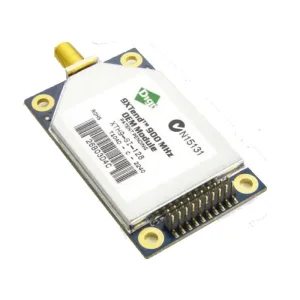
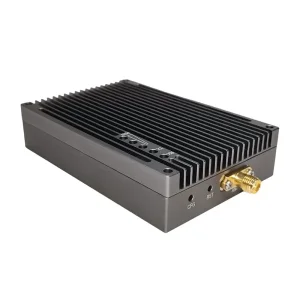
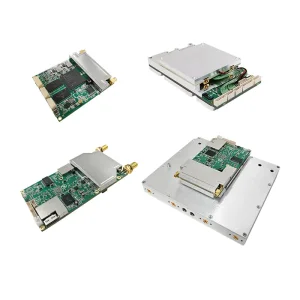
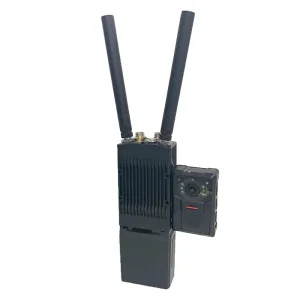
In modern telemetry and data mapping, relying strictly on traditional point-to-point topologies or cellular base stations represents a critical point of failure.
High-Quality Mesh-Based IoT Solutions provide a decentralized, dynamic self-healing network (AD-HOC) capable of transmitting data, high-definition real-time video, and high-fidelity duplex voice commands across long distances, dense urban areas, and subterranean cavities without depending on central telecommunications infrastructure.
Using technologies like Orthogonal Frequency Division Multiplexing (COFDM), Multiple-Input Multiple-Output (MIMO) antennas, and advanced frequency hopping techniques, these solutions bypass complex environmental hurdles, guaranteeing transmission stability even under heavy interference.
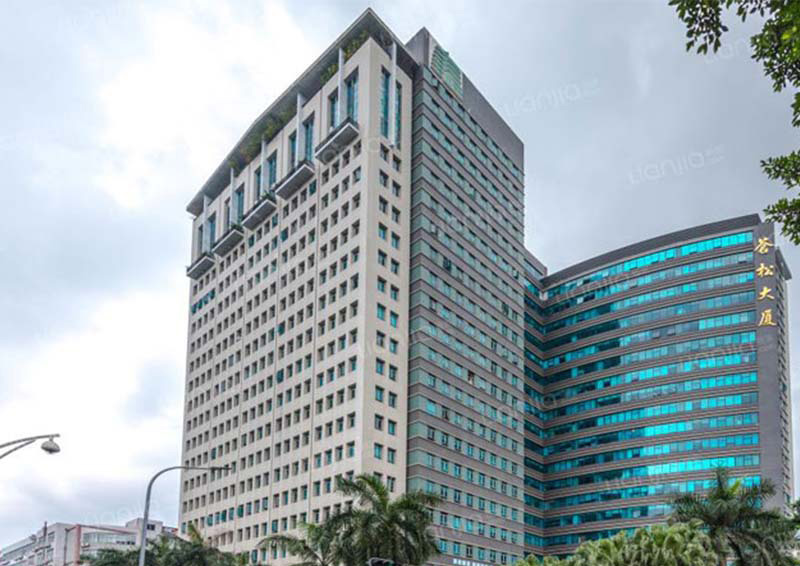
Pioneering High-Frequency Wireless Communication and R&D Innovation Since 1996.
As a leading communication equipment developer, our products feature deep anti-interference abilities, ultra-long-range profiles, and low power dissipation for heavy telemetry systems.
Over a span of 28 years, we have collaborated with premier domestic research institutes and top engineering universities, integrating theoretical excellence with industrial-grade manufacturing.
Providing high-precision hardware that performs continuously in temperature ranges from -40°C to +85°C, ensuring flawless control of drone, maritime, and seismic mapping fields.
A deep breakdown of the high-frequency protocols used in industrial data transmissions.
| Module Protocol | Frequency Range | Data Rate | Topological Support | Typical Latency | Best Applied Scenarios |
|---|---|---|---|---|---|
| MIMOmesh Series | 1.4GHz / 2.4GHz ISM | Up to 80 Mbps | Dynamic Peer-to-Peer, Mesh, Star | <10 ms | High-speed military UAVs, Multi-robot swarms |
| DDLmesh Series | 800MHz / 1.4GHz | Up to 30 Mbps | Ad-Hoc Self-Healing Grid | <15 ms | Vehicular dispatch, Long-range HD video stream |
| FGR2/NANO Series | 902-928 MHz | Up to 1.2 Mbps | Point-to-Multipoint, Repeaters | <5 ms | GNSS/RTK mapping, oil/gas pipe sensor polling |
| COFDM Video Link | 300MHz - 2.0GHz (Custom) | Unidirectional Broadcast | Line-of-Sight & Non-Line-of-Sight | <25 ms | Disaster command dispatch, Subterranean exploration |
Tracing our hardware developments designed to tackle complex path loss challenges.
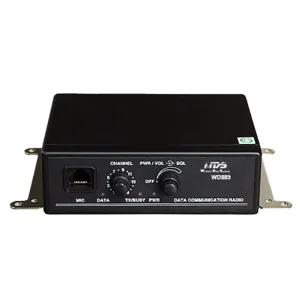
Established core wireless telemetry modules. Focused heavily on high-precision FM transceivers (WD889/WD250 Series) for basic long-range SCADA factory automations.
Introduced Frequency Hopping Spread Spectrum (FHSS) technology via our FGR2 & NANO series, delivering superior noise immunity for precision agriculture and GNSS RTK survey rigs.
Pioneered high-density COFDM video transmitters and MIMOmesh protocols, integrating advanced H.264/H.265 compression systems for real-time mobile command centers.
Integrating Software-Defined Radio (SDR) concepts into ultra-compact, low-latency DDLmesh and airborne systems to power smart robotic grids and complex AI swarm behaviors globally.
Where our high-performance transceivers maintain continuous wireless communication links.
Utilizing MIMOmesh Airborne modules, multiple drones can communicate dynamically. If one UAV loses line-of-sight, surrounding aircraft act as self-healing relay nodes to ensure zero-loss video streaming back to base station control racks.
Standard radio waves suffer high path loss in tunnels. Our COFDM and low-frequency DDLmesh units bounce signals off walls, bypassing Line-Of-Sight (LOS) dependency to deliver telemetry data from heavy drills to underground crews.
In high-grade infrastructure building, centimeter-level coordinate accuracy requires real-time differential GPS links. Our GNSS/RTK tailored modems deliver rapid, constant low-latency correction parameters directly to surveying rods.
From central heat grids to remote power stations, our digital transceivers offer dual-serial composite links to handle complex Modbus, Profibus, or industrial Ethernet parameters over broad geographical areas.
In massive robotic warehousing centers, steel shelves generate major multipath interference. MIMO multipath mitigation protocols guarantee constant data updates for high-speed AGVs without signal dead zones.
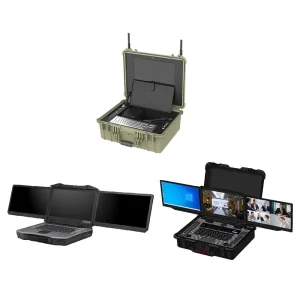
During heavy natural disasters, regular cell towers collapse. Our ruggedized Portable Command Box systems establish an immediate emergency AD-HOC voice and video net, covering critical search zones efficiently.
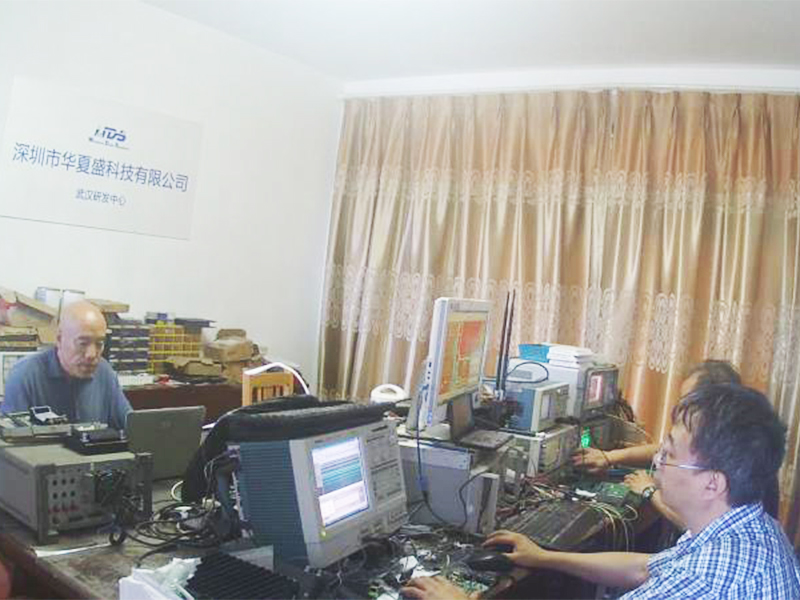
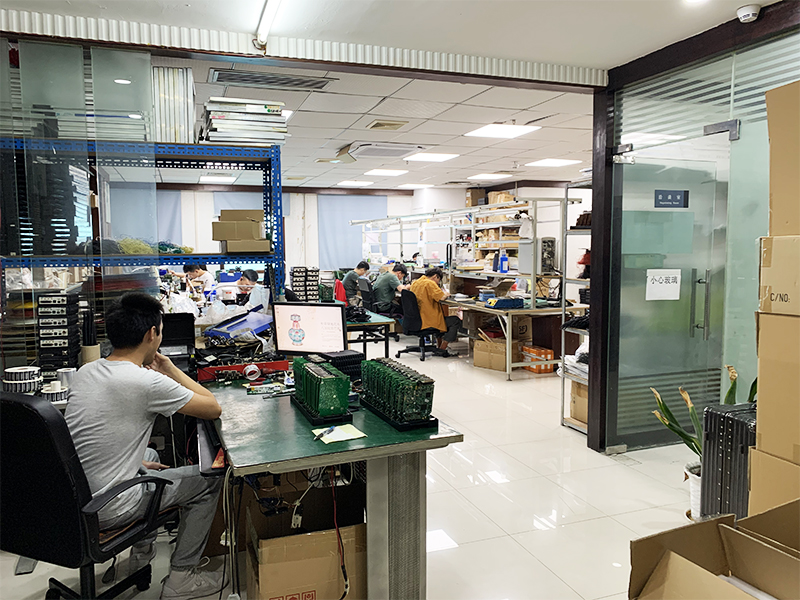
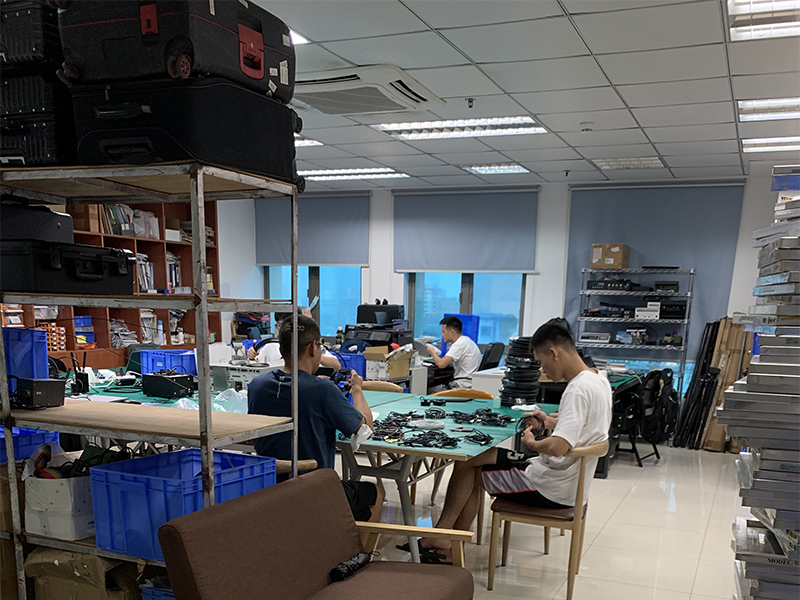
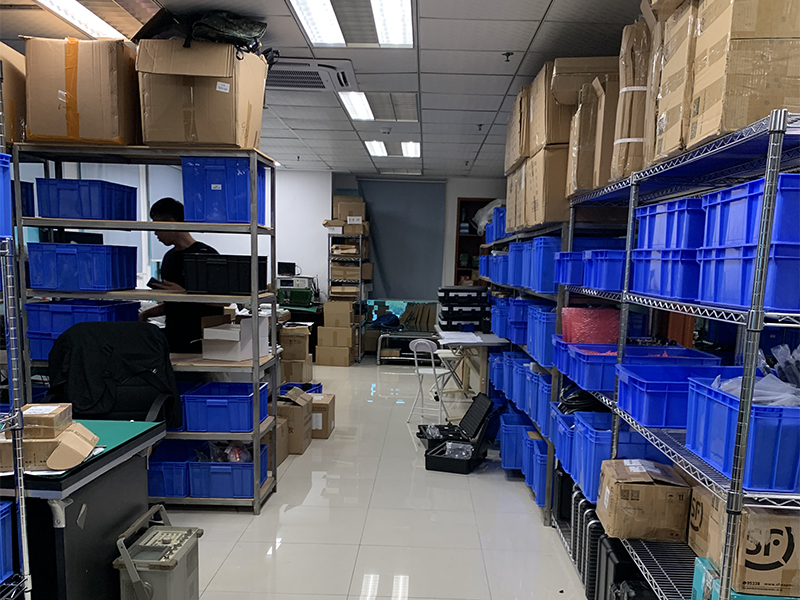
Shenzhen's hyper-integrated high-tech cluster enables our factory to rapidly manufacture bespoke, high-precision radio products with superior cost-to-performance metrics.
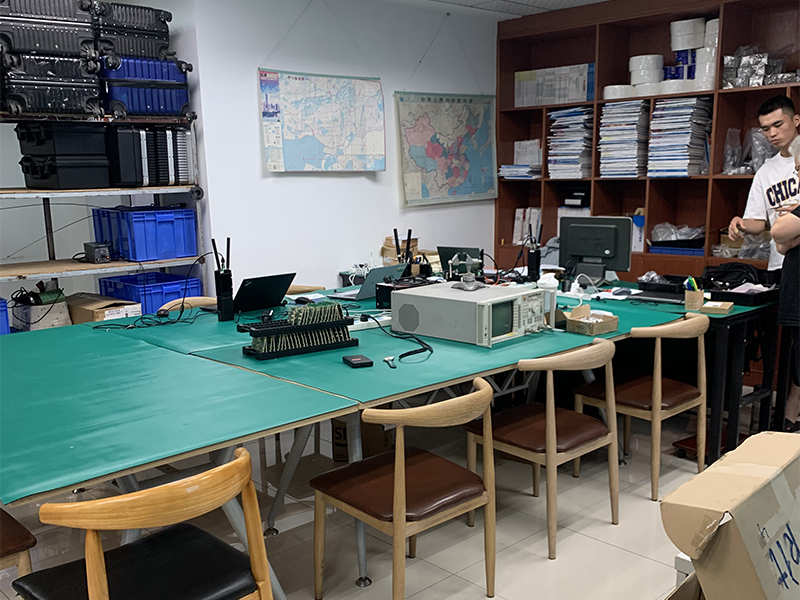
By leveraging in-house SMT production lines, advanced temperature-controlled aging chambers, and high-frequency vector network analyzers, we guarantee that each shipped transceiver complies with stringent global quality requirements.
Our solutions adapt to localized frequency demands (e.g., customized ISM bands for different geographical regions) and boast CE, FCC, and SRRC compliances. This makes Shenzhen Huaxiasheng Technology Co., Ltd. a highly secure and reliable OEM/ODM provider for tier-1 industrial clients worldwide.

Professional engineering explanations addressing common wireless data link deployment questions.
A: Multipath fading happens when radio signals bounce off structures and arrive at the receiver at slightly different times, causing phase cancellation. MIMO (Multiple-Input Multiple-Output) uses multiple antennas to transmit and receive parallel data streams. It leverages spatial diversity and advanced digital signal processing (DSP) to turn those reflections into constructive signals, dramatically improving connection reliability.
A: Yes, absolutely. All of our Ad-Hoc Mesh networks are fully decentralized. They do not need cellular networks, base stations, or internet connections to work. Each node operates as an autonomous transceiver that discovers neighboring units and routes data dynamically. This is ideal for disaster relief, deep mines, maritime applications, and military deployments.
A: Wi-Fi is designed for short-range line-of-sight environments and struggles with obstacle penetration and movement. COFDM (Coded Orthogonal Frequency Division Multiplexing) splits data across thousands of closely spaced subcarrier signals. This allows it to penetrate solid structures and maintain robust, high-speed, non-line-of-sight (NLOS) video connections over distances exceeding 10km, even when the transmitter is moving fast.
A: The FGR2/NANO series uses advanced Frequency Hopping Spread Spectrum (FHSS) technology. Instead of transmitting on a single static frequency, the transmitter quickly hops across 112 channels within the 902-928 MHz band using a pseudorandom sequence. This makes the signal incredibly difficult to intercept, jam, or disrupt, and it can be paired with high-level AES encryption keys for complete data protection.
A: Yes, we provide extensive OEM and ODM services. Our engineering team can calibrate RF front-end stages to meet target frequencies (e.g., 900MHz, 1.4GHz, 2.4GHz) and limit transmission power to meet FCC Part 15, European CE standards, or local telecommunication rules.
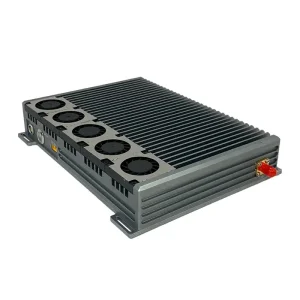
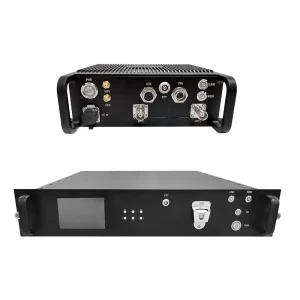
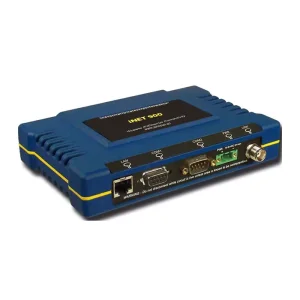
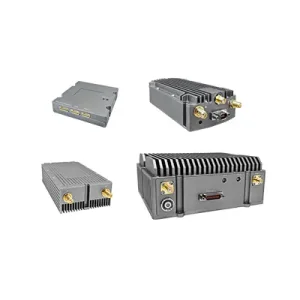
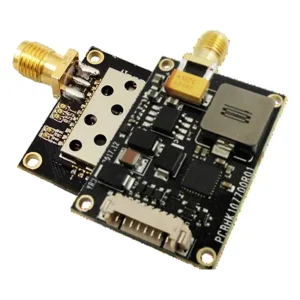
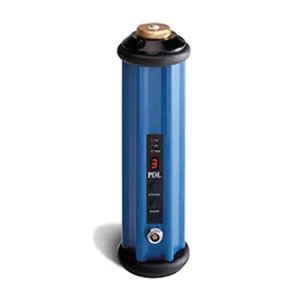
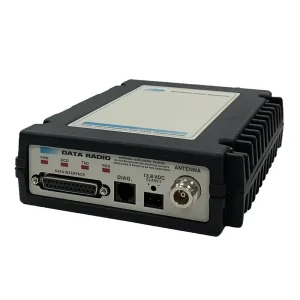
Check out our heavy-duty rackmount, lightweight airborne, and ultra-compact telemetry designs.
 Sinosun Tech