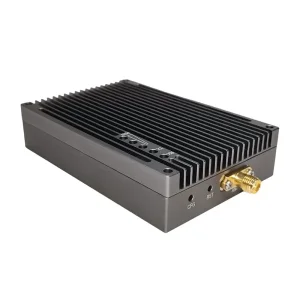
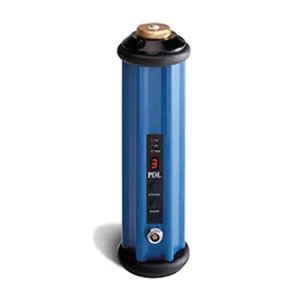
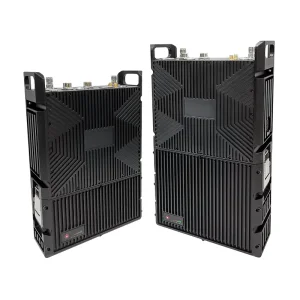
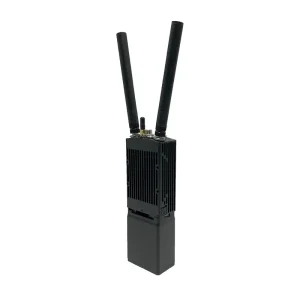
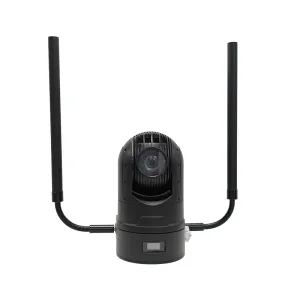
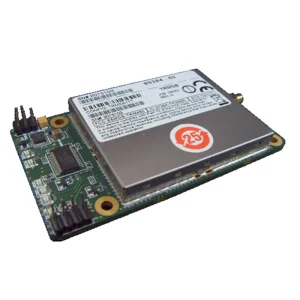
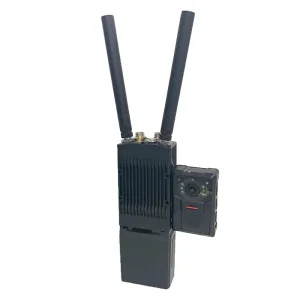
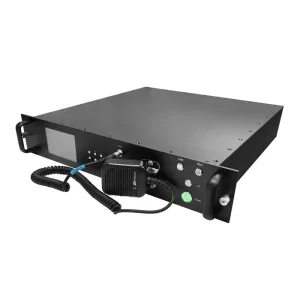
Explore our elite selection of COFDM, MESH, and point-to-point digital transmission radios designed for extreme conditions.
In modern RF engineering, the requirement to transmit high-definition (HD) video over vast distances under Non-Line-of-Sight (NLOS) conditions remains a fundamental challenge. Traditional modulation architectures, such as standard OFDM or conventional point-to-point Wi-Fi bridges, suffer catastrophic packet loss in high-multipath environments where physical obstructions cause signal reflections, phase shifts, and temporal distortions.
COFDM (Coded Orthogonal Frequency Division Multiplexing) solves this limitation. By splitting a single, high-bandwidth data stream into thousands of closely spaced orthogonal sub-carriers, COFDM significantly increases the symbol duration relative to the channel delay spread. The inclusion of aggressive Forward Error Correction (FEC) codes—such as Low-Density Parity-Check (LDPC) and Reed-Solomon—allows the receiving radio to reconstruct damaged or missing data packets on the fly. Furthermore, our implementation of COFDM integrates adaptive modulation (ranging from robust QPSK to high-spectral-efficiency 64QAM) combined with a configurable Guard Interval (GI) to eliminate Inter-Symbol Interference (ISI), ensuring robust, broadcast-quality HD video links even in deep NLOS urban corridors or moving at velocities exceeding 300 km/h (Doppler shift mitigation).
The global demand for reliable, long-distance HD video link infrastructure has surged beyond traditional broadcast TV production. Industrial automation, maritime security, critical infrastructure inspection, and defense ecosystems now rely heavily on continuous wireless data pipes.
In the energy sector, offshore oil and gas rigs require real-time, high-bandwidth optical feeds to onshore stations situated up to 30 kilometers away. In agricultural management and large-scale mining operations, autonomous heavy machinery uses dual-channel data links for remote operations. The common denominator is the need for uncompromised reliability: link dropouts translate directly to financial loss or hazardous working environments.
By leveraging specialized frequency bands (VHF, UHF, L-band, S-band, and C-band), our systems bypass heavily congested 2.4GHz and 5.8GHz consumer ISM bands, delivering dedicated, clean RF spectrum with military-grade AES-128/256 hardware encryption.
Global Deployment
Secure Encryption
Ultra-low Latency
For enterprise procurement officers and systems integrators, selecting a COFDM long-distance link partner requires analyzing detailed performance indicators. Procurement departments do not buy "radios"; they procure "link margins" and operational uptime. The critical parameters requested in RFQs usually include:
Shenzhen Huaxiasheng Technology Co., Ltd. has been engaged in the service industry of wireless data transmission product development, application and network engineering since 1996. Over the past decade, the company has independently developed wireless data transmission equipment based on the world's leading technology in the wireless data transmission equipment industry, according to the application characteristics of different fields, and relying on the strength of famous domestic universities and research institutes.
Currently, Huaxiasheng develops and produces the most advanced digital data transmission radio, intelligent data transmission radio, digital data module, high-speed frequency hopping radio, industrial wireless Ethernet, network high-definition image transmission radio/module, AD-HOC/MESH self-organizing network, GNSS/RTK wireless data link, industrial wireless remote I/O, handheld mobile data transmission voice transceiver, two-way RF power amplifier, voice codec, multi-serial port composite connection, point-to-multipoint address coding module and other products.
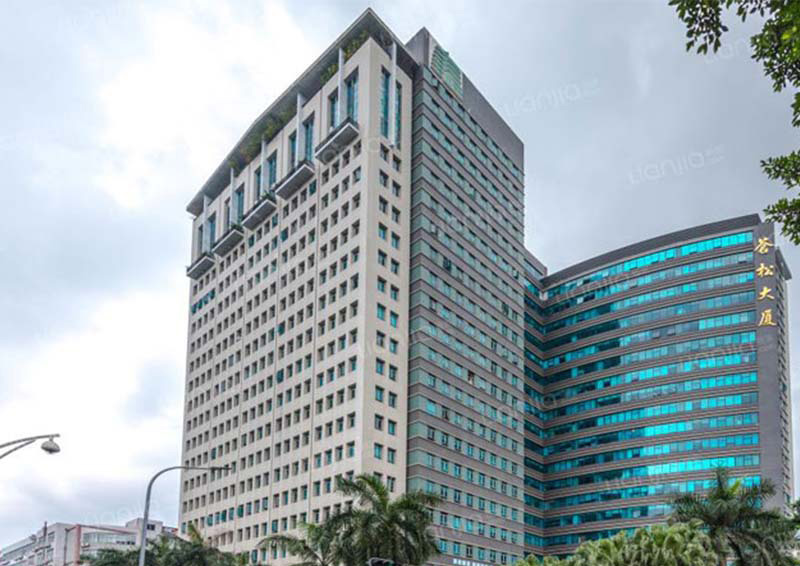
Shenzhen Huaxiasheng Technology Co., Ltd. is a top communication equipment product development and production provider in the MESH self-organizing network industry, with rich product varieties, leading performance, long transmission distance, high transmission rate, and strong anti-interference ability.
Shenzhen Huaxiasheng Technology Co., Ltd. not only has advantages in products, but also has the best pre-sales and after-sales services in the industry. We are committed to providing high-quality services to every customer, so that customers can use products effectively, accurately and safely.
Providing high-quality, reasonably priced products and professional, perfect services is the basis for us to become an industry leader. The spirit of active pioneering and innovation is the driving force of our continuous development. Providing advanced technology, reliable quality and reasonably priced wireless data transmission products for factory control automation is our unchanging direction.
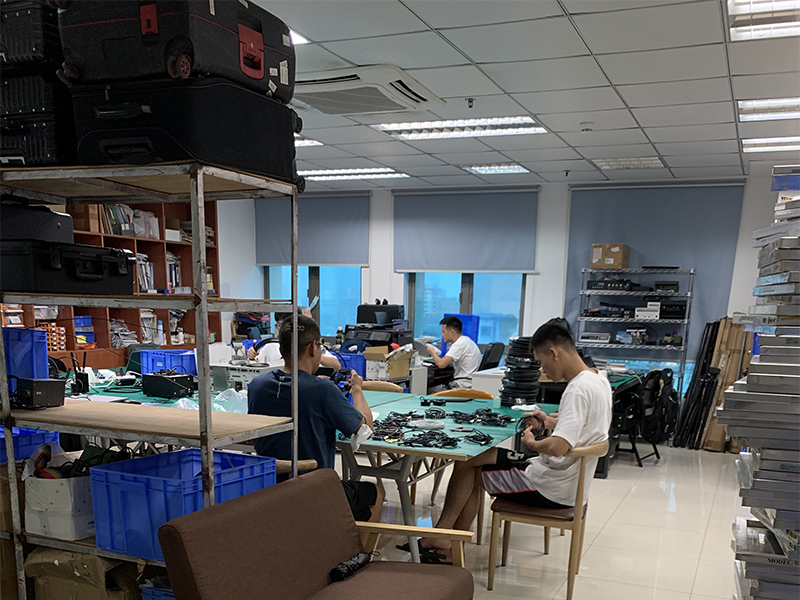
Manufacturing cutting-edge RF electronics requires more than standard assembly lines. Shenzhen's rapid prototyping ecosystem, combined with our advanced Factory 4.0 layout, guarantees product delivery and reliability. By integrating automated Surface Mount Technology (SMT) lines with 3D Automated Optical Inspection (AOI), X-ray component verification, and robotic RF calibration chambers, we eliminate the variable margins of human assembly.
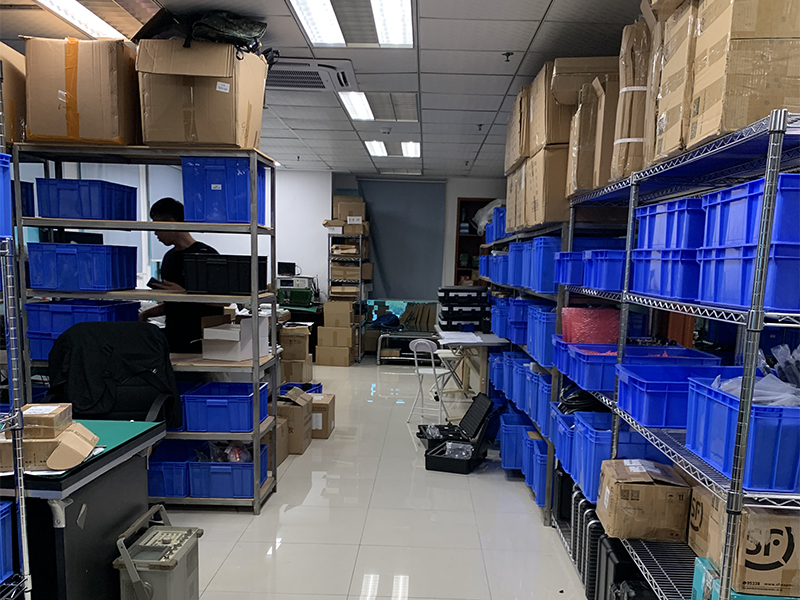
Furthermore, our long-term supply chain partnerships ensure we maintain a stable stock of core RF chipsets, FPGA boards, and structural aluminum enclosures. This vertical integration reduces lead times by up to 45% compared to Western competitors. In an era marked by component shortages and logistical delays, our supply chain resilience ensures that global engineering projects stay on schedule.
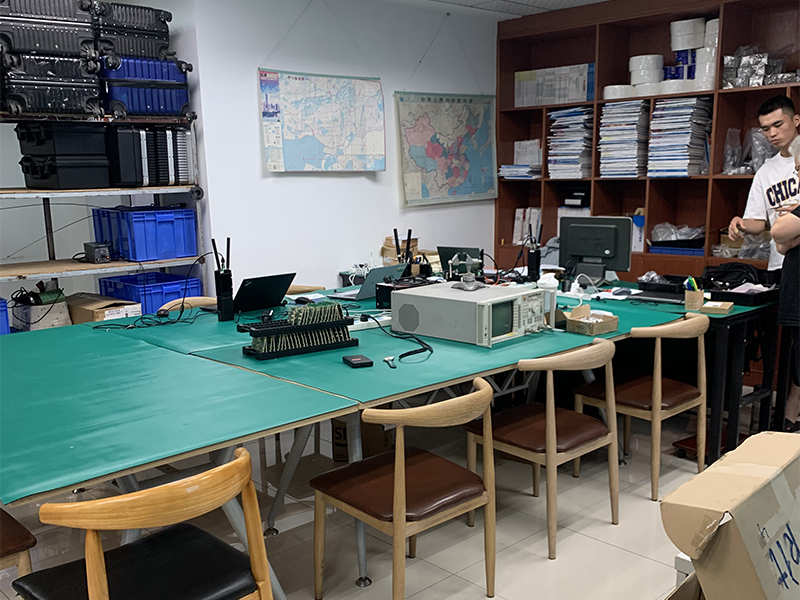
Our partnerships with national key laboratories and prestigious domestic telecommunications universities keep us at the forefront of wave propagation research. Every new model undergoes comprehensive environmental stressing, including temperature cycling inside environmental chambers (-50°C to +90°C), mechanical drop testing, salt spray corrosion testing for marine deployments, and electromagnetic compatibility (EMC/EMI) diagnostics.
Our robust RF solutions are designed to cross boundaries and solve mission-critical communication challenges.
Widely used in oil/gas extraction sites, water/electricity utilities, power distribution grid lines, heating networks, gas pipelines, railways, and municipal transportation systems. Reliable links ensure that SCADA telemetry and safety systems stream continuously.
Applied in high-reliability networks for street light control, earthquake monitoring stations, meteorological warning systems, and environmental protection sensors. These installations operate in remote areas where standard telecom signals do not exist.
Our dedicated GNSS/RTK wireless data links deliver centimeter-level real-time kinematic corrections for surveyors and agricultural automation machinery, maximizing spatial alignment and operational safety.
Long-distance video and data links enable command over multi-channel wireless links for drones, unmanned surface vessels (USVs), land robots, and autonomous industrial machinery operating in hazardous environments.
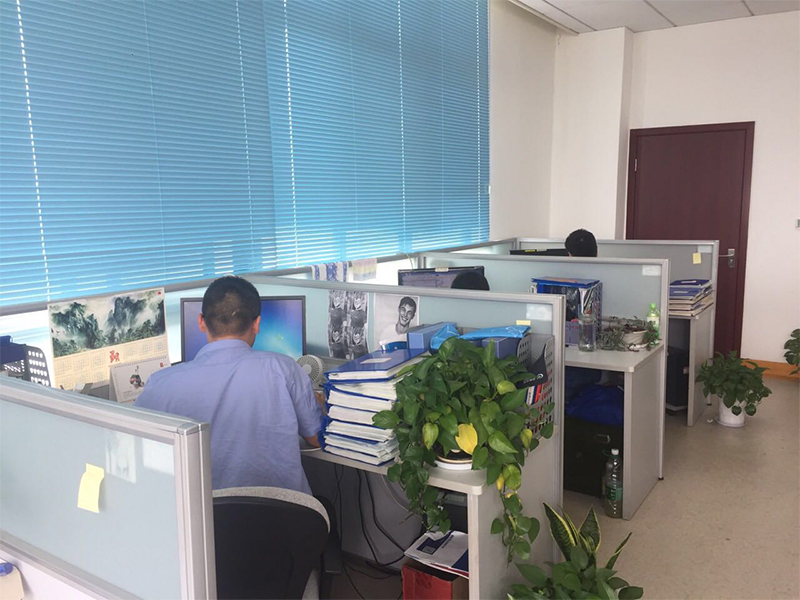
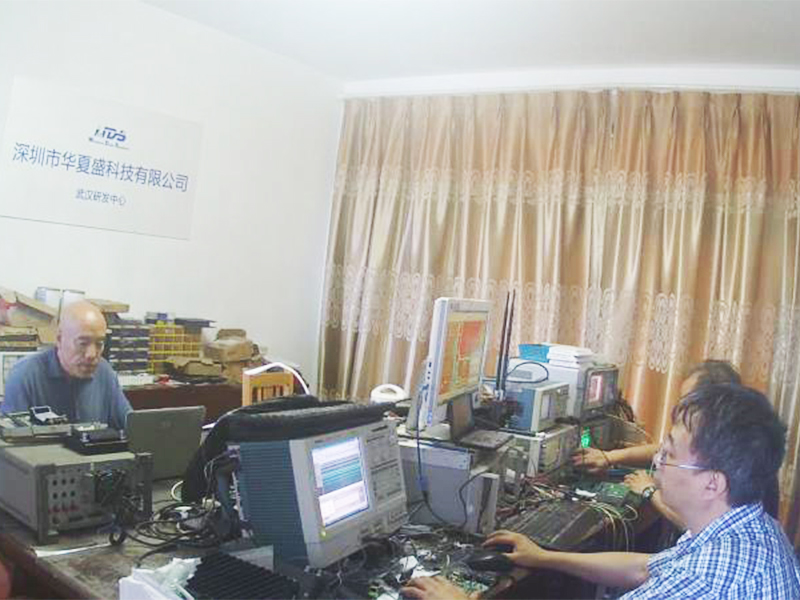
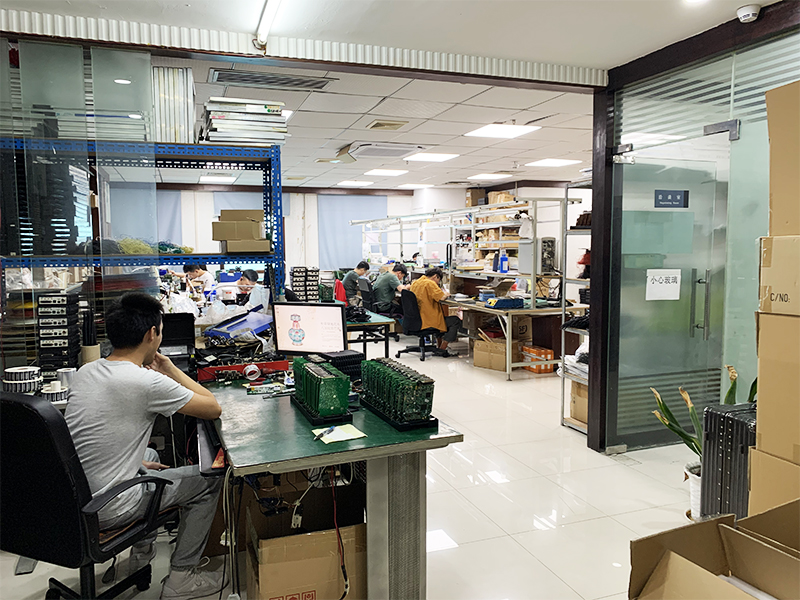
Get detailed technical answers on COFDM technology, system setup, and RF engineering best practices.
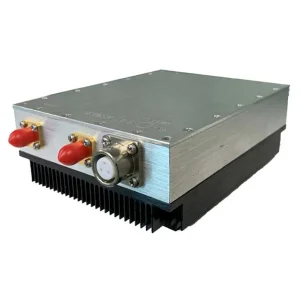
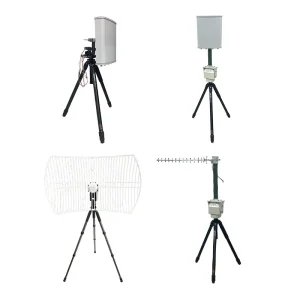
Expand your deployment capabilities with high-performance RF amplifiers, gateway nodes, and automatic tracking antenna systems.
 Sinosun Tech