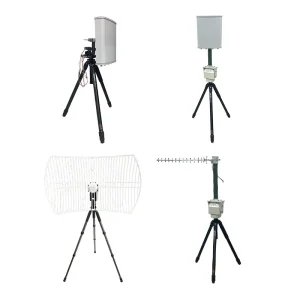
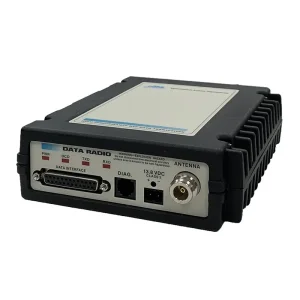
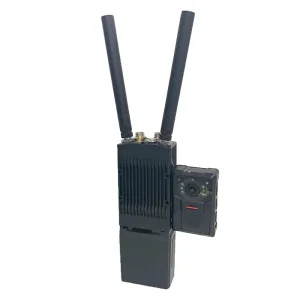
High-bandwidth, low-latency communication solutions engineered for complex, non-line-of-sight (NLOS) operational environments.
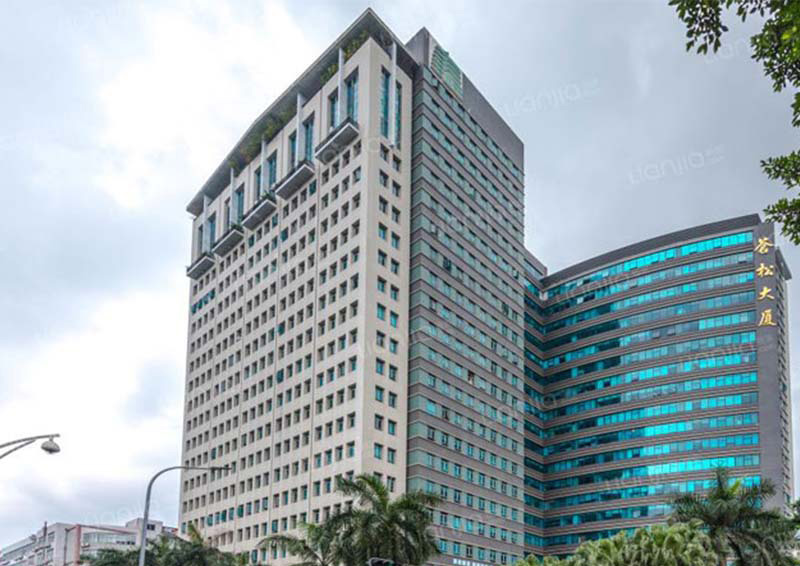
Shenzhen Huaxiasheng Technology Co., Ltd. has been at the forefront of the wireless data transmission industry since 1996. Over nearly three decades, the company has integrated advanced global RF architectures with localized development methodologies to engineer highly robust wireless data transmission equipment. Relying on close collaboration with prestigious domestic universities and research institutes, we have built a product ecosystem tailored to solve the most difficult communication barriers faced by industrial automation, defense systems, and telemetric networks.
By integrating Software Defined Radio (SDR) platforms, state-of-the-art COFDM/MIMO architectures, and highly resilient Frequency Hopping Spread Spectrum (FHSS) systems, our hardware is designed to ensure seamless data pipelines. We maintain absolute control over the production supply chain, offering unparalleled E-E-A-T (Experience, Expertise, Authoritativeness, and Trustworthiness) standards to international organizations.
Underpinned by high-performance engineering, responsive post-sales deployment, and a dedication to reliable network infrastructures.
Shenzhen Huaxiasheng Technology Co., Ltd. is a top tier communication equipment developer in the MESH self-organizing network industry. We feature rich product varieties, outstanding RF efficiency, exceptionally long transmission distances, high-throughput transmission rates, and robust electromagnetic anti-interference capacities.
Beyond our physical hardware solutions, we maintain an outstanding pre-sales and post-sales technical support network. From network topological design to link budget analyses and spectrum mapping, our field engineers ensure your operations run effectively, precisely, and safely.
Our goal is to provide high-quality, competitively priced products backed by flawless professional services. With an active spirit of pioneering innovation, we drive technical developments that deliver reliable wireless data pipelines for factory control automation and smart industrial networks.
Traditional wireless infrastructures depend on a centralized topological model, relying heavily on base stations and access points. However, in modern operations—such as heavy underground mining, tactical defense missions, automated factory complexes, and drone swarm operations—centralized networks introduce critical points of failure. The dynamic evolution of Mobile Ad-Hoc Networks (MANET) has replaced legacy architectures with self-healing, self-organizing mesh environments.
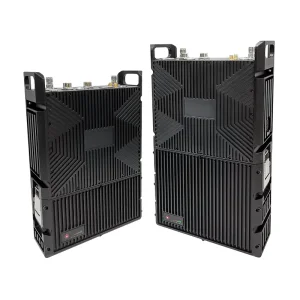
A Mesh Walkie-Talkie Device operates as an autonomous transceiver node that routes voice, video, and bidirectional telemetry dynamically across the network. If a node falls offline or is obstructed by heavy steel structures, the remaining nodes automatically recalculate alternative transmission paths. This dynamic routing protocol (often utilizing OLSR or HWMP algorithms) happens within milliseconds, ensuring zero-packet loss during high-stress operational parameters.
For mission-critical data integrity, simple frequency manipulation is no longer sufficient. Our modern product portfolios leverage Coded Orthogonal Frequency Division Multiplexing (COFDM) combined with Multiple-Input Multiple-Output (MIMO) spatial diversity. By dividing a single high-speed data stream across dozens of closely spaced orthogonal sub-carrier signals, our devices achieve unmatched multipath mitigation, even in extreme Non-Line-of-Sight (NLOS) conditions.
Our research and engineering ecosystem enables us to develop high-performance components covering the full spectrum of industrial communication requirements:
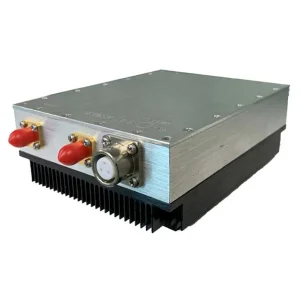
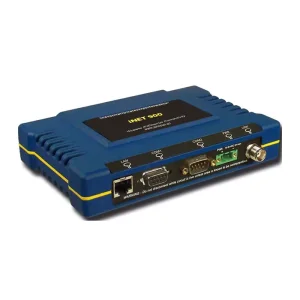
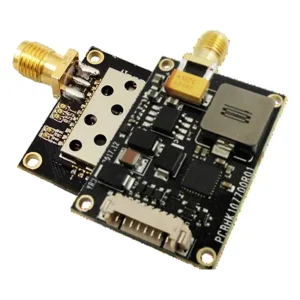
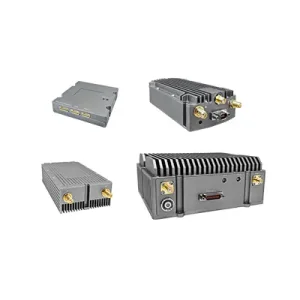
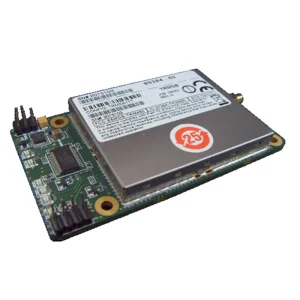
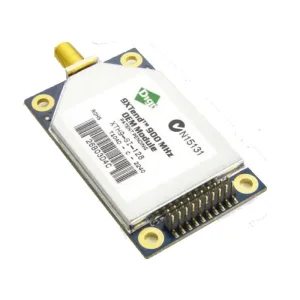
At present, Huaxiasheng develops and produces the most advanced digital data transmission radio, intelligent data transmission radio, digital data module, high-speed frequency hopping radio, industrial wireless Ethernet, network high-definition image transmission radio/module, AD-HOC/MESH self-organizing network, GNSS/RTK wireless data link, industrial wireless remote I/O, handheld mobile data transmission voice transceiver, two-way RF power amplifier, voice codec, multi-serial port composite connection, point-to-multipoint address coding module and other products.
These architectures are uniquely developed to support extreme workloads across diverse physical terrains, including deep offshore oil platforms, automated high-voltage electric transmission grids, high-speed rail lines, and tactical rescue scenarios.
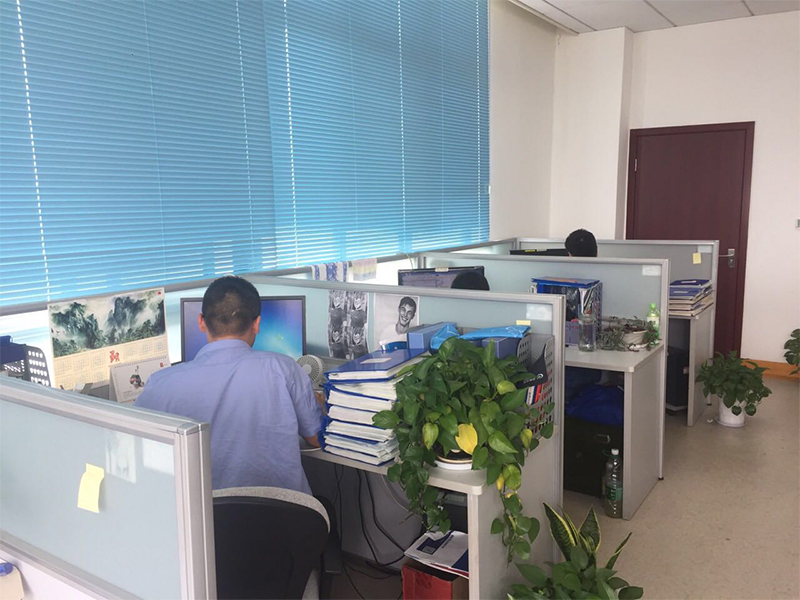
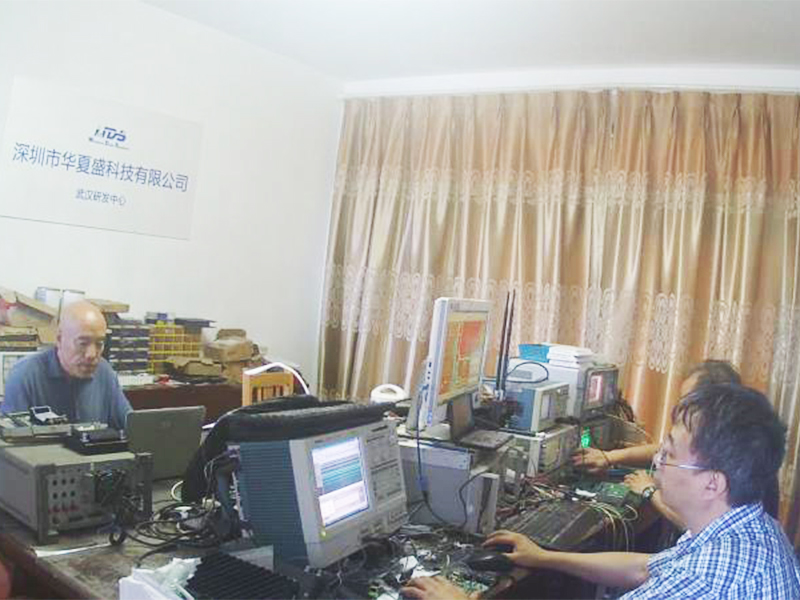
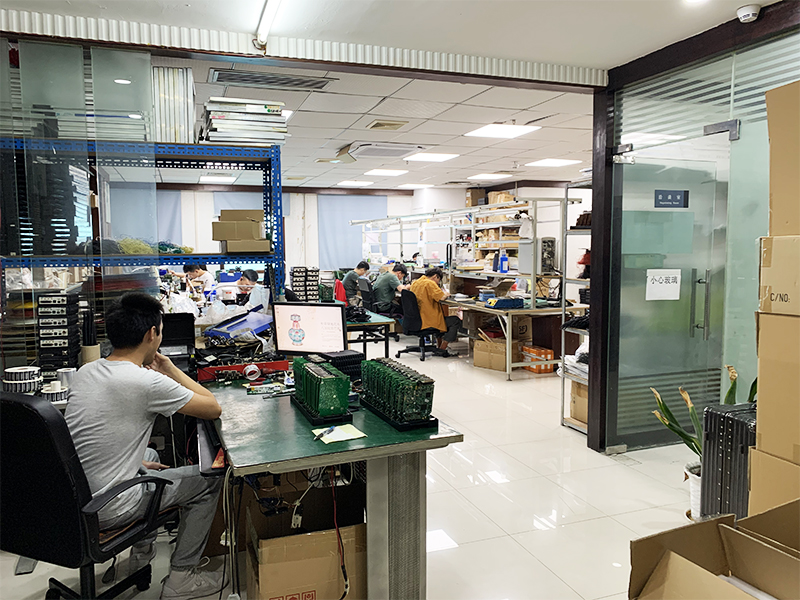
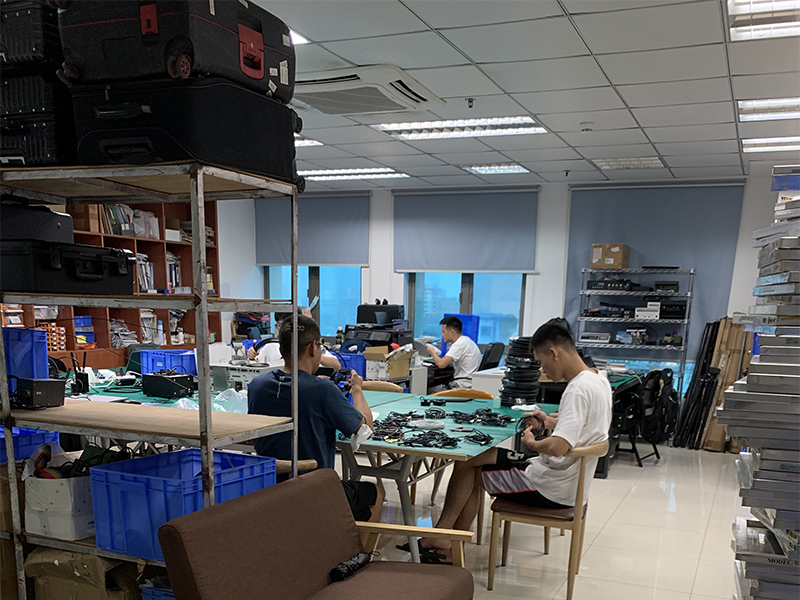
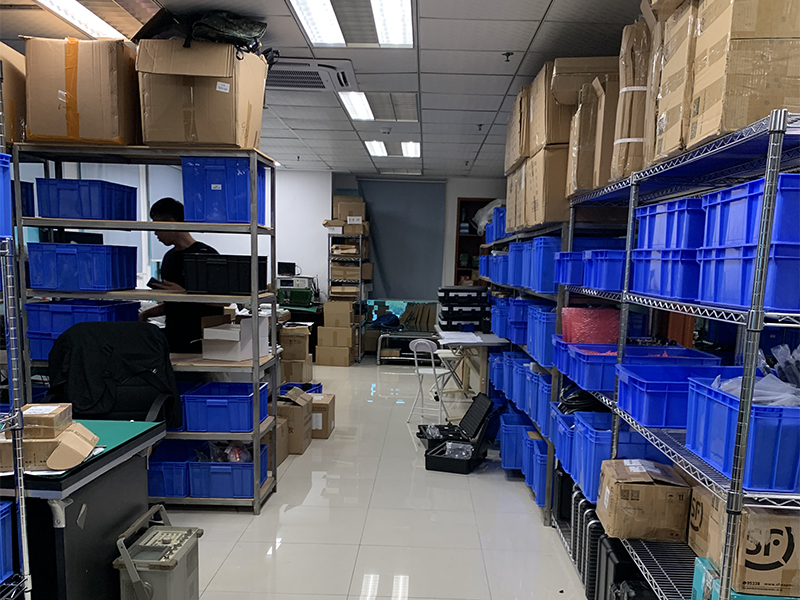
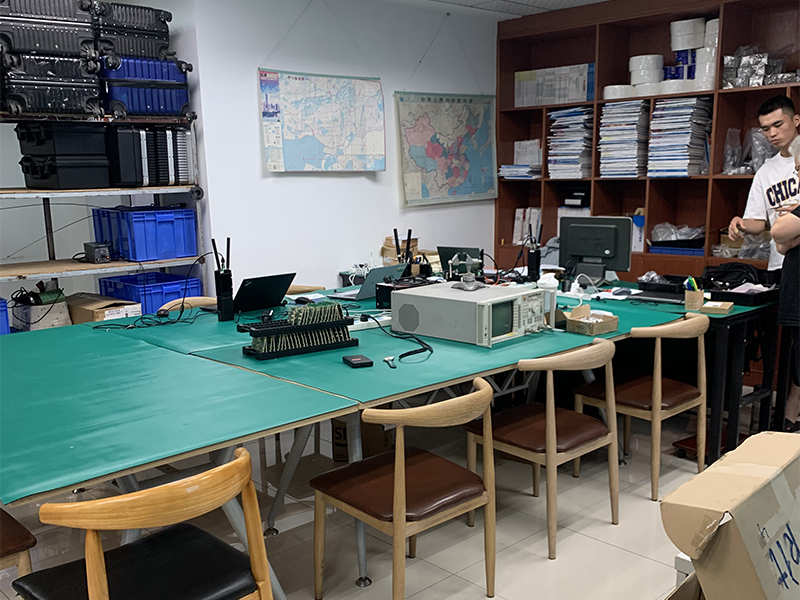
Sourcing from a top-tier Chinese factory like Shenzhen Huaxiasheng Technology provides significant strategic advantages for global enterprise procurement teams:
Shenzhen hosts the most concentrated electronic component ecosystem globally. We source high-grade RF chipsets, specialized passive components, and custom-engineered aluminum enclosures locally, reducing prototype-to-delivery lead times by up to 60% compared to Western competitors.
Every transceiver is subjected to severe quality control tests, including thermal cycling chambers (-40°C to +85°C), long-duration vibration tables, salt-spray corrosion tests, and vector network analyzers to verify impedance matching across critical transmission lines.
Unlike rigid off-the-shelf distributors, our in-house engineering team specializes in deep hardware customization. Whether you require custom frequency bands (e.g., L-Band, S-Band, C-Band), customized form factors for tactical integration, or specific firmware configurations, we execute fast, precise adaptations.
By leveraging advanced automated assembly lines, precision SMT pick-and-place systems, and efficient production workflows, we pass significant cost advantages on to our partners, without compromising component quality or RF reliability.
Shenzhen Huaxiasheng Technology Co., Ltd. builds hardware that operates reliably in challenging deployments where traditional consumer-grade communication systems fail:
Our long-range SCADA data radios and wireless Ethernet modules allow continuous telemetry collection across hundreds of kilometers of critical pipeline networks. In smart grid grids, our high-speed FHSS transceivers guarantee immediate protection-relay operations during grid faults.
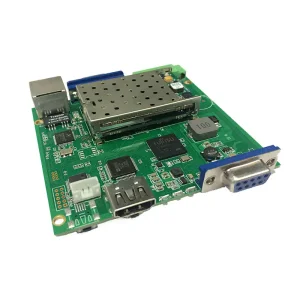
For unmanned aerial vehicles, maritime surface vessels, and industrial inspection robots, our lightweight airborne transceivers and low-latency HD video codec boards deliver high-bandwidth, bidirectional control links and crystal-clear 1080P real-time video streaming.
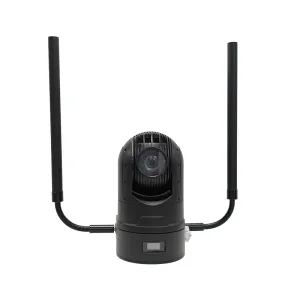
Traditional signals suffer severe degradation inside deep shafts and rock-walled corridors. Our self-organizing MESH handheld walkie-talkies and deployment cameras establish a daisy-chained signal web, enabling team members to communicate without pre-installed base stations.
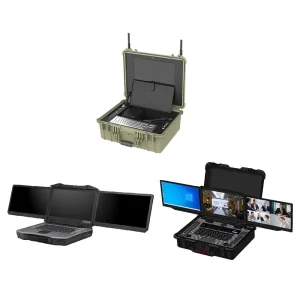
When natural disasters disable regional cellular towers, our portable MESH command boxes and tactical backpack radios provide immediate, secure, localized communication networks within minutes of deployment.
International procurement managers must evaluate several technical variables when selecting industrial wireless solutions. Compliance with global spectral regulations (such as FCC, CE, or national telecommunication authority rules) is critical. To address this, our engineers configure customizable channel bandwidths and precise frequency-allocation steps. This ensures seamless operation in licensed bands or within crowded license-free spectra like 900MHz, 2.4GHz, and 5.8GHz.
Mechanical durability is another key factor. To withstand the harsh environments of maritime, desert, and tropical installations, our outdoor transceivers feature ruggedized aluminum-alloy chassis rated for IP67 or IP68 ingress protection. These housings feature highly efficient passive heat-sinks, ensuring continuous operation in extreme climates without thermal throttling.
The next frontier of MESH communication relies on Cognitive Radio and AI-Optimized Routing Algorithms. Modern military and commercial bands are highly congested. By integrating real-time spectrum scanning and dynamic channel selectiveness into our hardware, the radio auto-senses incoming jamming signals and instantly shifts to a clean channel without interrupting communication. As AI models continue to integrate into hardware, future routing protocols will proactively predict node loss based on movement data, dynamically rerouting data flows before link failure occurs.
Detailed, engineering-focused answers to the most common questions regarding modern MESH radio networks.
Standard digital walkie-talkies (DMR, dPMR) generally operate on a point-to-point simplex or duplex mode, requiring direct line-of-sight or centralized repeaters to extend range. MESH walkie-talkies employ Mobile Ad-Hoc Network (MANET) technology. Each radio acts as a node, repeating and routing signals dynamically. If a node drops out, the network automatically self-heals and redirects traffic, extending coverage through multiple hops and bypassing terrain obstructions without a central tower.
COFDM (Coded Orthogonal Frequency Division Multiplexing) splits high-speed digital data into thousands of distinct sub-channels. When these sub-channels encounter obstacles like concrete walls or dense urban foliage, the resulting multipath reflections arrive at the receiver at slightly different times. COFDM uses advanced error correction algorithms to recombine these out-of-phase reflections into a clear signal, preventing multipath interference from causing data drops.
Our industrial and tactical wireless mesh links feature robust security protocols. We support industry-standard military-grade AES-128 and AES-256 hardware-level encryption. Additionally, our high-speed frequency-hopping spread spectrum (FHSS) technology executes thousands of hops per second across non-sequential channels, rendering the link highly resistant to electronic jamming and interception.
Under optimal Line-of-Sight (LOS) conditions, such as high-altitude airborne deployments or ground-to-air tracking stations, our MIMOmesh and DDLmesh systems achieve robust transmission distances exceeding 50 kilometers. In dense, non-line-of-sight urban environments, terrestrial range generally ranges from 3 to 10 kilometers, depending on local building density and electromagnetic noise floors.
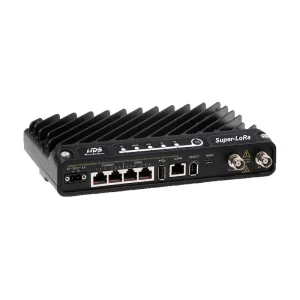
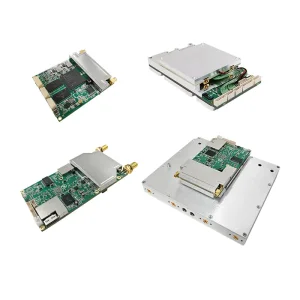
Yes, our high-quality iNET series, DDLmesh, and MIMOmesh boards feature transparent IP layer bridging. They appear to the system as standard wireless Ethernet networks. They fully support TCP/UDP/RTSP data formats, allowing direct plug-and-play connectivity for IP cameras, industrial PLCs, network switches, and computer systems without driver installations.
Engineered for deep-space telemetry, high-precision GNSS/RTK tracking, and specialized field command setups.
 Sinosun Tech