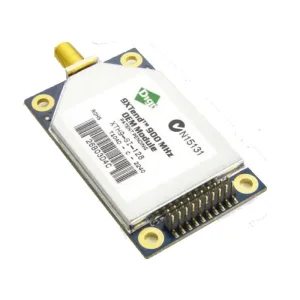
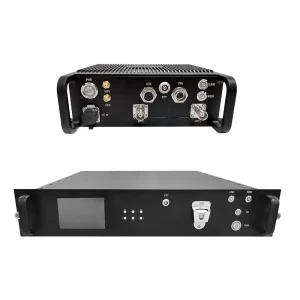
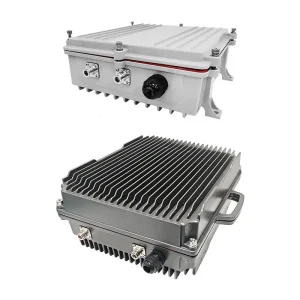
In the rapidly changing landscapes of modern defense operations, robotic autonomy, and large-scale industrial IoT, conventional point-to-point wireless networking topologies are hitting physical boundaries. Under challenging environmental constraints, modern system architects are turning towards dynamic IP Mesh Networks (Mobile Ad-hoc Networks or MANET). These self-configuring, self-healing networks bypass the physical limits of single centralized access points, shifting toward a decentralized matrix where every deployed terminal acts as an active relay.
"The core paradigm of IP Mesh is simple but robust: complete operational self-reliance. By merging COFDM modulation with advanced MIMO algorithms, our systems overcome non-line-of-sight barriers, maintaining mission-critical high-bandwidth links where standard networks fail completely."
Technological developments in Custom IP Mesh Networks focus on three key variables: spectral efficiency, SWaP-C (Size, Weight, Power, and Cost), and adaptive anti-jamming resilience. Modern networks use advanced MIMO (Multiple-Input Multiple-Output) antenna architectures and orthogonal frequency-division multiplexing (COFDM) to preserve bandwidth over vast distances. As automation continues to transform standard industrial applications, these custom-tailored radio networks enable seamless data flow across highly contested RF environments.
Delivering state-of-the-art wireless transceivers to global markets since 1996.
True decentralized ad-hoc routing with autonomous peer discovery.
Widely deployed in petrochemical, mining, defense, and robotic systems.
Procurement engineers and defense systems integrators must balance multiple competing priorities when selecting an IP Mesh partner. Reliability is paramount, but custom configurations, module form factors, spectral flexibility, and localized environmental compliance are also critical. Our factory understands that a single standard platform cannot meet the diverse needs of field operations.
Key procurement requirements center around:
Support across custom sub-GHz (300MHz to 900MHz), L-band, S-band, and C-band frequencies is essential to align with specific regional spectrum licenses and military allocations.
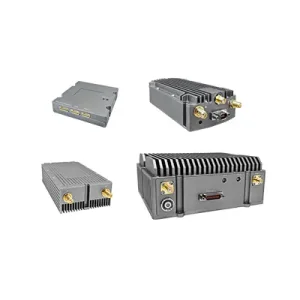
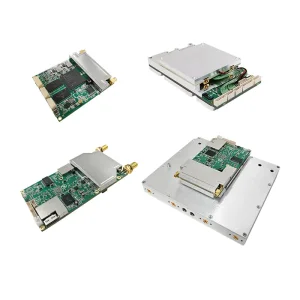
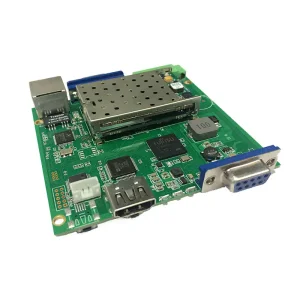
Particularly for UAV, UGV, and robotic payloads, dynamic OEM PCB modules must achieve high RF power output (up to 10 Watts or more) while maintaining low thermal profiles and sub-100g weight limits.
Combining ultra-low-latency 1080P HD H.264/H.265 video codecs, multi-channel serial TTL data streams, and robust bi-directional IP links onto a single RF carrier wave.
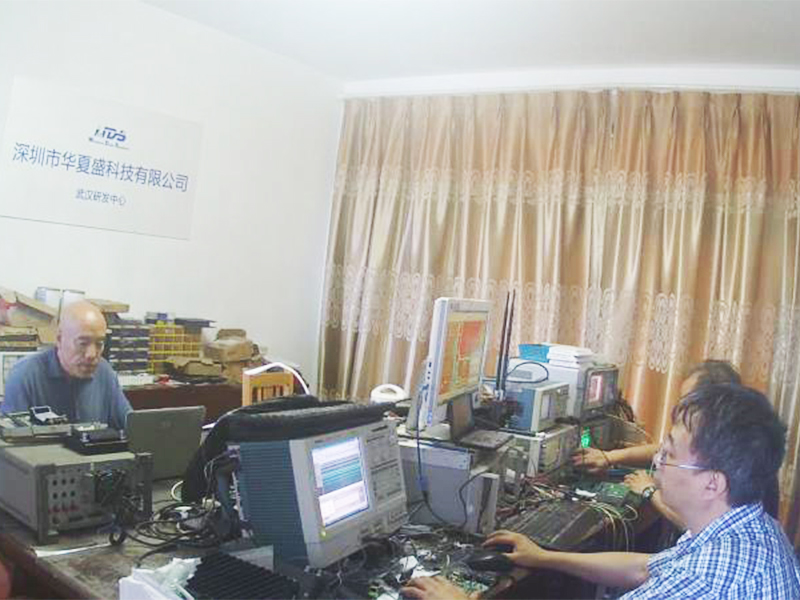
Established in 1996, Shenzhen Huaxiasheng Technology Co., Ltd. has been at the forefront of wireless data transmission product development, field application engineering, and comprehensive network systems engineering. Over the past several decades, our company has independently designed and manufactured high-reliability wireless data systems tailored for harsh operational environments. By combining advanced theoretical frameworks with practical RF experience, we collaborate closely with domestic universities and top research institutes to maintain our leadership in communication technology.
Our purpose has always been to provide high-quality, reasonably priced products backed by professional service. Pioneering innovation drives our continuous development, enabling us to deliver advanced technology, reliable quality, and cost-effective wireless data links for industrial automation, municipal security, and critical aerospace platforms.
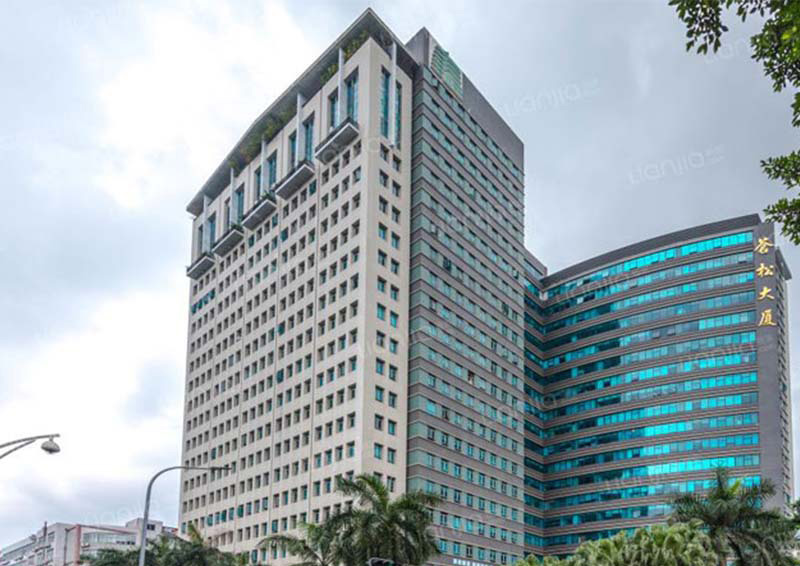
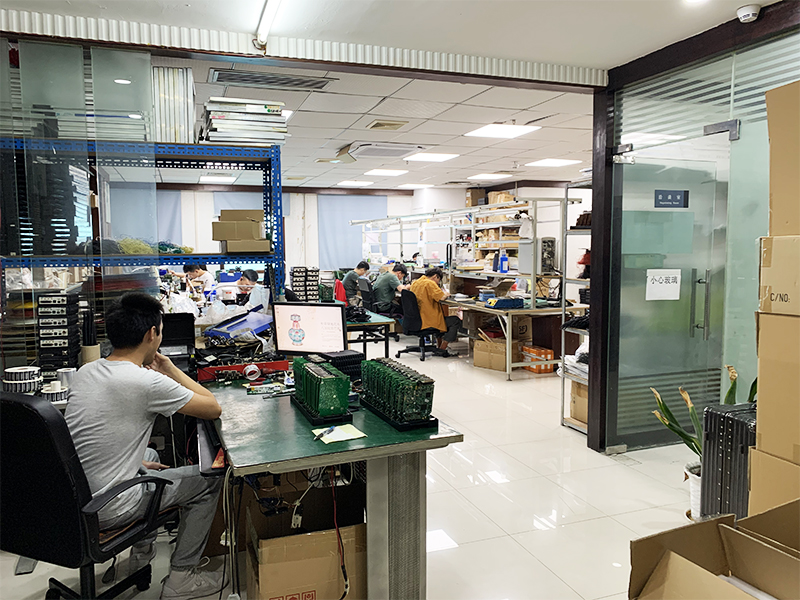
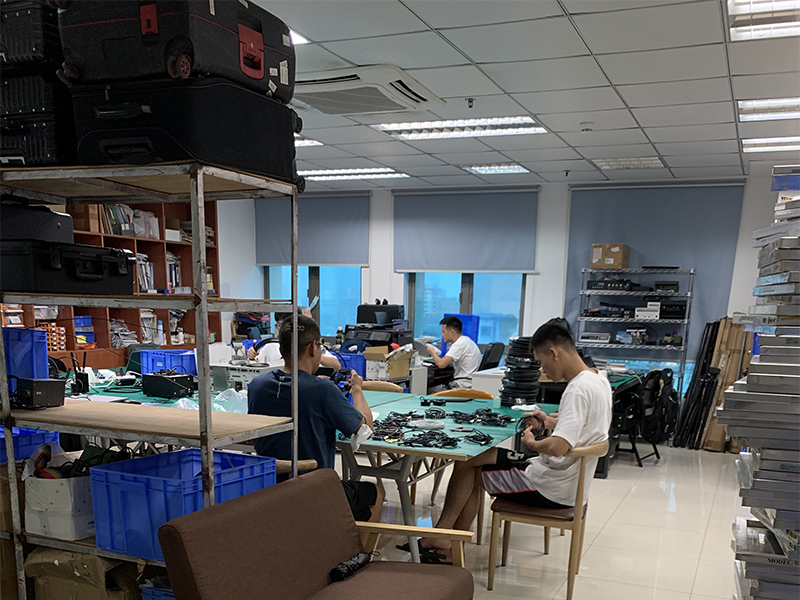
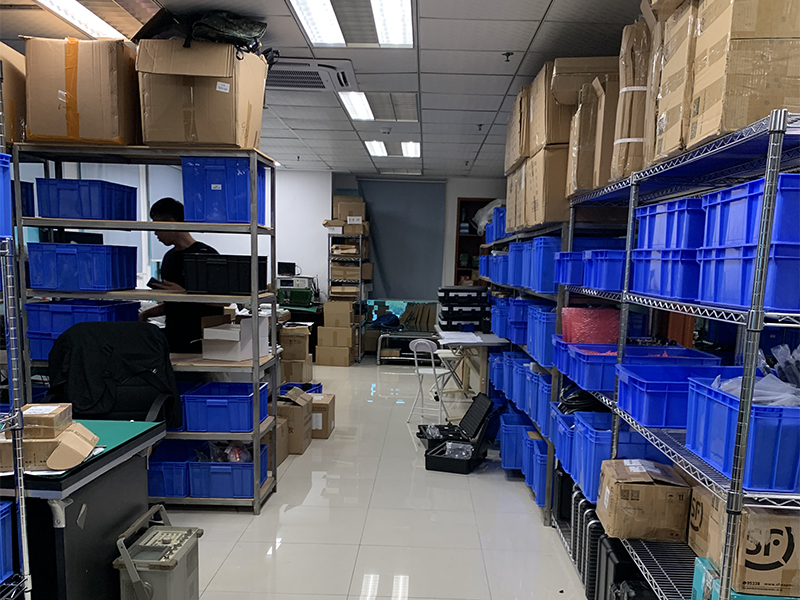
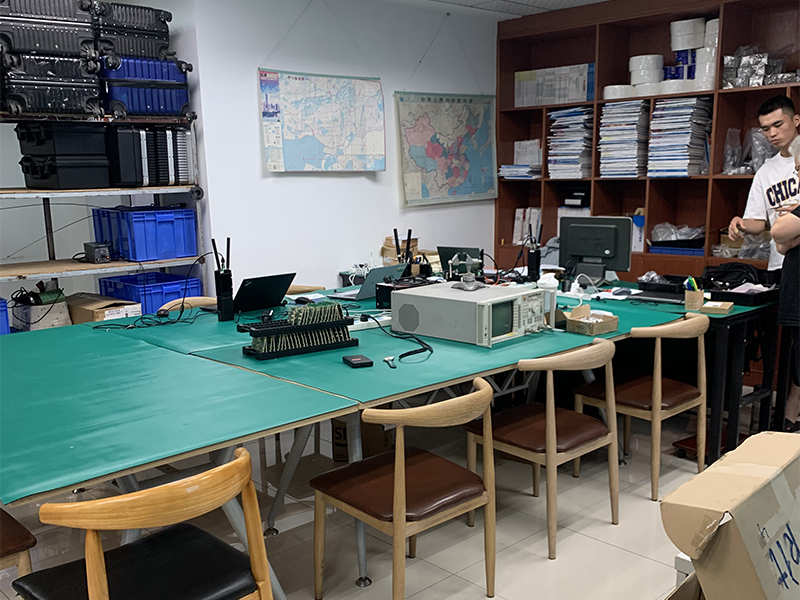
Shenzhen Huaxiasheng Technology operates a modern Factory 4.0 manufacturing ecosystem. By using automated surface-mount technology (SMT) lines, precise automated optical inspection (AOI), and in-house environmental simulation chambers, we ensure our production yields high-reliability hardware. This highly resilient supply chain enables us to source top-tier, industrial-grade silicon components and RF power transistors while maintaining rapid lead times for custom product orders.
Our manufacturing advantage lies in our comprehensive testing processes. Every customized IP mesh unit undergoes environmental screening, including high-temperature aging chambers, vibration stress tests, and RF signal sweep analysis up to 6GHz. This process ensures that your tactical backpack nodes, airborne telemetry systems, and outdoor fixed transceivers will operate reliably under extreme real-world conditions.

Our complete communication portfolio—from digital data transmission radios and frequency hopping transceivers to AD-HOC/MESH self-organizing networks and GNSS/RTK wireless data links—is designed to excel across multiple specialized industries:
Perfect for long-range, multi-channel video and data transmission for unmanned aerial vehicles (UAVs), unmanned surface vessels (USVs), and tactical autonomous UGVs.
Reliable, secure data acquisition and SCADA system telemetry for large-scale municipal operations across oil, gas, water, and power utility networks.
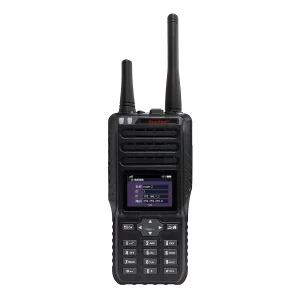
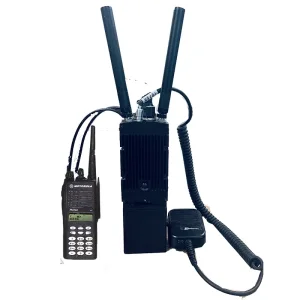
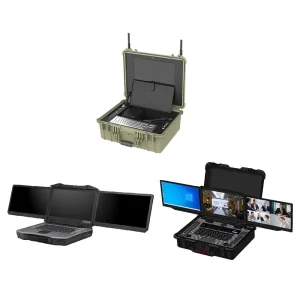
Quick-deploy communication platforms using portable command dispatch desks, backpack nodes, and tactical handheld intercoms to coordinate operations when standard infrastructure is down.
High-performance RF modules designed for real-time kinematic (RTK) positioning systems in precision agriculture, land surveying, and complex construction automation.
These detailed answers address common technical questions from procurement officers, communications engineers, and systems integrators:
Unlike standard star or point-to-multipoint topologies, an IP Mesh (MANET) network operates as a decentralized, peer-to-peer system. Every node functions as a smart transmitter, receiver, and signal repeater. If a single node drops due to terrain blockage or interference, the dynamic routing algorithm automatically reroutes data through adjacent active nodes. This self-healing architecture prevents single points of failure, making it ideal for mobile tactical operations, dense urban environments, and complex industrial complexes.
Our transceivers utilize a combination of proprietary frequency-hopping algorithms, orthogonal frequency-division multiplexing (COFDM), and MIMO antenna systems. Our FGR2 and NANO modules support rapid frequency hopping, making them highly resistant to electronic jamming and multipath interference. Additionally, we use high-linearity RF power amplifiers to maintain clean, strong signals even in dense industrial RF environments.
Yes. We specialize in OEM and ODM development. Our engineering team can customize the PCB footprint, power output, connection interfaces (Ethernet, TTL, RS232/RS485), and operating frequency bands to meet your project specifications. Our lightweight modules are ideal for integrating into UAV payloads, dynamic robotics, or handheld tracking devices where space, weight, and power are strictly limited.
Our video-enabled mesh platforms incorporate hardware-based H.264 and H.265 (HEVC) video compression codecs. This ensures low-latency, full 1080P HD video streaming at 60fps, even over constrained bandwidth channels. Combined with our multi-channel data links, these boards provide high-definition video along with telemetry, control data, and coordinate mapping over a single RF carrier.
 Sinosun Tech