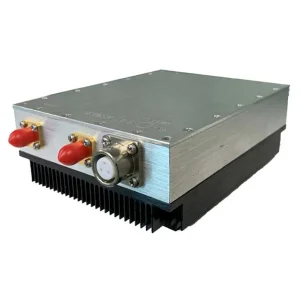
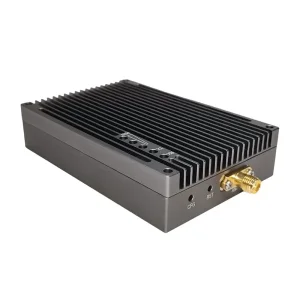
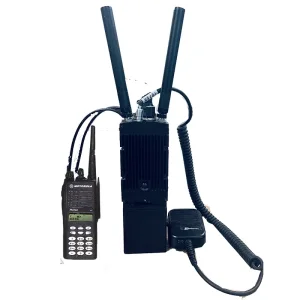
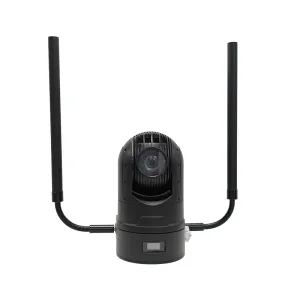
Explore our core selection of high-power bi-directional amplifiers, industrial MESH modules, and wireless data transceivers built for mission-critical applications.
In modern tactical, industrial, and commercial wireless systems, maintaining link integrity over challenging terrains requires advanced active RF components. A Bi-Directional RF Amplifier (BiAMP) acts as the vital bridge, enhancing both the uplink (transmitting) and downlink (receiving) signals dynamically.
At the heart of the BiAMP-VHF/UHF/L/S/C band architectures lies a fast, highly isolated switching mechanism. Because these systems often operate in Time Division Duplexing (TDD) modes, the speed at which the amplifier transitions between the Low Noise Amplifier (LNA) in the receive path and the Power Amplifier (PA) in the transmit path is critical. High-speed switching circuitry (often microsecond-level switching) ensures no packet loss or latency spikes occur in modern digital communications, such as COFDM or wireless MESH networks.
"By integrating custom gallium nitride (GaN) or gallium arsenide (GaAs) semiconductor technologies, our bi-directional amplifiers achieve excellent power efficiency, low noise figures, and robust linearity across extended operating temperatures."
Ideal for long-range, non-line-of-sight (NLOS) ground communication. Penetrates foliage, structures, and atmospheric barriers with ease, achieving solid data links over rugged landscapes.
Caters to high-bandwidth applications, drone video downlinks, satellite ground stations, and multi-channel telemetry where high frequency operation and gigabit-level throughput are needed.
Integrated Automatic Level Control (ALC) and RF power limiting prevent transceiver front-end damage from sudden signal spikes or impedance mismatches (high VSWR).
How the evolution of dynamic MESH topologies and autonomous robotics is driving the demand for specialized, custom bi-directional RF amplifiers.
In the current industrial internet of things (IIoT) ecosystem, standard off-the-shelf amplification solutions fall short. Whether it is oil rigs in the Gulf of Mexico, open-cast mines in Australia, or high-speed railways in Asia, operations demand high-integrity telemetry and HD video transmission in harsh environmental conditions.
According to recent market research, the global market for specialized military, tactical, and industrial RF amplifiers is experiencing compound annual growth rates (CAGR) exceeding 8.5%. This is driven primarily by the rapid expansion of unmanned aerial vehicles (UAVs), unmanned ground vehicles (UGVs), and autonomous marine vessels (USVs). These systems rely on compact, lightweight, and low-power-consumption (SWaP - Size, Weight, and Power) bi-directional amplifiers to double or triple their operational communication radii.
Every operational landscape is distinct. A standard amplifier cannot handle the extreme thermal variations of a desert oil field or the multi-path reflections of a dense urban rescue zone. Shenzhen Huaxiasheng Technology Co., Ltd. addresses this disparity by engineering custom-tailored BiAMP platforms.
Our custom designs accommodate specific gain profiles, customizable switching times, distinct voltage inputs, and unique mechanical housings (e.g., IP67 waterproof standards for maritime deployments), providing our global OEM/ODM partners with a distinct competitive advantage.
Deep-dive specifications showing the high level of engineering integrity put into every BiAMP system.
Designing a highly linear bi-directional amplifier across wide bandwidths (such as VHF/UHF from 136MHz up to C-band at 5.8GHz) presents significant engineering challenges. The foremost is Intermodulation Distortion (IMD). When complex digital modulation schemes like OFDM, QAM, or COFDM are passed through an amplifier, non-linearities create spectral regrowth, interfering with adjacent channels and degrading the signal's Error Vector Magnitude (EVM).
Huaxiasheng solves this by building class-AB and class-J linear designs with dynamic biasing. This yields an exceptionally high Output Third-Order Intercept Point (OIP3), ensuring clean data transmission even at maximum power output levels. In addition, our receiver LNAs employ multi-stage bandpass filters and ultra-low noise transistors, maintaining noise figures below 1.5 dB for crisp reception of weak signals at the cell edge.
| Parameters / Specs | VHF/UHF Range | L/S/C Band Range |
|---|---|---|
| Frequency Coverage | 136 - 470 MHz | 900 MHz - 5.8 GHz |
| Tx Gain | 15 dB - 25 dB (Customizable) | 12 dB - 30 dB (Customizable) |
| Rx Gain | 10 dB - 15 dB (Customizable) | 10 dB - 18 dB (Customizable) |
| Rx Noise Figure | ≤ 1.5 dB | ≤ 2.0 dB |
| TDD Switching Time | ≤ 1.5 μs | ≤ 1.0 μs |
| IP Rating | IP65 / IP67 Options | IP65 / IP67 Options |
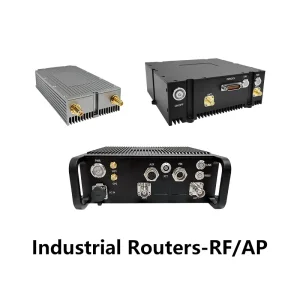
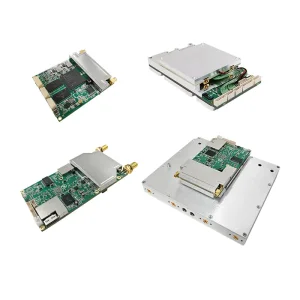
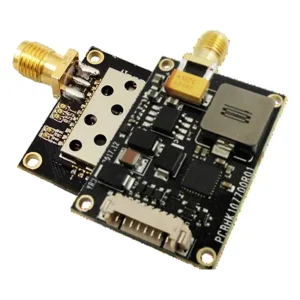
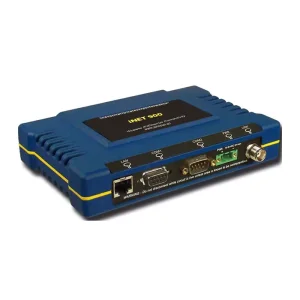
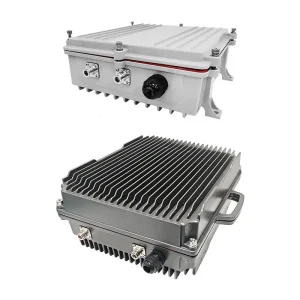
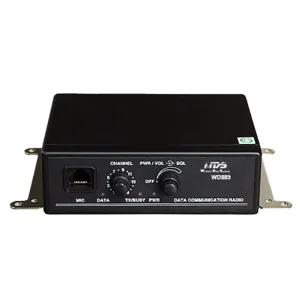
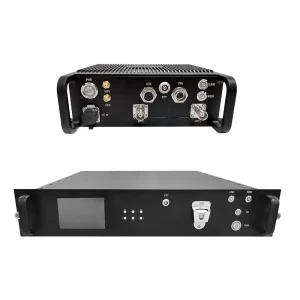
A standalone amplifier is only as effective as the system it is integrated into. At Shenzhen Huaxiasheng Technology Co., Ltd., we take a macro-level approach to connectivity. We design our bi-directional amplifiers to function seamlessly alongside our core product ecosystem, including:
How our custom bi-directional RF amplification units are implemented in high-stress real-world systems.
Offshore drilling rigs operate in high-humidity, high-salinity environments requiring intrinsically safe hardware. By integrating our custom C-band and S-band BiAMP modules into their maritime routers, petroleum firms establish stable, high-bandwidth data bridges between drill ships and ocean platforms over 30 kilometers away.
VHF networks excel at tracking sensors and voice links across mountainous terrain. In active disaster zones, our VHF/UHF bi-directional amplifiers are installed on high-altitude surveillance drones, boosting the transmission of vital thermal sensor data back to remote command posts.
Autonomous haul trucks and underground drill rigs require constant sub-millisecond control links. Placing our custom low-latency MESH900 units combined with UHF BiAMPs directly onto mining machinery ensures reliable signal propagation through deep, winding subterranean stone tunnels.
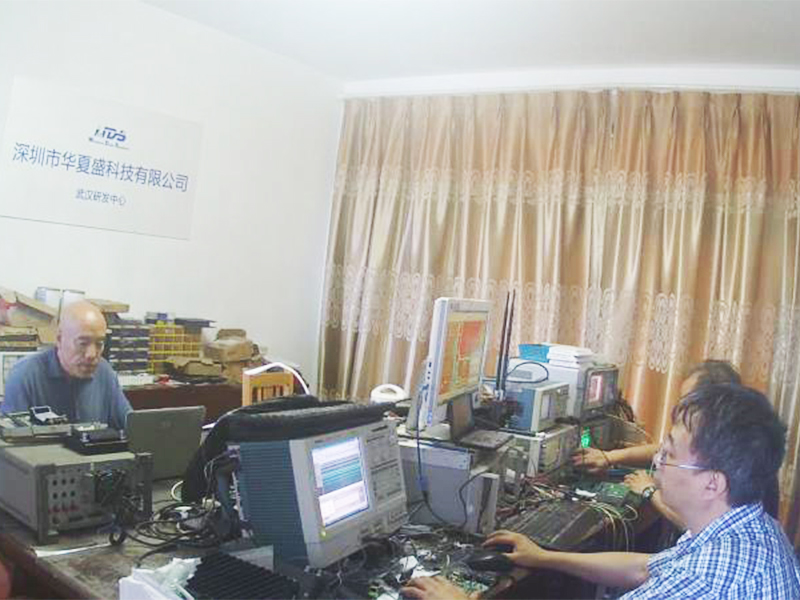
Established in 1996, Shenzhen Huaxiasheng Technology Co., Ltd. has dedicated over two decades to pioneering the wireless data transmission market. Collaborating with top-tier domestic universities and international aerospace research institutes, we have built a robust research team capable of handling complex RF challenges.
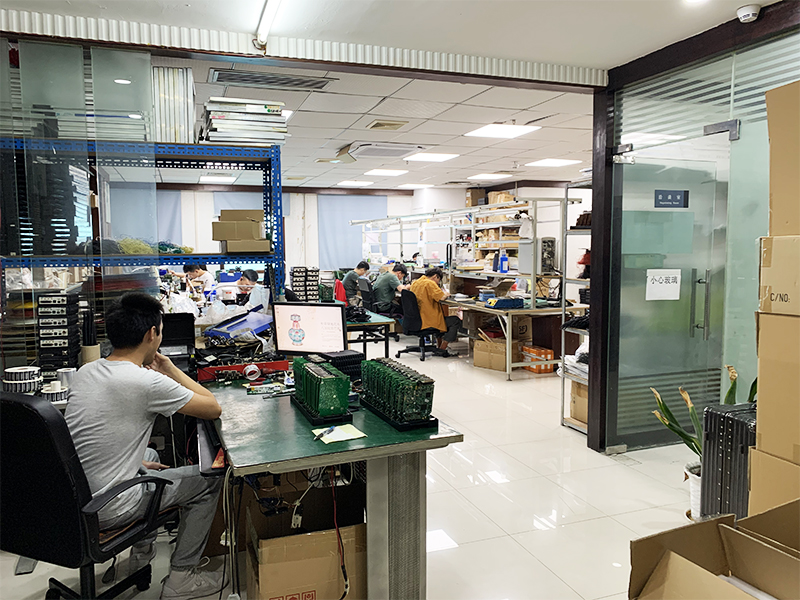
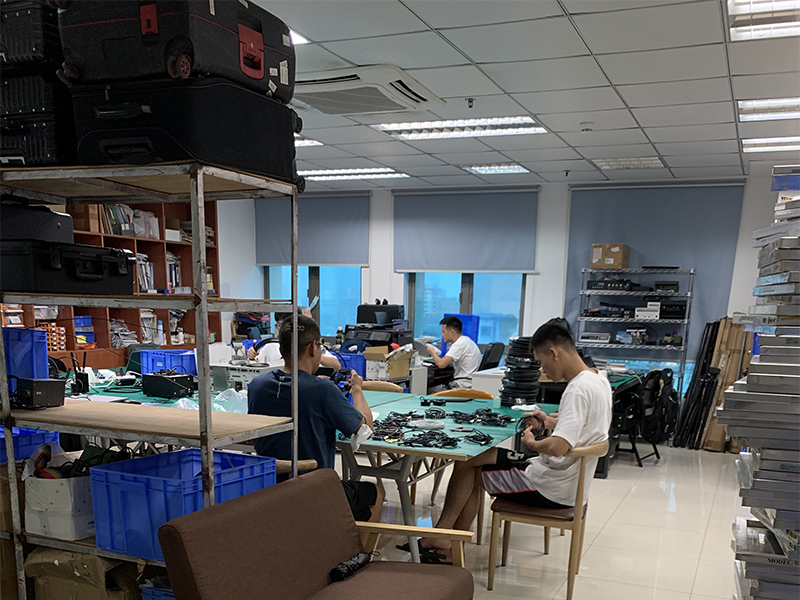
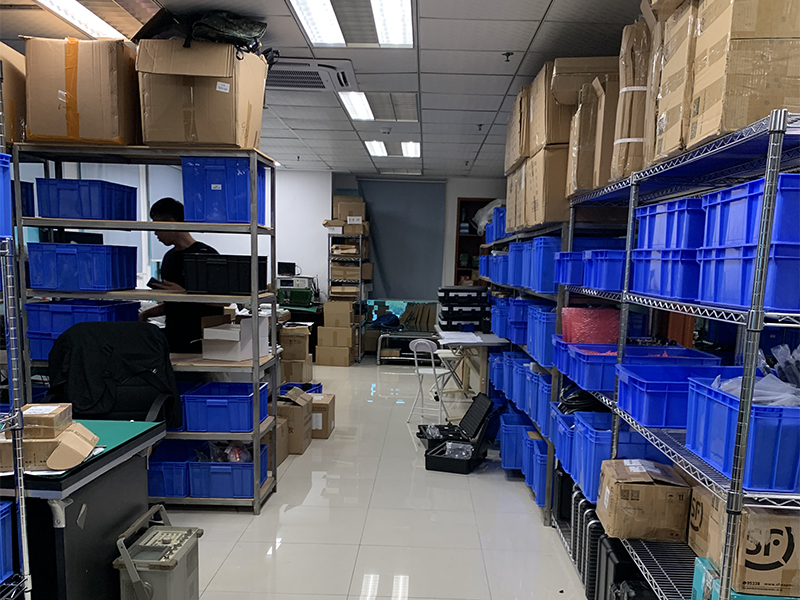
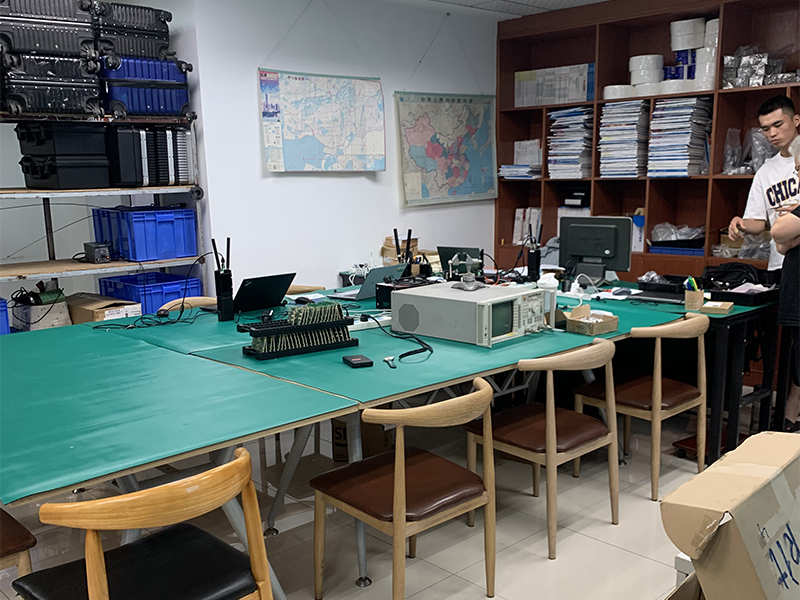
Our state-of-the-art facility is equipped with high-precision vector network analyzers, spectrum analyzers, climate chambers, and automated pick-and-place surface mount lines. This vertical integration allows us to execute strict quality control at every stage, from initial schematic design and PCB routing to final casing sealing and thermal burn-in testing.
Our products find wide application across vital industries including electrical networks, water conservancy, heating infrastructure, seismological monitoring, meteorology, agricultural drones, and custom unmanned systems.

How next-generation semiconductor physics and adaptive software layers are transforming the industry.
The transition from traditional Silicon LDMOS or GaAs to Gallium Nitride (GaN) on Silicon Carbide (SiC) substrates represents a major step forward in power density. GaN devices tolerate much higher operating voltages and temperatures, enabling us to compress 50W of saturated output power into RF modules that previously could only output 10W.
Future BiAMP architectures will integrate micro-controllers running lightweight machine learning algorithms. By continuously analyzing the incoming signal-to-noise ratio (SNR) and bit error rate (BER) of the link, the amplifier dynamically scales its power output. This conserves vital battery power on mobile drone setups when nodes are close, and maxes out power only when the link budget degrades.
Find authoritative answers to technical engineering queries regarding bi-directional amplifiers and self-organizing networks.
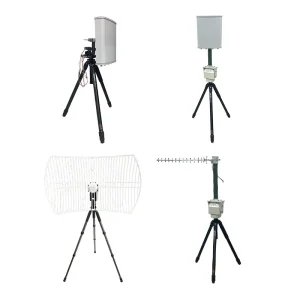
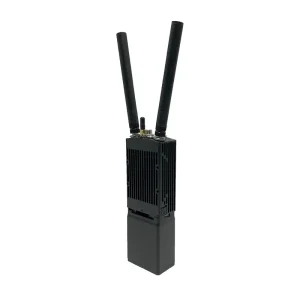
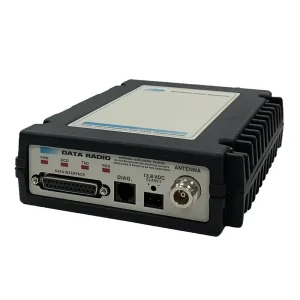
Complete your deployment configuration with our heavy-duty long-range data links, tracking pedestals, and MIMO mesh units.
 Sinosun Tech