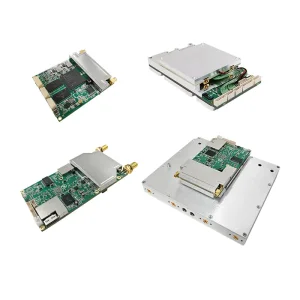
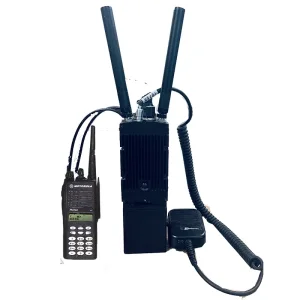
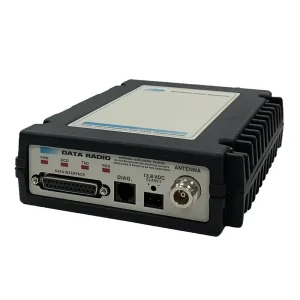
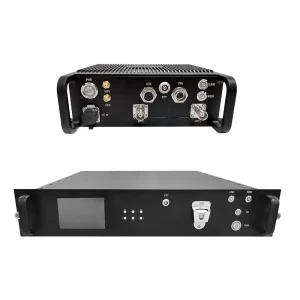
In critical communication scenarios—spanning search and rescue, defense operations, unmanned swarms, and massive industrial SCADA telemetry networks—infrastructure-dependent topologies (e.g., standard cellular LTE/5G or centralized WiFi networks) are vulnerable to structural failures. The loss of a single base station or optical backhaul link can cause absolute system blackout. In contrast, custom mesh-based communication acts as a resilient, decentralized network architecture. Leveraging Mobile Ad-Hoc Network (MANET) dynamics, every node in a mesh deployment behaves simultaneously as an end-device, transceiver, and dynamic router. This eliminates single points of failure, ensuring constant transmission pathways.
This technical whitepaper details the structural designs, manufacturing parameters, global market forces, and algorithmic advancements that define industrial and military-grade wireless mesh communications. As a pioneer in the RF manufacturing industry since 1996, Shenzhen Huaxiasheng Technology Co., Ltd. (HXS) leads the integration of advanced COFDM modulation, MIMO-driven physical layers, and adaptive routing protocols. These designs support missions requiring low-latency high-definition video and robust telemetry over long distances in challenged environments.
E-E-A-T Technical Focus: The core of modern MANET systems relies on the seamless convergence of the Physical Layer (PHY) utilizing COFDM (Coded Orthogonal Frequency Division Multiplexing) and the Media Access Control (MAC) layer dynamically coordinating time slots via TDMA (Time Division Multiple Access).
Industrial mesh modules require specialized routing algorithms designed to mitigate multipath fading, high Doppler shifts in fast-moving unmanned aircraft systems (UAS), and high spatial attenuation in urban dense forests. Huaxiasheng's advanced firmware applies custom variants of the Ad-hoc On-Demand Distance Vector (AODV) and Optimized Link State Routing (OLSR) protocols. These protocol updates execute packet-by-packet signal strength evaluation (RSSI and Link Quality Metrics) to dynamically recalculate transmission routes in microseconds. When a terrestrial or airborne node undergoes blockage, the self-healing network instantly re-routes the data package through alternative adjacent nodes, preventing packet loss and minimizing latency to sub-20ms windows.
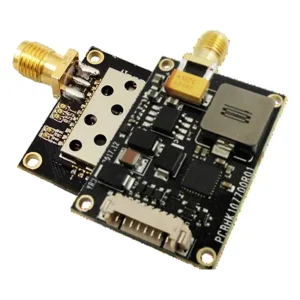
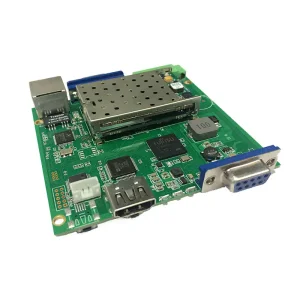
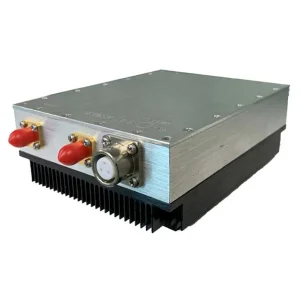
Based in Shenzhen, the global hardware capital, Huaxiasheng coordinates rapid sourcing of RF components, dynamic PA modules, LNA chipsets, and high-density multi-layered PCBs. This proximity reduces time-to-market and lowers NPI (New Product Introduction) cycles to a fraction of standard timelines.
Unlike rigid off-the-shelf Western system providers, Chinese manufacturing infrastructures accommodate hardware level adjustments. This includes modifications to operating frequencies (from 200MHz up to 6GHz), specific physical dimensions, localized board shape layouts for compact UAV bays, and custom firmware modifications.
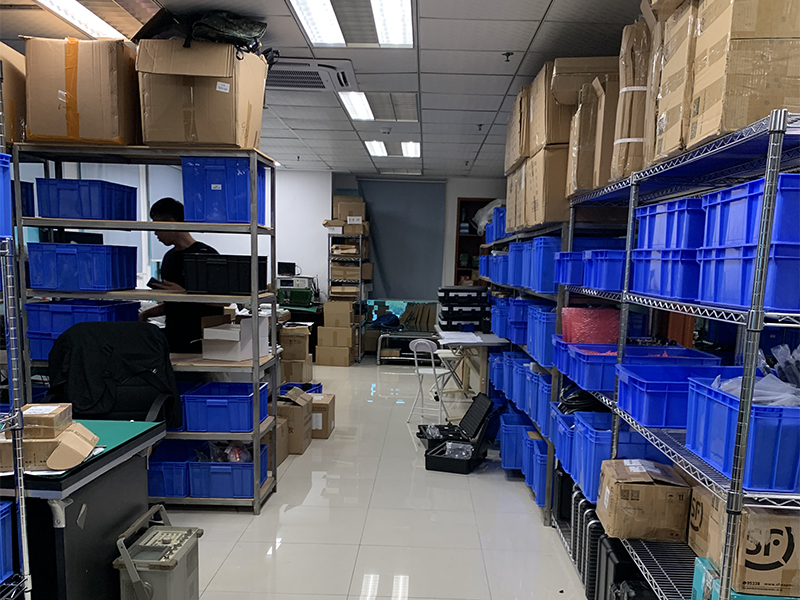
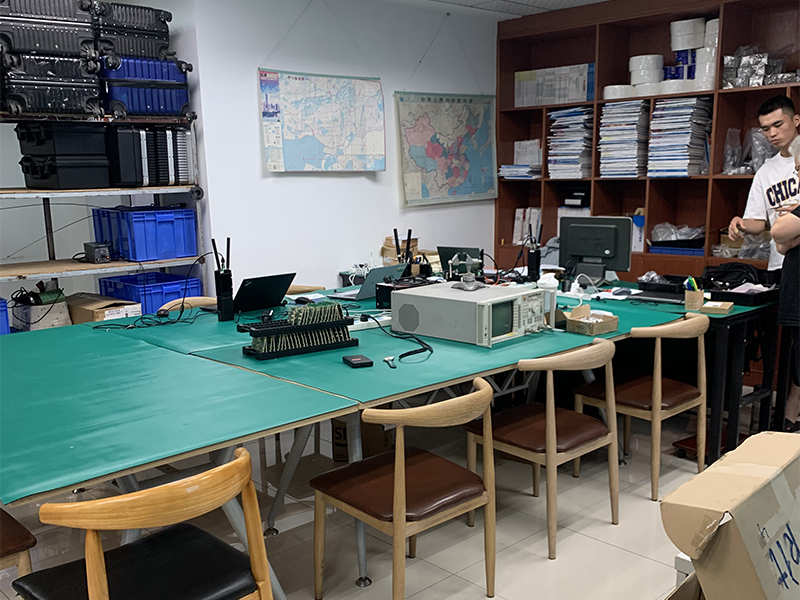
Advanced factories are equipped with state-of-the-art diagnostic systems including RF vector network analyzers, high-low temperature chamber ovens, vibration testing rigs, and anechoic chambers to guarantee strict adherence to IP67 ingress standards and MIL-STD-810G vibration tolerances.
The global wireless mesh communication paradigm is shifting toward higher frequencies, wider bandwidths, and embedded artificial intelligence. Understanding these development trends allows procurement officers and systems architects to future-proof their field deployments:
Multiple-Input Multiple-Output (MIMO) technology uses multi-antenna paths to double data rates via spatial multiplexing. Integrating MIMO with COFDM enables MIMOmesh modules to reliably transmit continuous 1080P and 4K video feeds in dynamic, non-line-of-sight (NLOS) urban environments prone to multipath reflections.
Modern security environments are increasingly defined by electromagnetic interference. Cognitive radio-enabled mesh nodes dynamically scan the RF spectrum to identify localized jamming attempts. They automatically switch communication bands or initiate ultra-high-speed frequency hopping (FHSS) to bypass localized interference without disconnecting.
Modern tactical operators do not rely on a single communication medium. Gateway radios act as smart translators, bridging local ad-hoc networks with cellular networks (4G/5G), satellite uplinks (LEO), and public switched networks (PSTN), ensuring continuous connection back to global command centers.
For unmanned systems, a millisecond delay can mean the difference between mission success and structural loss. Embedded H.264/H.265 video codec boards are integrated directly onto the same PCB as the RF transceiver, bypassing external processors to achieve low end-to-end latency for bidirectional control and video telemetry.
Mesh communication technologies are suited for harsh physical environments where standard commercial networks fail. Below are five macro-level industrial applications implemented globally:
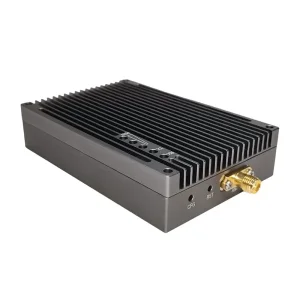
Unmanned vehicles rely on constant, bidirectional links to transmit telemetry, sensor feedback, and high-definition video feeds. Our DDLmesh and pMDDL series of lightweight wireless digital links provide long-range, low-latency transmission for multi-UAV swarms. They allow automated coordinating flights where nodes continuously relay control commands to adjacent aircraft, extending operations beyond standard visual line-of-sight (BVLOS).
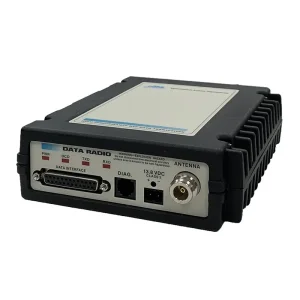
Oil refineries, gas pipelines, and offshore platforms present hazardous environments spread across expansive geographic landscapes. Huaxiasheng's industrial-grade SCADA Digital Data Radios provide low-bandwidth, long-range telemetry links. These systems communicate sensor data regarding pressure, flow rates, and pipeline structural health back to centralized terminals. They run on optimized protocols to operate continuously on minimal solar energy systems, even under extreme ambient temperatures.
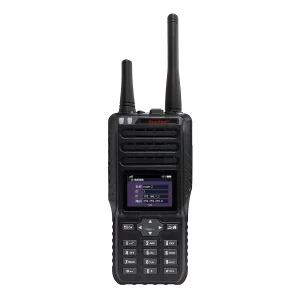
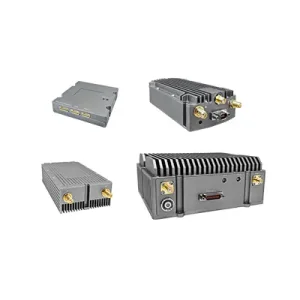
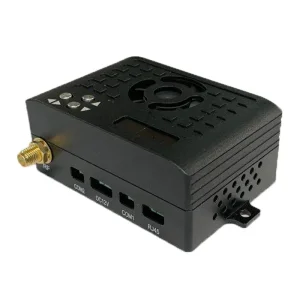
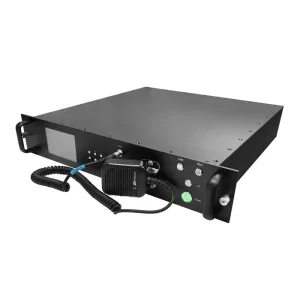
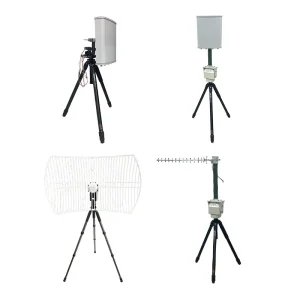
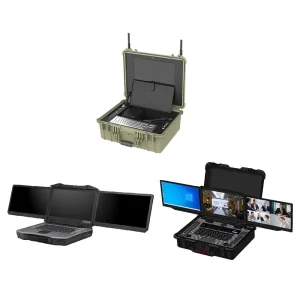
When natural disasters like earthquakes, typhoons, or floods disable local telecommunication grids, first responders face a critical information vacuum. Under these conditions, tactical response teams deploy Portable MESH Command Boxes, handheld BEAMmesh radios, and vehicular command desks. In minutes, they establish a high-bandwidth local communications network, facilitating the sharing of real-time maps, tactical voice channels, and thermal imaging data.
Engaged in the development, application, and network engineering of high-end wireless data transmission equipment since 1996, Shenzhen Huaxiasheng Technology Co., Ltd. (HXS) has established itself as an industry leader. For nearly three decades, our engineering team has collaborated with elite domestic research institutes and top-tier technical universities. This cooperative approach combines research insights with field experiences to design robust RF systems.
HXS develops, manufactures, and supplies digital data transmission radios, high-speed frequency-hopping modules, heterogeneous internet gateways, bi-directional RF power amplifiers, and multi-channel data links. Our product catalog supports critical applications across oil and gas exploration, smart grids, seismic warning networks, meteorological monitoring, precision agriculture (GNSS/RTK), financial networks, and advanced automation systems.
Our core operational mission stands on three pillars: **Producer** (leading independent hardware development), **Services** (ensuring pre-sales support and after-sales engineering guarantees), and **Purpose** (delivering reliable, reasonably priced RF equipment that powers industrial automation and tactical security worldwide).
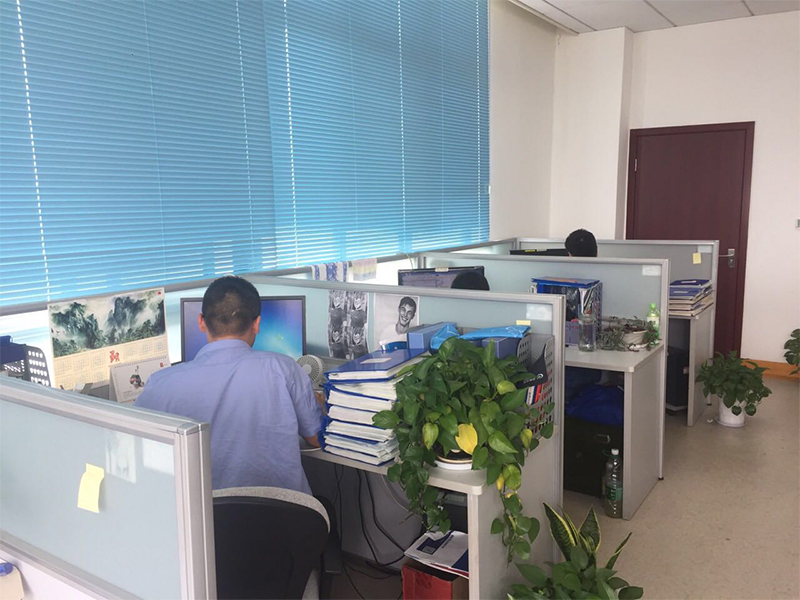
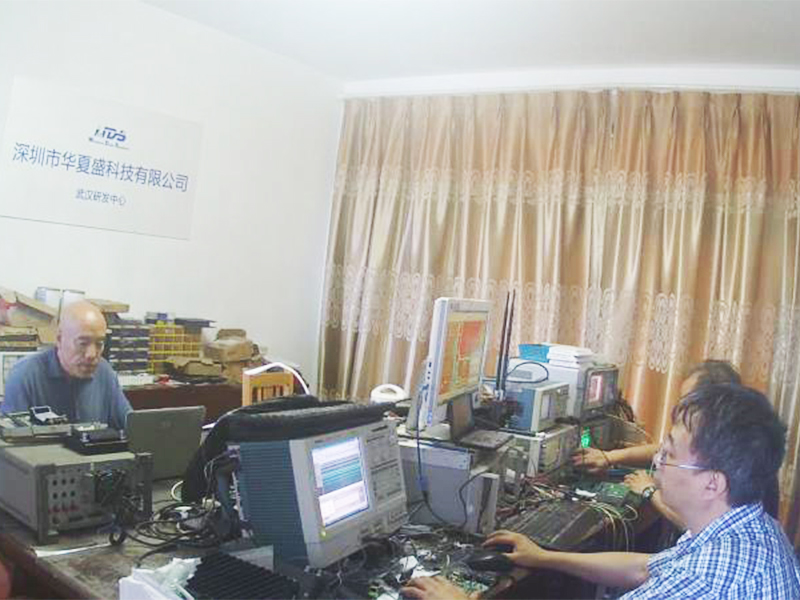
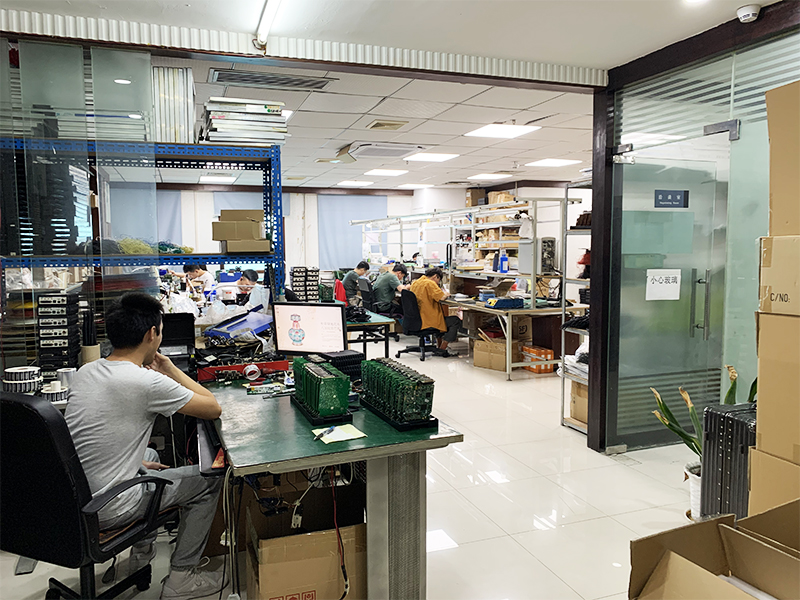
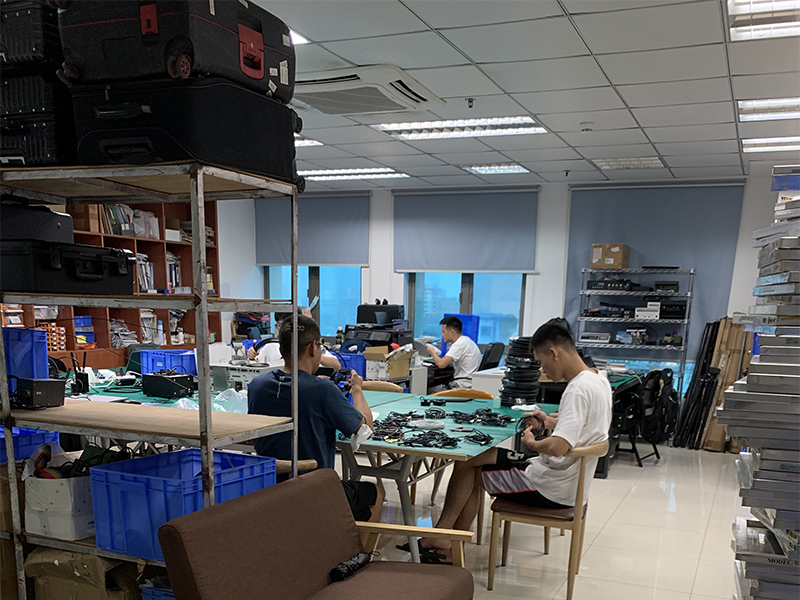
We offer broad customization capabilities. While standard bands include 350MHz, 900MHz, 1.4GHz, and 2.4GHz, we regularly construct bespoke RF front-ends that span from 150MHz up to 6.0GHz (including L-band, S-band, and C-band frequencies). This allows our global clients to align with local regulatory frameworks or utilize military-specific designated spectrum bands.
COFDM (Coded Orthogonal Frequency Division Multiplexing) splits a single high-rate data stream across hundreds of closely spaced, orthogonal sub-carrier signals. Each sub-carrier transmits low-rate data. Because the symbol duration on each sub-carrier is longer, the signal is resilient to multipath interference, allowing it to penetrate walls and bend around structural obstacles, even when direct line-of-sight is blocked.
To secure transmissions in tactical environments, our MESH firmware supports integrated AES-128 and AES-256 hardware-accelerated encryption. Key generation and rotation can be configured dynamically through our web administration portal, preventing interception, brute-force injection, or packet analysis by unauthorized external monitors.
Through dynamic channel access optimization and adaptive TDMA timeslot distribution, our standard MESH system supports up to 64 or 128 nodes dynamically self-configuring in a single frequency domain. For networks requiring higher node densities, we design multi-frequency heterogeneous gateways that segment traffic while preserving overall path connectivity.
 Sinosun Tech