How to Choose a Wireless Communication Link in 2026?

Time:2026-10-13 Author:Sophia
0%

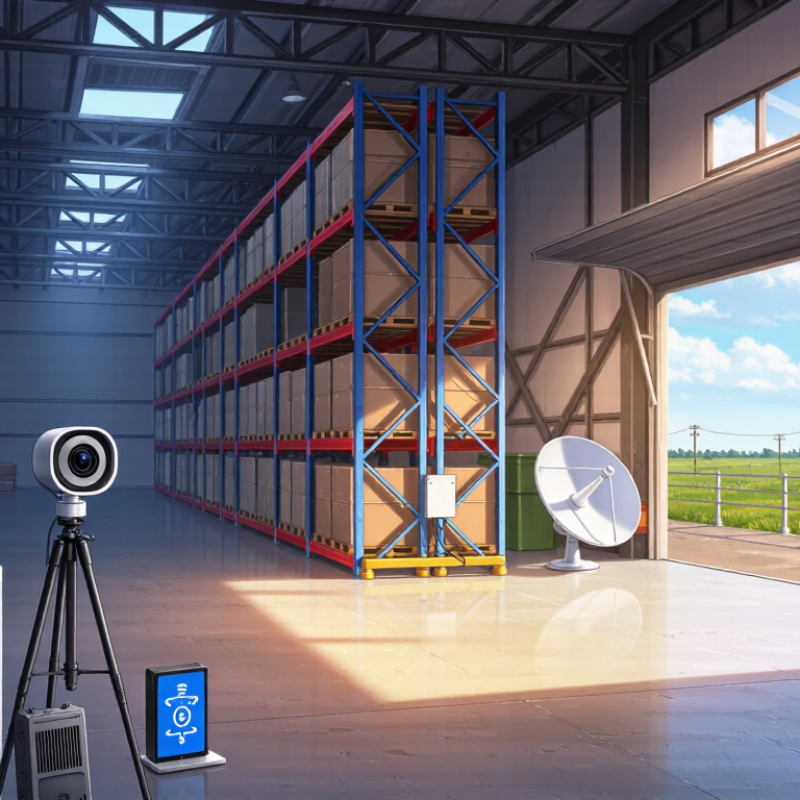
Choosing a Wireless Communication Link in 2026 requires more than comparing advertised speed. Real deployments expose the difference. A warehouse full of metal racks may weaken Wi-Fi signals, while a rural sensor may need years of battery life. The strongest option depends on distance, latency, coverage, spectrum, security, and maintenance conditions.

Industry evidence shows why this decision matters. Ericsson’s Mobility Report, November 2024, forecasts continued rapid growth in mobile data traffic through 2030, driven by video, cloud services, and connected devices. The GSMA Mobile Economy 2025 report also identifies 5G as a major platform for enterprise digitalisation, although adoption differs sharply between regions. Meanwhile, the ITU’s IMT-2030 framework highlights enhanced mobile broadband, massive machine communication, and ultra-reliable low-latency communication as distinct future requirements. One link cannot serve every scenario.

This guide compares cellular, Wi-Fi, Bluetooth, LoRaWAN, satellite, and private networks against practical engineering needs. It considers installation effort, operating cost, resilience, interoperability, and regulatory constraints. A camera streaming from a construction site needs different performance than a soil sensor transmitting twice daily. That sounds obvious. It is often overlooked.

The evaluation also recognises uncertainty. Coverage maps can appear precise but may not reflect indoor walls, weather, congestion, or local interference. Vendor claims deserve testing. Pilot measurements, battery logs, and failure records should support the final choice. Readers should therefore treat this article as a decision framework, not a universal ranking. The right Wireless Communication Link is the one that remains dependable after deployment, not merely the one with the highest peak speed.
How to Choose a Wireless Communication Link in 2026?

Define Link Requirements: ITU IMT-2020 Targets 20 Gbit/s Peak Downlink

Choosing a wireless communication link in 2026 starts with measurable requirements, not fashionable specifications. The ITU IMT-2020 framework sets a 20 Gbit/s peak downlink target for advanced mobile systems. That figure describes ideal conditions. It does not promise 20 Gbit/s beside a crowded railway platform. Write the real scene. A factory camera may need 200 Mbit/s, while an immersive display could demand several gigabits. Peak speed matters, but average speed matters more.

Measure payload size, user density, session duration, latency, reliability, and uplink traffic. A ten-millisecond response target can change the design more than a dramatic download number. Record signal loss through concrete walls. Test at night and during lunch-hour congestion. This is practical evidence. Select a link that remains useful after interference, distance, weather, and protocol overhead. Engineers should leave headroom, because field performance is rarely as clean as a spreadsheet.

Security and resilience belong in the requirement sheet. Define authentication, encryption, failure recovery, and safe behavior during link loss. Power use also deserves a clear number. A battery sensor cannot behave like a rooftop access point. I would question any proposal reporting only peak downlink speed. It may hide weak uplink capacity or unstable handovers. Real measurements can expose uncomfortable assumptions.

How to Choose a Wireless Communication Link in 2026?

Define link requirements using ITU IMT-2020 performance targets

The ITU IMT-2020 framework specifies a peak downlink target of 20 Gbit/s and a peak uplink target of 10 Gbit/s. It also defines user-experienced data-rate targets of 100 Mbit/s downlink and 50 Mbit/s uplink. Use these figures as engineering reference points when comparing wireless links; actual performance depends on spectrum, coverage, propagation conditions, traffic load, antenna configuration, and deployment design.

Reference: ITU-R M.2410, Minimum requirements related to technical performance for IMT-2020 radio interface(s).

Compare Capacity: Wi-Fi 7 Offers a 46 Gbit/s Theoretical PHY Rate

How to Choose a Wireless Communication Link in 2026?

Wi-Fi 7 can advertise a theoretical PHY rate of 46 Gbit/s. That figure assumes ideal conditions, wide channels, advanced modulation, and multiple spatial streams. It is not the speed a laptop will usually measure. Real throughput drops because of interference, distance, protocol overhead, and shared airtime. In a quiet room, a compatible device may transfer large files quickly. Through a concrete wall, performance can change sharply. I have seen excellent laboratory numbers become ordinary home results.

Tips: Check the actual client capability before choosing equipment. Measure throughput from the intended room, not beside the access point. Ask whether your application needs high capacity or stable coverage. Video production, dense offices, and local backups may justify Wi-Fi 7. Basic browsing may not. A lower-cost link can be more sensible.

Capacity is only one selection factor. Wi-Fi 7 can reduce congestion through wider channels and coordinated multi-link operation. However, those benefits require compatible devices and clean spectrum. The 46 Gbit/s rate describes the physical layer, not guaranteed application speed. Wired connections still offer predictable latency for fixed workstations. Cellular links may suit moving users or temporary sites. Satellite access can help remote locations, but latency remains a practical concern. Review measured throughput, coverage maps, client counts, and interference before deciding. Then test again during busy hours.

Evaluate Range and Power: Bluetooth LE 2 Mbit/s vs LoRaWAN Low-Power IoT

How to Choose a Wireless Communication Link in 2026?
Evaluate Range and Power: Bluetooth LE 2 Mbit/s vs LoRaWAN Low-Power IoT

Bluetooth LE 2M PHY offers a theoretical 2 Mbit/s rate, but real throughput is lower. Walls, interference, packet overhead, and sleep cycles reduce performance. It fits sensors, wearables, and local equipment that need quick transfers. A 2024 Bluetooth market report recorded 5.4 billion device shipments in 2023, showing strong ecosystem maturity. Yet, high speed does not automatically mean longer battery life.

LoRaWAN usually sends data at roughly 0.3 to 50 kbit/s, depending on regional settings and signal conditions. Its strength is coverage. Outdoor links can reach several kilometres, while dense buildings may reduce that distance sharply. GSMA Intelligence reported 18.8 billion IoT connections in 2024 and forecasts 34.4 billion by 2030. That growth favors low-maintenance networks, but planning remains imperfect. Gateway placement, antenna height, payload size, and local spectrum conditions can change results.

Tips: Measure the real site, not an ideal laboratory. Send a 20-byte sensor packet through walls and record retries. Choose Bluetooth LE when devices are nearby and data arrives quickly. Consider LoRaWAN when sensors are scattered, messages are small, and battery replacement is difficult. Keep a power budget for cold weather, weak signals, and firmware updates. A mistake I still see is treating “kilometres” and “2 Mbit/s” as guaranteed user performance. They are starting points, not promises.

Assess Reliability and Latency: 5G URLLC Targets 1 ms Air-Interface Latency

How to Choose a Wireless Communication Link in 2026?

Assess Reliability and Latency: 5G URLLC Targets 1 ms Air-Interface Latency

Choosing a wireless link requires more than checking its advertised speed. In field tests, reliability often matters more than peak performance. A robotic arm, remote inspection camera, or mobile control unit may fail after one brief interruption. 5G URLLC targets about 1 millisecond of air-interface latency under suitable conditions. This is not the same as end-to-end latency. Processing, transport, and application delays still add time.

Measure the complete path. Record latency, jitter, packet loss, and recovery time during movement, congestion, and weak-signal conditions. Test near walls, metal equipment, and busy access points. A link that performs well in an empty laboratory may behave differently on a factory floor. Use repeated trials, not one impressive result. I have seen average latency hide short spikes that disrupted control signals. That mistake deserves attention.

Tips: Define a realistic latency budget. Separate air-interface delay from total application delay. Test at peak traffic. Set an outage limit before deployment. Keep a backup path when downtime is costly. Also, document the test equipment and time of day. Results can change. No wireless design is perfect, and a confident decision should include its known weaknesses.

Verify Standards and Security: IEEE 802.11be and 3GPP Release 18 Criteria

Choosing a wireless communication link in 2026 starts with verified standards, not advertised speed. IEEE 802.11be, commonly associated with Wi-Fi 7, should support multi-link operation, wider channels, and improved modulation. Check the device’s certification record and regional frequency approval. A test site should measure latency beside a busy access point, not only in an empty room. Security matters equally. Require WPA3, protected management frames, strong authentication, and timely firmware maintenance. A fast link is still weak if its credentials are poorly managed.

For wide-area coverage, assess 3GPP Release 18 criteria carefully. Release 18 introduces 5G-Advanced capabilities, including improved positioning, energy efficiency, automation, and support for demanding industrial traffic. Ask whether the network supports mutual authentication, encrypted signaling, secure subscriber identity handling, and clear isolation between applications. Verify service-level targets with packet-loss and handover tests. In practice, coverage maps can look convincing. Buildings often disagree.

Tips: Write down latency, jitter, packet loss, recovery time, and power use during real workloads. Compare results across several locations and times. Check independent laboratory reports, security advisories, and update commitments. Do not treat every Release 18 feature as available everywhere; deployment maturity varies. I would also retest after major software updates, because an earlier result may quietly become outdated.

FAQS

When should a 2 Mbit/s short-range wireless link be used?

Use it for nearby sensors, wearables, and equipment needing quick data transfers.

When is a long-range, low-power network more suitable?

Choose it for scattered sensors sending small messages over several kilometres.

How should wireless range be tested?

Measure the actual site, not only laboratory conditions.

What affects long-range network performance?

Gateway position, antenna height, payload size, and local spectrum conditions matter.

Does a high data rate guarantee longer battery life?

No. Sleep cycles, retransmissions, interference, and processing also consume power.

Is a one-millisecond wireless delay guaranteed?

No. A one-millisecond air-interface target excludes processing and application delays.

How should latency and reliability be evaluated?

Measure total latency, jitter, packet loss, and recovery time.

What physical locations deserve special testing?

Test near walls, metal equipment, and busy access points.

Should a wireless system include a backup path?

Use one when downtime could damage operations or interrupt control.

Conclusion

Choosing a Wireless Communication Link in 2026 requires matching technical performance to the application’s actual needs. Begin by defining throughput, coverage, device density, energy limits, and response-time requirements. Advanced mobile systems may target peak downlink speeds of 20 Gbit/s, while next-generation local networks can provide theoretical physical-layer rates of up to 46 Gbit/s. These figures represent maximum laboratory potential, so practical performance should be assessed under realistic congestion, distance, and interference conditions.

Range and power consumption are equally important. A short-range connection supporting about 2 Mbit/s may suit compact, battery-powered devices, whereas low-power wide-area technologies are more appropriate for sensors that transmit small amounts of data over long distances. For industrial control or other time-sensitive uses, evaluate reliability and air-interface latency, with some systems targeting approximately 1 millisecond. Finally, confirm that the selected solution follows current technical standards, supports modern security practices, and has a clear upgrade path through the latest wireless specifications.

Sophia

Sophia

Sophia is a dedicated marketing professional with an exceptional depth of knowledge about her company's products and services. With a keen understanding of market trends and customer needs, she crafts insightful blog posts that not only inform but also engage readers, enriching the company’s online......