Digital Wireless Radio offers a transformative solution for businesses seeking efficient communication. Many companies face challenges in coordinating tasks and ensuring effective teamwork. The introduction of Digital Wireless Radio can streamline these processes significantly.
Unlike traditional communication methods, Digital Wireless Radio provides clear audio and quick, reliable connections. This enhances collaboration among team members, especially in industries like construction and hospitality. Businesses can respond to requests almost instantly, improving overall productivity.
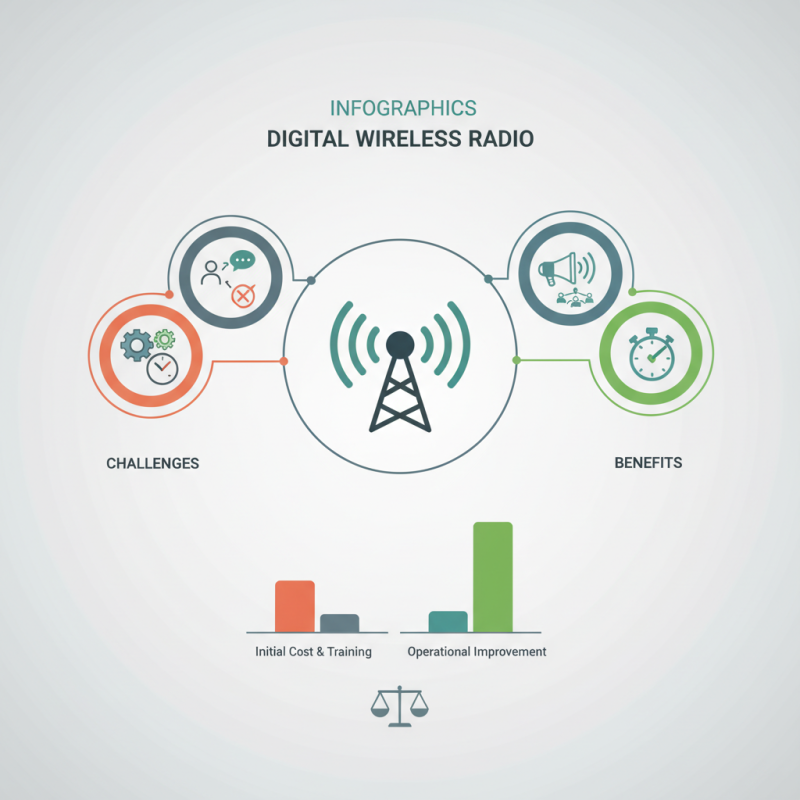
However, transitioning to Digital Wireless Radio may raise concerns. Initial costs can be high, and training staff requires time and effort. It’s crucial for businesses to evaluate if the benefits outweigh these drawbacks. With careful planning and execution, the switch can lead to significant operational improvements.
Digital wireless radio significantly enhances communication clarity for businesses in various sectors. This technology eliminates static and noise, allowing for clearer conversations. Employees can communicate with precision, ensuring that instructions and feedback are understood without confusion. This clarity can reduce errors and improve overall efficiency.
In high-pressure environments, such as construction sites or emergency services, reliable communication is vital. Digital wireless radios provide real-time updates, keeping teams connected. It facilitates quick problem-solving and immediate responses. However, reliance on this technology can sometimes lead to complacency. Regular training is essential to ensure all users are familiar with the equipment and protocols.
Moreover, enhanced communication is not just about clarity. It builds confidence among team members. When employees know they can share information without misinterpretation, it fosters a culture of collaboration. Yet, businesses must ensure all members engage actively, or the technology may not reach its full potential. Continuous assessment of communication practices can help identify gaps and improve functionality.
In a world where businesses strive for efficiency, digital wireless radio presents a significant opportunity for cost savings. By reducing the need for extensive infrastructure, companies can allocate resources more effectively. Traditional systems often require extensive wiring and hardware installation, driving up initial costs and ongoing maintenance. Wireless solutions simplify this landscape. They eliminate the need for physical cables and reduce installation times.
With less reliance on physical infrastructure, businesses can see substantial savings over the long term. Maintenance costs tend to drop as well, as wireless systems require fewer repairs and adjustments. This flexibility often leads to a more agile work environment, allowing teams to communicate effectively without being tethered to fixed locations. However, companies should evaluate the trade-offs in terms of reliability and security. The initial transition period can be challenging, as staff adjusts to new technology.
Moreover, in urban settings, reduced environmental impact becomes a fascinating aspect. Less cabling means less material waste. Still, businesses must stay alert to the potential pitfalls, such as connectivity issues or network interference. Continuous monitoring is vital to ensure optimal performance. Acknowledging these challenges is essential to truly maximize the benefits of digital wireless radio.
| Benefit | Description | Estimated Cost Savings (%) |
|---|---|---|
| Reduced Infrastructure Costs | Digital wireless radio systems require less physical infrastructure compared to traditional wired systems. | 30% |
| Lower Maintenance Expenses | Digital systems are easier to maintain, with fewer breakdowns and reduced dependency on physical repairs. | 25% |
| Improved Efficiency | Streamlined communication capabilities lead to faster decision-making and increased productivity. | 15% |
| Scalability | Easily scalable to accommodate business growth without significant additional infrastructure costs. | 20% |
| Enhanced Communication Range | Digital wireless radios often provide better coverage than traditional systems, reducing costs associated with failed communications. | 10% |
Digital wireless radios offer powerful instant communication, enhancing employee safety in businesses. When workers can reach each other quickly, they can respond to emergencies more effectively. For instance, in a manufacturing facility, a worker may notice an unsafe condition. With the push of a button, they can alert supervisors immediately. This rapid transmission of information can prevent accidents and injuries.
Additionally, digital wireless radios provide clear audio quality, even in noisy environments. Employees can communicate without straining to hear each other. This clarity is crucial during critical situations where misunderstandings can lead to danger. However, adapting to new technology may come with challenges. Some employees may initially resist this change or struggle with device usage. Training is essential to overcome these hurdles.
Moreover, the reliability of these systems is vital. Battery life and coverage areas must be considered. A dead radio in an emergency is counterproductive. Regular maintenance checks can ensure all devices function properly. Businesses must remain attentive to these details for optimal safety. Continuous feedback from employees can help identify areas for improvement. This two-way communication fosters a culture of safety and responsiveness.
Digital wireless radio technology offers businesses an effective way to enhance operational efficiency through real-time data sharing. This innovation allows teams to communicate instantly, reducing delays and improving response times. When critical data is shared immediately, decision-makers can act faster, leading to smoother operations.
Real-time data sharing helps in identifying issues as they occur. For instance, if equipment malfunctions, the team can be alerted instantly, minimizing downtime. This approach not only saves time but also money. Companies can ensure that resources are allocated efficiently and tasks are completed without unnecessary interruptions.
Tips: Encourage your team to utilize digital wireless radios for regular updates. This habit can reinforce a culture of transparency. When everyone is on the same page, collaboration flourishes. Remember, adopting new technologies might feel overwhelming at first. Reflect on your current communication methods and explore how digital radios can enhance them. Make the transition gradual, but stay committed. This will build trust in the new system and its capabilities.
In today’s fast-paced business environment, scalability and flexibility are crucial. Digital wireless radio systems provide businesses with the tools necessary to adapt quickly to changing needs. These systems can grow seamlessly alongside your organization, making them a smart investment. They support a range of communication requirements, from small teams to large enterprises.
With digital solutions, businesses can implement changes without significant upgrades. For example, adding new radios or features can often be done with minimal disruption. This adaptability can enhance overall workflow efficiency. However, some companies may struggle with initial setup or training. It’s important to assess your team's readiness for such transitions.
Investing in digital wireless radio also encourages innovation. It opens up options for integrating other technologies. Businesses can incorporate new features as they become available. Yet, this rapid evolution can be overwhelming. Companies must ensure their staff is not only equipped but also trained to utilize these advancements effectively. This ongoing learning process is essential for maximizing the benefits.
: They enable instant communication, allowing workers to report unsafe conditions quickly.
Clear audio quality is essential to avoid misunderstandings in critical situations.
Some may resist change or struggle with using the devices initially.
Dead radios in emergencies can compromise safety. Regular checks ensure functionality.
It allows teams to communicate instantly, reducing delays and improving response times.
Regular updates through digital radios can foster transparency and collaboration.
Instant alerts can minimize downtime and lead to quicker problem resolution.
Transition gradually and encourage feedback to build trust in the new system.
It helps identify areas for improvement and enhances the culture of safety.
The initial overwhelming feeling can hinder the transition if not managed properly.
Digital Wireless Radio offers significant benefits for businesses seeking to enhance their communication systems. One of the primary advantages is improved communication clarity, which ensures clear and reliable exchanges among employees. This technology also leads to considerable cost savings by minimizing infrastructure and maintenance expenses, allowing companies to allocate resources more efficiently.
Moreover, Digital Wireless Radio enhances employee safety by providing instant communication capabilities, which can be crucial in emergency situations. It also promotes operational efficiency through real-time data sharing, enabling faster decision-making processes. Lastly, the scalability and flexibility of digital solutions cater to the evolving needs of growing businesses, making Digital Wireless Radio a valuable asset in today’s fast-paced environment.

Sinosun Tech